

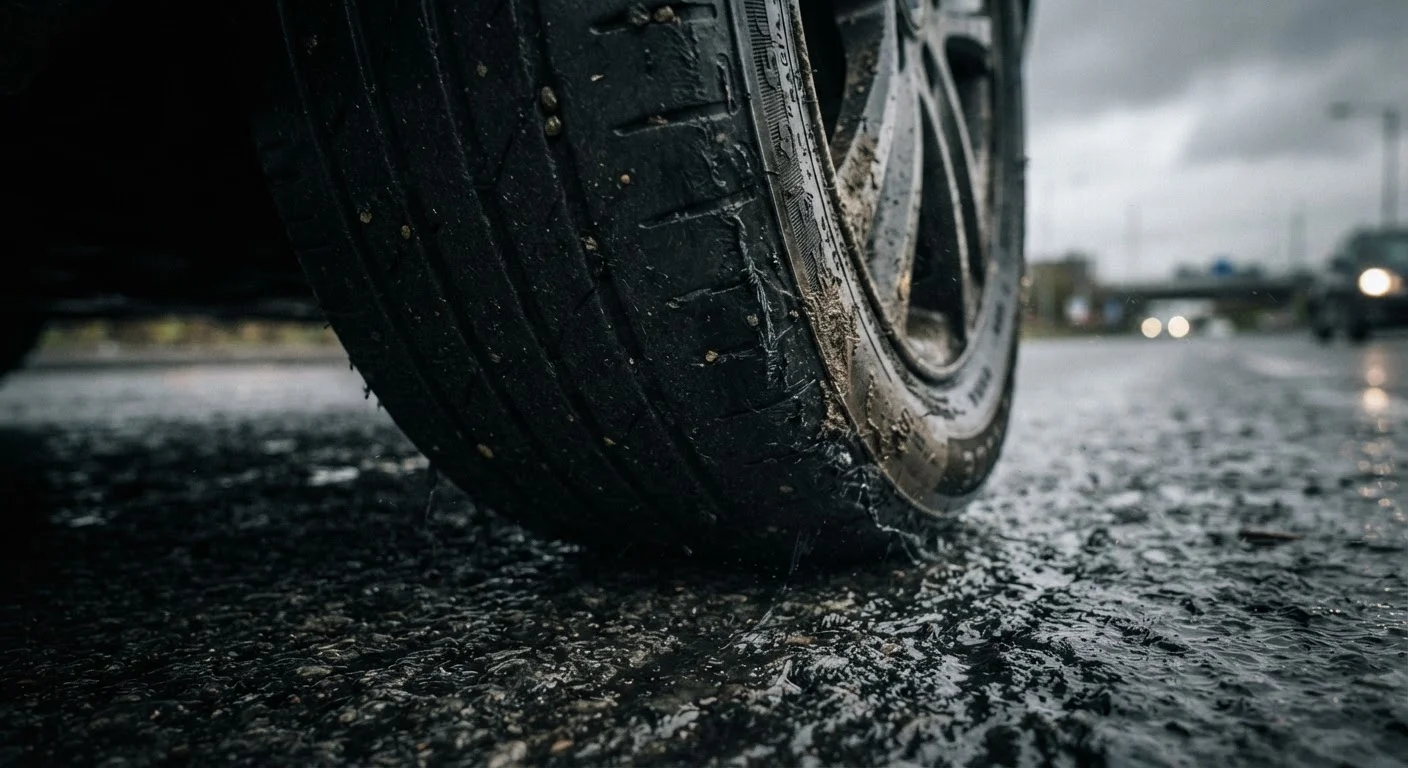
Key Takeaways
- Tread depth below 4/32 of an inch significantly increases stopping distances on wet roads.
- Under-inflation causes tyres to overheat and wear unevenly, reducing control and lifespan.
- Sidewall cracks, bulges, or impact damage can cause sudden tyre failure without warning.
- Tyres older than six years may degrade internally even if tread appears adequate.
- Regular tyre checks take minutes and can prevent accidents, fines, and costly replacements.
Tyre Condition
Tyre condition refers to the overall state of your vehicle's tyres — including tread depth, inflation pressure, sidewall integrity, and age. Each of these factors directly influences how safely and predictably your car handles, brakes, and responds to driver inputs. A tyre that looks acceptable at a glance may still be compromised in ways that only become apparent in an emergency.
In the US, the legal minimum tread depth is 2/32 of an inch, though many safety engineers recommend replacing tyres at 4/32 of an inch for meaningful wet-road grip.
Why Tyres Are Your Car's Most Critical Safety Component
Every system in your vehicle — steering, braking, suspension — ultimately communicates with the road through four contact patches roughly the size of a human hand. Those patches are your tyres. When tyre condition deteriorates, every other safety system is compromised by extension.
This isn't a niche concern. The National Highway Traffic Safety Administration (NHTSA) has consistently identified tyre-related factors as contributors to thousands of crashes annually in the US. Yet tyre checks remain one of the most skipped elements of routine vehicle maintenance.
For a complete pre-trip approach, see this pre-journey safety checklist, which covers tyres alongside other critical systems. Understanding what to look for — and why it matters — is the first step toward smarter, safer driving.
11,000+
Annual tyre-related crashes in the US
According to NHTSA estimates, tyre failures and tyre-related factors contribute to approximately 11,000 crashes per year in the United States.
~43%
Drivers with at least one under-inflated tyre
NHTSA surveys have found that roughly four in ten passenger vehicles are driven with at least one tyre significantly under-inflated at any given time.
4/32"
Recommended replacement tread depth
Many tyre safety organizations recommend replacing tyres at 4/32 of an inch of tread — double the legal minimum — to maintain adequate wet-road stopping performance.
Tread Depth: The Grip You Rely On
Tyre tread is engineered to channel water, mud, and debris away from the contact patch. As tread wears down, this ability diminishes. The consequences show up most sharply on wet roads, where a tyre with shallow grooves cannot evacuate water fast enough — a phenomenon known as aquaplaning (or hydroplaning). When aquaplaning occurs, the tyre rides on a film of water with effectively zero grip, meaning braking and steering inputs have no effect until contact is restored.
The penny test is a rough starting guide: insert a penny into a tread groove with Lincoln's head pointing down. If you can see all of his head, the tread is at or below 2/32 of an inch — the legal minimum. A quarter gives a more conservative benchmark at 4/32 of an inch, which is where many safety professionals advise replacement.
Uneven tread wear is equally telling. Wear concentrated on the outer edges typically points to chronic under-inflation. Center-heavy wear often indicates over-inflation. Both patterns signal that something in the tyre setup needs correction, not just the tread itself. Our guide on tyre pressure and tread depth checks covers how to read wear patterns in more detail.
Inflation Pressure and Its Effect on Handling
Tyre pressure affects the shape of the contact patch — too low and the patch spreads and distorts, too high and it shrinks. Neither extreme delivers the handling balance the tyre was designed for.
Under-inflated tyres increase rolling resistance and heat buildup. The sidewalls flex excessively with each rotation, eventually weakening the tyre's internal structure. Drivers often report vague or sluggish steering, particularly through corners. Over-inflated tyres, by contrast, create a smaller and stiffer contact area that bounces over surface imperfections rather than conforming to them, reducing traction and making the ride harsher.
Your vehicle's recommended tyre pressure is listed on a sticker in the door jamb (or owner's manual) — not on the tyre sidewall, which shows the maximum pressure the tyre can handle, not the ideal operating pressure. Temperature matters too: pressure drops roughly 1 PSI for every 10°F decrease in ambient temperature, which is why seasonal tyre checks are particularly important heading into winter.
Check Pressure When Tyres Are Cold
Tyre pressure readings are only accurate when the tyre is cold — ideally before the vehicle has been driven that day, or after sitting for at least three hours. Heat from driving temporarily increases pressure, which can lead you to underestimate how low a tyre actually is. Check all four tyres plus the spare monthly, and always use a reliable gauge rather than relying on the tyre's appearance.
Sidewall Damage, Age, and Structural Integrity
A tyre's sidewall takes constant abuse — curb scuffs, pothole impacts, UV exposure, and temperature cycling. Inspect sidewalls regularly for bulges, cracks, or cuts. A bulge indicates internal structural damage where the tyre's plies have separated, creating a weak point that can fail suddenly at speed. This is not a monitor-and-wait situation — a bulging tyre should be replaced before the vehicle is driven further.
Tyre age is a factor that many drivers overlook entirely. Rubber compounds degrade chemically over time even when a tyre is not in use or shows adequate tread. Most tyre manufacturers and safety bodies recommend replacing any tyre older than six years from its manufacture date, regardless of apparent condition. The manufacture date is encoded in the tyre's DOT code — the last four digits indicate the week and year of production (e.g., "2319" means the 23rd week of 2019).
Tyre condition also intersects with your braking system's effectiveness. Even the best brake hardware delivers diminished results through worn tyres. For context on how the full stopping system works, see our piece on brake wear and component replacement.
Roadworthiness and When to Replace
In states with vehicle safety inspection programs, tyre condition is a checked item. Inspectors look for tread depth, visible damage, improper repairs (such as sidewall plugs), and mismatched tyre types on the same axle. Failing a tyre check means the vehicle cannot legally be driven until the issue is corrected.
Beyond legal thresholds, the practical decision to replace tyres depends on the combination of tread remaining, age, and any physical damage. A tyre at 3/32 of an inch that is four years old may be acceptable. The same depth on a nine-year-old tyre warrants immediate replacement. Mixing significantly different tread depths on the same axle affects how the car responds under braking and in turns, and is generally not recommended.
Adverse weather conditions amplify every tyre shortcoming. If you regularly drive in rain, ice, or snow, the margin for tyre compromise is narrower — conditions change what your vehicle can and can't do, as explored in our adverse weather driving guide. Maintaining your tyres in good condition is one of the most straightforward, cost-effective ways to reduce risk on every trip.