

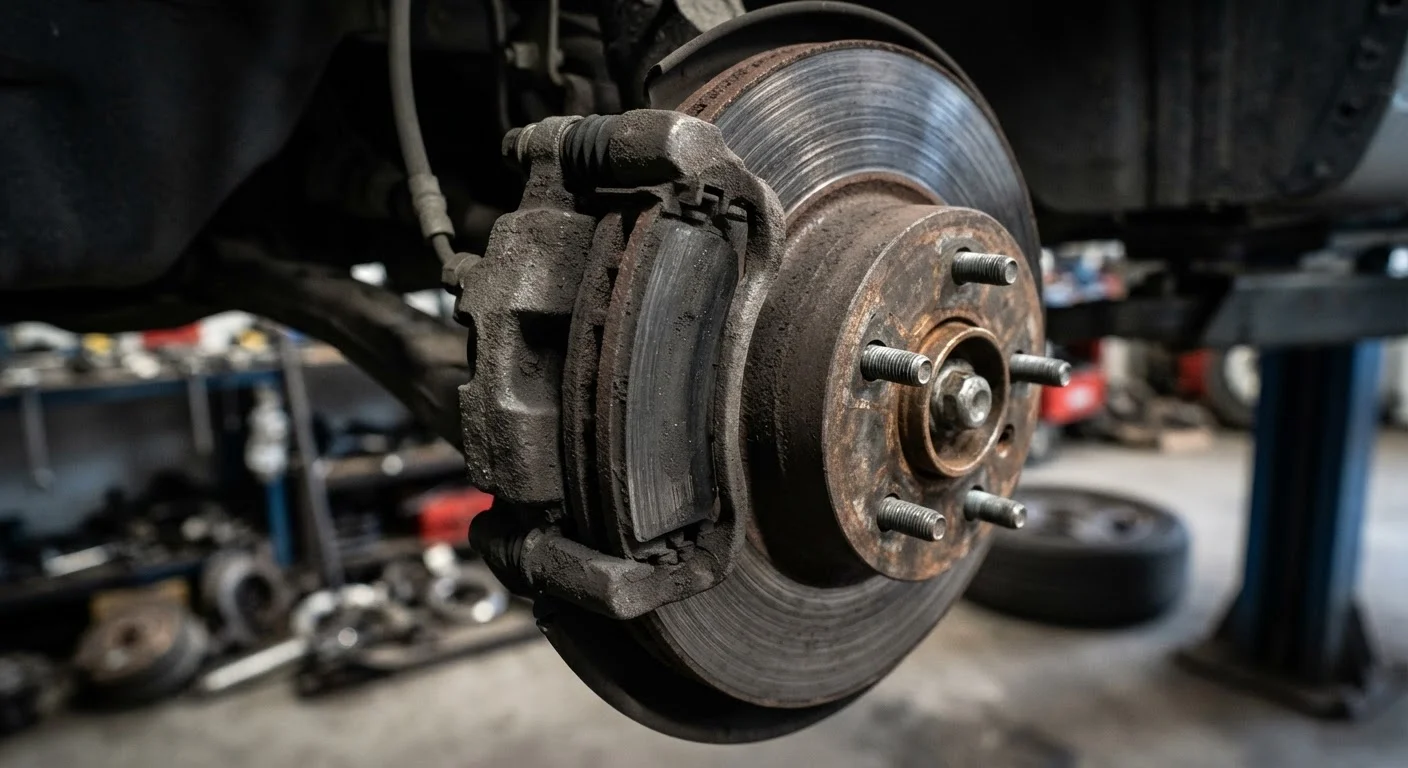
Key Takeaways
- Brake pads typically need replacement every 25,000–70,000 miles depending on driving habits and pad material.
- Squealing or squeaking is often a built-in wear indicator alerting you the pads are low.
- Rotors can last through several pad replacements but may need resurfacing or replacement if grooved or warped.
- Grinding sounds when braking usually mean metal-on-metal contact — a situation requiring immediate attention.
- Brake fluid condition is directly tied to brake performance and should be checked regularly.
- Never delay brake service; worn components significantly increase stopping distances.
Brake Wear
Brake wear refers to the gradual erosion of brake pads and rotors that occurs each time you slow or stop your vehicle. Brake pads are the friction material that clamps against the rotor (the metal disc) to create stopping force. Over time, both components thin down and lose effectiveness. Recognizing the signs of wear before it becomes critical is a fundamental part of vehicle ownership.
Brake pads are typically rated by lining thickness measured in millimeters; most manufacturers recommend replacement when pad material reaches 2–3 mm. Rotor thickness is also specified to a minimum discard thickness stamped on the rotor itself.
How Brake Pads and Rotors Work Together
Every time you press the brake pedal, hydraulic pressure pushes a caliper to squeeze brake pads against a spinning rotor. The friction this creates converts kinetic energy into heat, slowing the wheel. It sounds simple — and conceptually it is — but the system depends on both components being in serviceable condition simultaneously.
Brake pads are made of a friction material bonded to a metal backing plate. The friction material wears away with use, and most pads include a small metal tab called a wear indicator that is designed to contact the rotor and produce an audible squeal when the lining gets thin. Rotors, meanwhile, are subject to heat stress, surface scoring from pad material, and corrosion. They have a minimum thickness specification — often stamped on the edge — below which they should not be used.
Understanding this relationship helps you distinguish between a pad problem and a rotor problem, which often require different types of service. For a broader picture of the routine checks that support brake health, see the guide on long-term vehicle maintenance.
Warning Signs: What Your Brakes Are Telling You
Your brakes communicate wear through sound, feel, and sometimes smell. Learning to interpret these signals accurately can mean the difference between a routine pad swap and a more expensive repair.
Know the Difference Between Squeak and Grind
A brief squeak on the first stop of a cold, damp morning is usually harmless — light surface rust burning off the rotor. A squeal that occurs consistently during every braking event is the wear indicator tab telling you pads are low. Grinding, by contrast, means friction material is likely gone and metal components are in direct contact. The first warrants monitoring; the second and third warrant prompt professional inspection.
- Squealing or squeaking: Often the wear indicator doing its job. Persistent squealing during normal braking means pads need inspection soon.
- Grinding: A harsh metal-on-metal sound typically means pad material is gone and the backing plate is contacting the rotor directly. This is an urgent situation.
- Pulsating pedal: A pedal that vibrates or pulses under braking pressure usually points to warped rotors, which can occur from repeated heavy braking heat cycles.
- Soft or spongy pedal: This is more likely a hydraulic issue — often degraded brake fluid or air in the lines — rather than pad or rotor wear. See our article on fluid checks for guidance.
- Pulling to one side: If the car drifts left or right during braking, a caliper may be sticking or pad wear may be uneven across axles.
- Burning smell: A sharp, acrid smell after heavy braking can indicate overheated pads or a dragging caliper.
If a dashboard warning light accompanies any of these sensations, consult our dashboard warning light guide to understand what the symbol is signaling.
Pad Replacement vs. Rotor Replacement: Key Differences
Brake pads wear faster than rotors and will need replacement more frequently — often two to three times in a rotor's lifespan under normal driving conditions. However, rotors are not indefinitely reusable.
25,000–70,000 mi
Typical brake pad lifespan range
The wide range reflects differences in driving style, pad compound, and vehicle weight — city drivers typically fall at the lower end.
2–3 mm
Minimum pad thickness before replacement
Most vehicle manufacturers and brake specialists recommend replacement at or before this threshold to maintain effective braking.
~30%
Stopping distance increase with worn brakes
Research from road safety organizations indicates that severely degraded brake components can meaningfully extend stopping distances in emergency situations.
When a mechanic inspects your brakes, they will measure rotor thickness with a micrometer and check for surface condition. Rotors with minor surface rust (common after a vehicle sits unused) may clean up after normal driving. Rotors with deep grooves scored by metal-on-metal contact, or those below minimum thickness, require replacement. Rotors that are still within specification but show minor surface variation can sometimes be resurfaced (also called turning or machining), though this is less common than it once was because many modern rotors are thin from the factory and have little material to remove.
One practical consideration: replacing pads on a grooved or heavily worn rotor can reduce pad life and braking effectiveness, because the new pad surface cannot mate properly with a damaged rotor. A qualified mechanic can assess whether resurfacing is viable or whether full replacement makes more sense for your vehicle.
Good brake condition also works in concert with tyre health — worn tyres extend stopping distances even when brakes are functioning perfectly. The article on how tyre condition affects braking covers that interaction in detail.
How Driving Habits Affect Brake Longevity
No two drivers wear their brakes at the same rate. Frequent city driving with repeated hard stops will deplete pad material far faster than steady highway cruising. Carrying heavy loads, towing, or driving in hilly terrain also accelerates wear because the braking system has more kinetic energy to absorb on each stop.
Driving style plays a measurable role. Anticipating stops and allowing the vehicle to coast down before applying the brake — rather than braking hard at the last moment — reduces the heat and friction load on pads and rotors over time. This is not about avoiding braking; it is about using it proportionately.
Checking tyre pressure and tread depth is another part of the broader safety picture, because tyres in poor condition shift more braking burden onto the hydraulic system. See our tyre pressure and tread depth guide for the checks that complement brake maintenance.
As a general rule, have brake components inspected at each tire rotation — roughly every 5,000–7,500 miles for most vehicles — or any time you notice one of the warning signs described above. A qualified mechanic can measure pad thickness and rotor condition quickly and advise you on the actual service interval your driving pattern warrants.