

Key Takeaways
- Temperature swings stress tires, batteries, and fluids more than steady conditions do.
- Many seasonal checks are visual or simple gauge readings — no mechanic required.
- Cold weather accelerates battery drain; heat degrades coolant and rubber components.
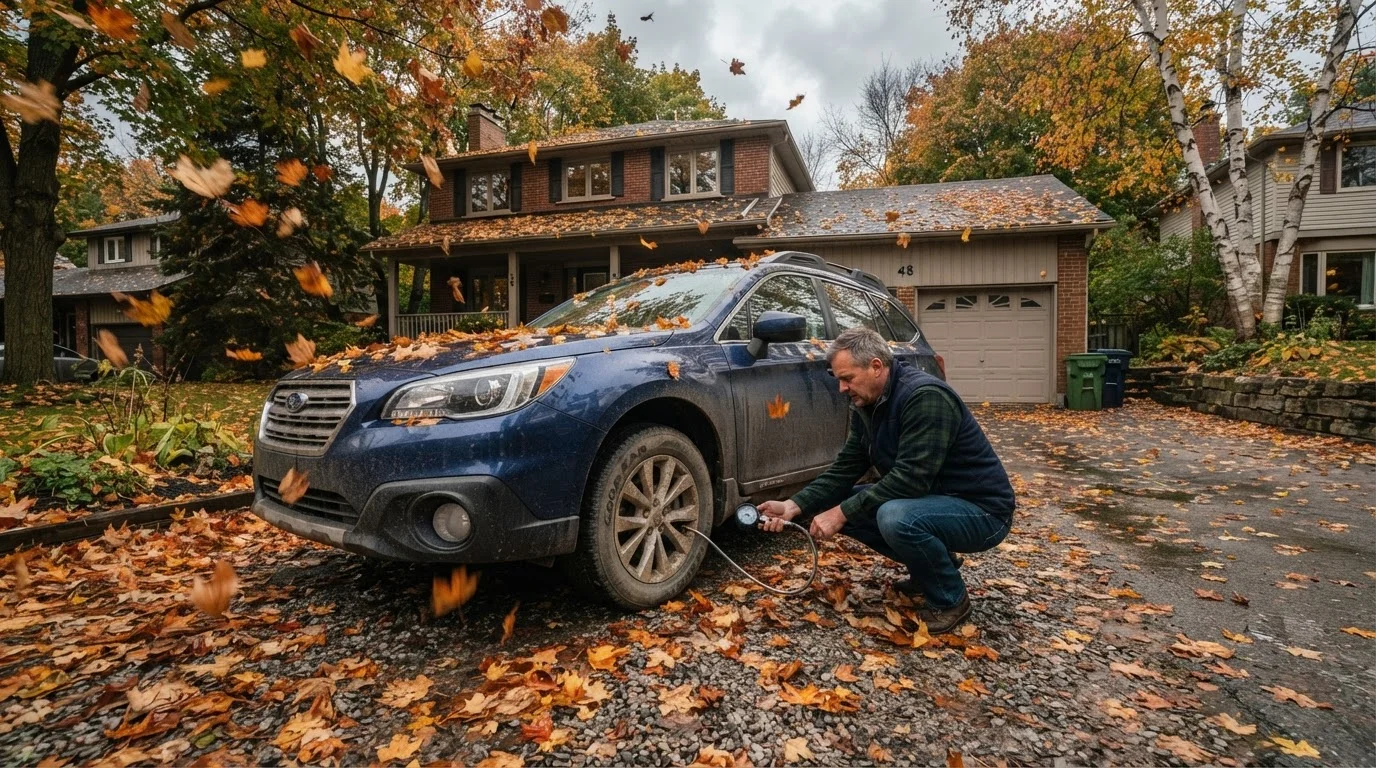
- Tire pressure drops roughly 1 PSI for every 10°F fall in ambient temperature.
- Addressing small issues before a season change is far less costly than roadside repairs.
Summary
18 items · 30–75 minutes
Why Seasonal Transitions Are Harder on Your Vehicle Than Steady Weather
Your car is engineered to handle a range of conditions, but the transition periods — fall into winter, spring into summer — are when its systems face the most stress. Rapid temperature swings cause materials to expand and contract, fluids to thicken or thin unpredictably, and electrical systems to work harder than they were designed for on a daily basis.
This checklist is designed for the two key transition windows: before cold weather sets in, and before summer heat peaks. Some items apply to both; others are season-specific. Use it as a structured walk-around, not a panic response. Most checks take minutes and require nothing more than a flashlight, a tire gauge, and your owner's manual.
For a broader view of how these checks fit into your vehicle's overall care rhythm, see our guide on keeping a vehicle well-maintained for the long term.
Battery and Electrical
Tires
Fluids
Visibility and Wipers
Belts, Hoses, and Under-Hood Components
Tools and Resources Worth Having on Hand
You don't need a full garage to run through these checks. A modest set of tools covers the majority of items on this list.
Tire pressure gauge
Accurately measures PSI in all four tires and the spare — digital or dial gauges are more reliable than stick-type.
Multimeter or battery tester
Checks resting voltage and, with a load tester, cold cranking amp capacity of your battery before temperatures fall.
Flashlight or work light
Needed for inspecting hoses, belts, and the undercarriage in lower-light conditions or tight engine bays.
Antifreeze tester (float or refractometer)
Determines the freeze point of your current coolant mixture so you know whether it's adequate for your region's winter lows.
Owner's manual
Contains manufacturer-specified fluid types, capacities, and service intervals unique to your vehicle — the authoritative reference for any check.
Penny or tread depth gauge
A simple way to verify whether tire tread depth meets the minimum safety threshold before seasonal driving demands increase.
For a deeper dive into what your service intervals actually mean — and which manufacturer recommendations are non-negotiable — our article on your car's maintenance schedule, explained is worth bookmarking alongside this checklist.
Know Which Tasks Belong to a Professional
Most items on this checklist are visual inspections or simple measurements. However, tasks such as load-testing a battery under charge, inspecting brake pad thickness and rotor condition, evaluating suspension components, or diagnosing an AC refrigerant issue are best handled by a qualified mechanic. If any visual check reveals something that doesn't look right — fluid leaks, significant corrosion, cracks in structural components — have it assessed by a professional before driving the vehicle in extreme conditions.
What to Focus on Before Winter
Cold weather is hardest on three systems: your battery, your tires, and your fluids. Battery capacity drops measurably in low temperatures — a battery that starts the car fine at 70°F may struggle below freezing. Our detailed article on car battery health and signs of decline walks through what to watch for before the cold arrives.
Tire pressure deserves attention every time the mercury drops significantly. The general rule is approximately 1 PSI of pressure loss for every 10°F decrease in temperature. Under-inflated tires affect braking distance and handling — both critical in wet or icy conditions. For more on what tire condition actually does to how your car responds, see how tyre condition affects handling, braking, and roadworthiness.
Fluids also behave differently in the cold. Coolant (antifreeze) concentration determines the freeze point of your cooling system. Engine oil viscosity affects how quickly lubrication reaches components at startup. Our fluid checks guide covering coolant, brake fluid, and beyond covers how to assess these without guessing.
Don't Skip the Battery Check Before Winter
A battery that is marginal in mild weather can fail completely in temperatures below 20°F. Cold weather reduces a battery's ability to deliver the cranking amps needed to start the engine, and it also slows the alternator's ability to recharge it. If your battery is more than three to four years old and hasn't been tested recently, have it load-tested before the first hard freeze — not after a no-start event in a parking lot.
What to Focus on Before Summer Heat
Heat is its own category of wear. Engine cooling systems work overtime in summer, making coolant condition and hose integrity more important. Rubber components — belts, hoses, and wiper blades — degrade faster in sustained heat and UV exposure. Air conditioning systems that weren't tested all winter may reveal refrigerant leaks or compressor issues right when you need them most.
Cabin air filters are easy to overlook but affect both air quality and AC efficiency. Similarly, the small components under the hood — air filters, spark plugs, belts — influence how efficiently the engine runs when it's hot. See air filters, spark plugs, and the smaller parts that affect performance for a clear breakdown of when these are due.
Summer also affects driving conditions in ways that demand specific habits. Our guide on driving in adverse weather including rain, fog, ice, and sun glare covers the adjustments worth making when visibility and road conditions change.