

Key Takeaways
- Tyre pressure should be checked monthly when tyres are cold — not after driving.
- The correct pressure is on the vehicle placard, not the maximum figure moulded into the tyre sidewall.
- Legal tread depth minimum in the US is 2/32 inch, but handling degrades noticeably before that point.
- Uneven wear patterns are diagnostic signals — they reveal alignment, inflation, and suspension problems.
- A spare tyre needs the same pressure and tread checks as the four tyres you drive on daily.
Summary
18 items · 15–30 minutes
Why Tyre Checks Are Worth Your Time
Tyres are the only part of your vehicle in contact with the road, yet they're among the most routinely neglected maintenance items. Incorrect inflation alone affects fuel economy, handling response, and how quickly your car stops in an emergency. Combined with tread wear and physical damage, an unchecked tyre can quietly become a serious safety risk.
This checklist covers the four areas every driver should audit regularly: inflation pressure, tread depth, wear patterns, and physical condition. None of it requires mechanical expertise — just the right tools and a consistent habit. For a broader look at how tyre condition shapes vehicle behaviour, see how tyre condition affects handling and braking.
Digital or Dial Tyre Pressure Gauge
Measures tyre inflation accurately so you can compare against your vehicle's specified PSI.
Tread Depth Gauge
Provides a precise measurement of remaining tread depth across the tyre width.
Penny (US cent coin)
Serves as a quick field tool to estimate whether tread depth has reached the legal minimum.
Portable Tyre Inflator
Allows you to correct pressure at home without driving to a forecourt; useful for monthly checks.
Flashlight or Torch
Improves visibility when inspecting sidewalls and tread grooves for damage or embedded objects.
Working Through the Checklist
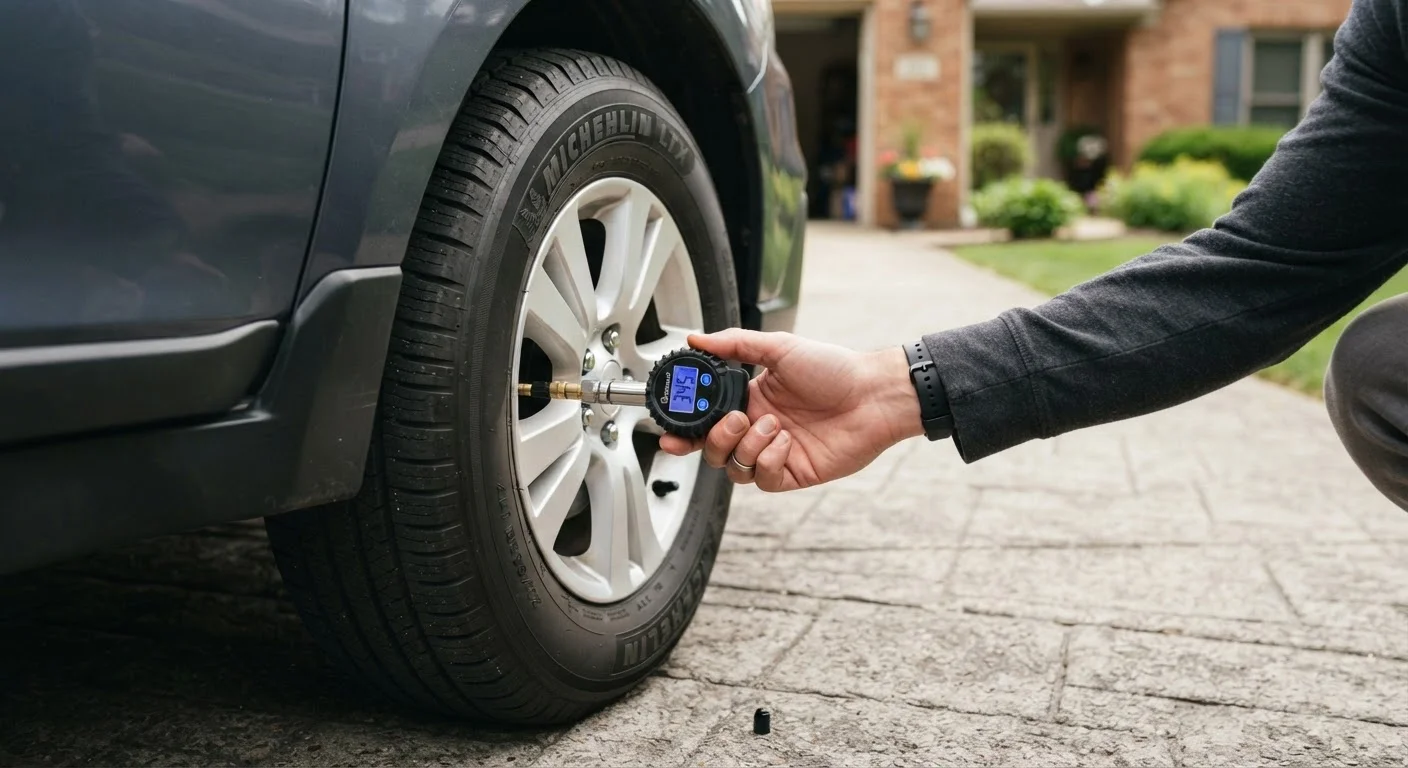
Run through these checks in order. Pressure first — always on cold tyres — then tread, then wear patterns, then a physical inspection of each tyre's sidewall and contact surface. The entire process takes 15 to 30 minutes and can be done in your driveway.
TPMS Is a Warning System, Not a Substitute for Checks
Many vehicles made after 2008 include a Tyre Pressure Monitoring System (TPMS) that alerts you when pressure drops roughly 25% below the recommended level. By the time that warning light illuminates, your tyre is already significantly under-inflated. Monthly manual checks catch gradual pressure loss long before the TPMS triggers.
Uneven wear patterns are worth particular attention because they tell you something is wrong beyond the tyre itself. One-sided shoulder wear points to wheel misalignment; cupping suggests suspension wear. Addressing only the tyre without investigating the underlying cause means the replacement will wear prematurely too. If in doubt, a qualified technician can interpret the wear pattern and advise on next steps.
Tyre Pressure
Tread Depth
Wear Pattern Inspection
Visual and Physical Condition
These same checks apply when evaluating a used vehicle. A pre-purchase vehicle inspection will cover tyres, but knowing what to look for yourself means you spot problems before you commit to a purchase.
Pairing Tyre Checks With Other Routine Maintenance
Tyre checks fit naturally alongside other quick monthly inspections. While you're already in the driveway with your gauge, it takes a few extra minutes to run through fluid levels — a habit covered in detail in our guide to coolant, brake fluid, and other essential fluid checks.
Before longer trips, combine this tyre checklist with a full pre-departure review. Our pre-journey safety readiness checklist brings together tyres, lights, fluids, and route planning in one pass. If you're a newer driver building these routines from scratch, car maintenance for new drivers offers a grounded starting point.
Consistent tyre checks take less time than dealing with a flat on the highway — or worse, an accident caused by a tyre that was quietly failing for weeks.