

Key Takeaways
- Fatigue impairs driving ability in ways that closely mirror alcohol intoxication.
- Microsleeps can last 4–5 seconds — enough to travel over 100 yards at highway speed without any awareness.
- Common warning signs include lane drifting, heavy eyelids, yawning repeatedly, and missing road signs.
- Caffeine provides only short-term alertness and is not a substitute for sleep.
- The only reliable remedy for driver fatigue is genuine rest — stopping and sleeping.
- High-risk periods include 2–6 a.m. and mid-afternoon, when the body's circadian rhythm dips naturally.
Driver Fatigue
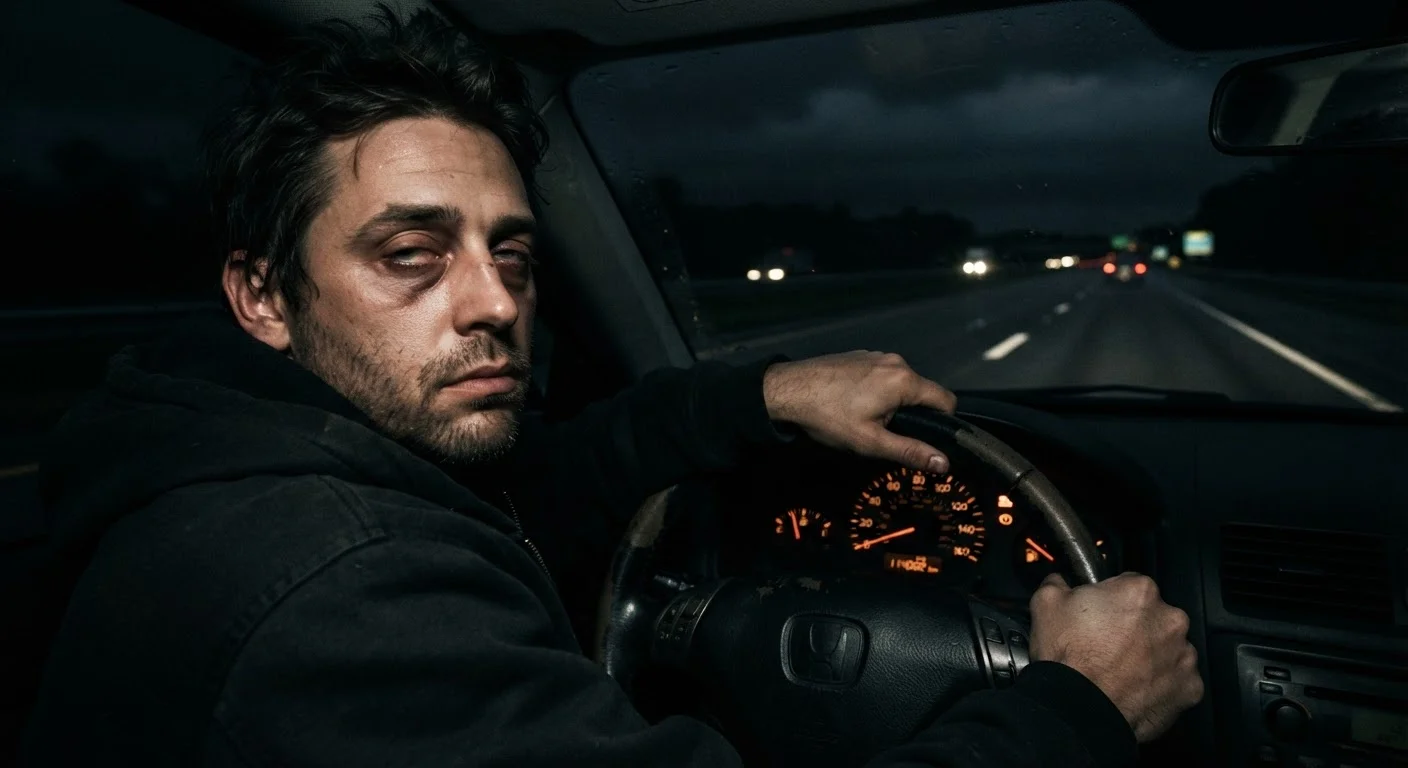
Driver fatigue is a state of physical and mental tiredness that impairs a driver's ability to operate a vehicle safely. It slows reaction time, reduces situational awareness, and can cause microsleeps — brief, involuntary episodes of unconsciousness lasting a few seconds. Unlike alcohol, there is no roadside test that measures fatigue, making it both harder to detect and easier to underestimate.
Research published by road safety agencies consistently shows that being awake for 17–19 consecutive hours produces impairment comparable to a blood alcohol concentration at or above the legal driving limit in most US states.
Why Fatigue Is a Serious Road Safety Risk
Driver fatigue contributes to a significant share of fatal road crashes in the United States each year. The National Highway Traffic Safety Administration (NHTSA) has linked drowsy driving to thousands of crashes annually, though many researchers believe official figures undercount the true scale because fatigue leaves no measurable trace at a crash scene.
What makes fatigue particularly dangerous is how poorly most people gauge their own impairment. Studies show that fatigued drivers consistently overestimate their alertness and underestimate how much their performance has degraded. This mirrors the well-documented pattern seen with alcohol — and the comparison is more than just rhetorical. The impairment profile of alcohol and fatigue overlap significantly, affecting reaction time, hazard recognition, and decision-making in similar ways.
Fatigue compounds other risk factors too. At night, it interacts with reduced visibility and glare; on busy roads, the consequences of a microsleep are immediate. Understanding the physiological changes that make night driving harder helps explain why fatigue risk spikes after dark.
~100,000
Police-reported drowsy driving crashes annually (US)
According to NHTSA estimates, though researchers widely believe the actual figure is substantially higher due to underreporting.
4–5 seconds
Typical duration of a microsleep episode
At 60 mph, a 4-second microsleep means travelling approximately 350 feet with no driver awareness or control.
18 hours
Wakefulness equivalent to ~0.05% BAC impairment
Research cited by road safety bodies indicates 18 hours without sleep produces driving impairment comparable to a 0.05% blood alcohol concentration.
2–6 a.m.
Highest-risk window for fatigue-related crashes
This period coincides with the deepest trough in the human circadian rhythm, when alertness and reaction time are naturally at their lowest.
Recognising the Warning Signs
Fatigue rarely announces itself all at once. It builds gradually, and the warning signs can be easy to rationalise or dismiss. Knowing what to look for — and taking those signals seriously — is the first line of defence.
Physical signals
- Frequent or prolonged yawning
- Heavy or burning eyelids
- Difficulty keeping your head upright
- Blurred or tunnel vision
Behavioural signals
- Drifting between lanes or onto rumble strips
- Inconsistent speed — slowing without noticing, then overcorrecting
- Braking later than usual
- Missing exits, signs, or traffic signals
Cognitive signals
- Inability to recall the last several miles driven
- Difficulty concentrating on the road ahead
- Thoughts wandering repeatedly
- Slower, less confident decision-making at junctions or merges
If you experience several of these simultaneously, treat it as an immediate instruction to stop. These are not minor inconveniences to push through — they are indicators that your ability to respond to a hazard has been meaningfully compromised. This mirrors the kind of attentional impairment discussed in our article on cognitive distraction at the wheel.
What to Do When Fatigue Sets In
The most important thing to understand is that there is no substitute for rest. Common stopgap measures — opening a window, turning up the radio, splashing cold water on your face — are not effective safety strategies. They may provide seconds of distraction but do nothing to reverse the underlying sleep deficit.
Immediate steps if you feel fatigued:
- Signal and exit the highway or pull safely off the road at the earliest opportunity — a rest area, service station, or safe parking lot.
- Lock the doors and take a 15–20 minute nap. Set a phone alarm so you don't oversleep into grogginess.
- If you plan to continue driving, a caffeinated drink consumed just before the nap can help as caffeine takes around 20–30 minutes to take effect.
- After waking, allow a few minutes to fully rouse before returning to the wheel.
If you are planning a long trip, building in scheduled rest breaks every two hours is a practical strategy. Our pre-trip safety checklist covers this alongside other readiness factors worth reviewing before departure.
Drivers who regularly feel drowsy behind the wheel — particularly those who wake unrefreshed or snore heavily — should consider speaking with a healthcare professional. Untreated sleep disorders such as obstructive sleep apnea are a known contributor to driver fatigue and are manageable with proper diagnosis and care.
High-Risk Groups and Situations
While fatigue can affect any driver, certain situations and groups carry elevated risk:
- Shift workers and night workers — driving home after an overnight shift combines natural sleep pressure with the body's circadian low point.
- Long-distance drivers — monotonous highway driving suppresses alertness even when total sleep time has been adequate.
- Young drivers — teens and young adults have high natural sleep needs and are statistically over-represented in fatigue-related crashes.
- Drivers on certain medications — antihistamines, some antidepressants, and sleep aids can cause residual drowsiness. Always check labelling and consult a pharmacist or physician if uncertain.
The combination of fatigue with other known risk behaviours amplifies danger considerably. Following too closely, for instance, leaves no margin for the delayed reactions that fatigue produces — a connection explored in detail in our article on why tailgating is more dangerous than most drivers realise.
This article is for general information and educational purposes only. If you regularly experience excessive daytime sleepiness or feel unsafe to drive, consult a qualified healthcare professional.