

Key Takeaways
- Your owner's manual is the most reliable source for service intervals and fluid specifications.
- Catching small issues early — through regular visual checks — prevents costly repairs later.
- Consistent oil changes remain one of the highest-impact habits for engine longevity.
- Tire pressure and brake inspections are quick checks that directly affect safety.
- A documented maintenance history adds real value if you eventually sell the vehicle.
Why Consistency Beats Intensity
Long-term vehicle reliability isn't built on one heroic service visit — it's built on a series of small, regular actions taken before problems develop. Most mechanical failures that leave drivers stranded don't appear without warning; they follow weeks or months of gradually worsening conditions that routine checks would have caught. The goal of a good maintenance routine is to compress the gap between a problem starting and you knowing about it.
This doesn't require mechanical expertise. Many of the highest-value habits involve nothing more than looking, listening, and keeping records. If you've just taken ownership of a vehicle, our guide for new drivers covers the essential starting points without overwhelming detail.
Follow your owner's manual for all service intervals — not generic internet advice.
Manufacturer-specified intervals are calibrated to your exact engine, transmission, and fluid chemistry. Generic schedules (like the old 3,000-mile oil change rule) are often outdated for modern vehicles and can lead to either unnecessary expense or under-servicing. Sticking to the manual keeps you aligned with warranty requirements and engineering intent.
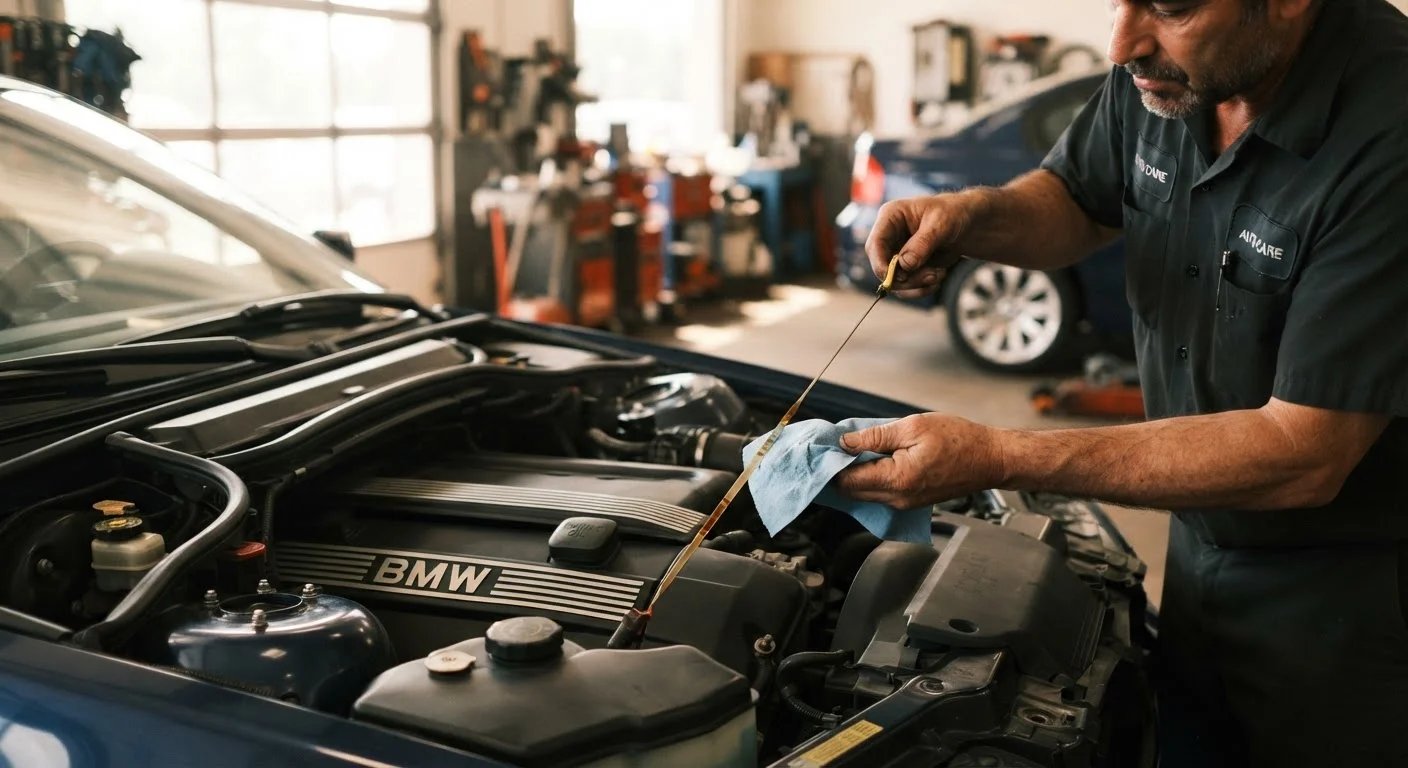
Check fluid levels — oil, coolant, brake fluid, and windshield washer — at least once a month.
Low or contaminated fluids degrade performance and accelerate wear across multiple systems simultaneously. Oil that's too low starves the engine of lubrication; coolant that's low risks overheating. Monthly visual checks take under five minutes and give you an early warning before a slow leak becomes an expensive repair.
Inspect tire pressure monthly and before long trips, using the placard value — not the tire sidewall.
Underinflated tires increase fuel consumption, reduce handling precision, and wear unevenly. The correct pressure is printed on a sticker inside the driver's door jamb — not the maximum pressure listed on the tire itself. Maintaining correct pressure also extends tire lifespan considerably.
Have brakes inspected at every tire rotation, and address any grinding or squealing sounds promptly.
Brake pads wear gradually and give clear auditory warnings before complete failure — squealing indicates worn material, grinding often means metal-on-metal contact. Waiting too long turns a pad replacement into a rotor replacement, roughly tripling the repair cost. Brakes are also a direct safety item.
Keep up with timing belt or chain service if your vehicle requires it.
In vehicles with a timing belt (rather than a chain), this component has a finite replacement interval — often 60,000 to 100,000 miles, depending on the manufacturer. A failed timing belt can cause catastrophic engine damage in interference engines, resulting in repair bills that may exceed the vehicle's value. This is one task where following the manual interval is non-negotiable.
Core Practices That Make the Difference
The following practices are grounded in manufacturer guidelines and widely accepted by automotive professionals. None require specialist tools for their basic application, though some tasks are best delegated to a qualified mechanic — see our overview of DIY versus garage servicing for a balanced look at where to draw that line.
77%
Of vehicles found to have at least one maintenance item overdue
According to the Car Care Council's Vehicle Health Index, a significant majority of vehicles inspected at care events are found with at least one overdue maintenance item.
200,000+ miles
Lifespan achievable with consistent maintenance
Automotive industry analysts and consumer vehicle data consistently show that vehicles maintained to manufacturer schedules can reliably reach 200,000 miles or beyond.
Building a Maintenance Record You Can Actually Use
A vehicle with a documented service history is easier to maintain, easier to diagnose when something goes wrong, and more straightforward to sell or trade in. Keep a simple log — even a notes app or a folder of receipts — recording the date, mileage, and work completed for every service. If a mechanic flags a future item to monitor, write that down too.
This habit also protects you financially. Warranty claims, recall notices, and insurance disputes can all hinge on whether a vehicle was serviced according to schedule. The financial case for keeping a car longer is stronger when maintenance records are in order — something we explore in detail in the long-term financial case for keeping a car longer.
This article provides general vehicle maintenance information for educational purposes. Always follow your vehicle manufacturer's guidelines and consult a qualified mechanic for advice specific to your vehicle's condition.