

Key Takeaways
- Vertical storage reclaims floor space by using wall height, but requires physical accessibility planning.
- Horizontal storage keeps items within easy reach and contributes to visual stability in a room.
- Most small spaces benefit from a deliberate combination of both orientations rather than committing to one alone.
- Ceiling height, household composition, and how frequently items are used should all guide your storage decisions.
- Neither approach is universally superior — the right choice depends on the specific room and its contents.
Option A
Vertical Storage
The space-maximizing approach that builds upward, not outward.
Best for: Rooms with limited floor area but usable wall height, such as studio apartments, narrow kitchens, or cramped home offices.
Option B
Horizontal Storage
The grounded, accessible approach that spreads across surfaces and low furniture.
Best for: Households needing easy, frequent access to stored items — especially in spaces with low ceilings or shared use by children and adults.
If you have high ceilings and very limited floor space
Vertical Storage
Tall shelving and wall-mounted systems let you store far more without consuming precious square footage. This is the most direct way to expand capacity in a compact room.
If your household includes young children or older adults
Horizontal Storage
Lower, stable storage keeps frequently used items within safe reach for everyone. Climbing or stretching to high shelves introduces unnecessary risk in daily routines.
If you want a tidy, uncluttered visual feel in a small room
Vertical Storage
Drawing the eye upward creates the perception of height, making a small room feel airier. Closed vertical cabinetry also hides clutter more completely than surface-level horizontal storage.
If you are storing heavy, bulky, or frequently used items
Horizontal Storage
Heavy items are safer and more practical stored at or near floor level. Low, sturdy furniture designed for weight-bearing is generally more stable than tall shelving loaded heavily at height.
If you are organizing a mixed-use room like a living room or bedroom
Vertical Storage
A combination approach anchored by tall storage maximizes the room's total capacity while horizontal pieces like ottomans or benches handle daily-access needs at a comfortable level.
What Vertical and Horizontal Storage Actually Mean
In organizing, vertical storage refers to any system that stacks or mounts items along wall height — think floor-to-ceiling shelves, wall-mounted pegboards, stacked bins, or tall pantry cabinets. The governing principle is simple: use the full height of a room, not just the floor footprint.
Horizontal storage, by contrast, spreads laterally across surfaces and low furniture. Sideboards, under-bed drawers, storage ottomans, and wide shelving units installed at countertop or bench height all fall into this category. The governing principle here is accessibility — items remain within comfortable reach without stretching or climbing.
Understanding both as distinct design orientations — not just furniture categories — is what allows you to use them strategically. As we explore in our look at kitchen storage trade-offs, storage decisions are rarely one-size-fits-all; context shapes the right answer every time.
How Each Approach Uses Space Differently
Vertical storage's core advantage is that it decouples storage capacity from floor area. A wall-mounted shelving run that reaches eight feet high can hold dramatically more than a low bookcase occupying the same wall footprint. In a room where every square foot matters — a studio apartment, a galley kitchen, a narrow home office — this distinction is significant.
However, vertical systems introduce trade-offs. Items stored above shoulder height require a step stool or ladder, making them impractical for daily-use objects. Tall, heavily loaded shelving also demands secure wall anchoring; improperly fixed units are a safety hazard. For guidance on matching the right tool to the right job, our storage tools reference covers common misapplications worth avoiding.
Horizontal storage sacrifices vertical real estate but gains usability. A storage bench at the foot of a bed, or a low sideboard in a hallway, keeps everyday items genuinely accessible. This approach also tends to feel visually grounding — useful in rooms where tall storage can feel oppressive or unstable.
| Criterion | Vertical Storage | Horizontal Storage |
|---|---|---|
| Primary benefit | Maximizes capacity without using floor space | Keeps items accessible at comfortable reach |
| Best ceiling height | Eight feet or higher | Works at any ceiling height |
| Accessibility | Upper sections require step stool | Fully accessible without climbing |
| Visual effect | Draws eye upward, creates height perception | Grounds the room, feels stable and open |
| Best item types | Seasonal, rarely used, lightweight items | Daily-use, heavy, or frequently retrieved items |
| Safety considerations | Requires proper wall anchoring; fall risk if unstable | Low risk; stable at floor level |
| Ideal household | Adults without mobility or reach limitations | Mixed households including children or older adults |
When to Prioritize One Over the Other
Several practical factors should guide your decision:
- Ceiling height: Rooms with eight feet or more of ceiling height are natural candidates for vertical systems. Lower ceilings reduce the advantage; a tall unit in a low-ceilinged room can feel cramped rather than efficient.
- Item frequency: Reserve high vertical shelves for items used rarely — seasonal decor, archival files, overflow stock. Daily-use items belong within arm's reach, which generally means horizontal storage below shoulder height.
- Household needs: A household with young children or mobility limitations benefits strongly from horizontal, low-access storage. Safety and independence matter more than maximizing cubic footage in these cases.
- Room function: High-traffic rooms where many things are used daily — a kitchen, a laundry room, a bathroom — benefit from accessible horizontal storage supplemented by vertical where possible. Rooms used for overflow or occasional access, like a storage closet, suit vertical systems well.
It is also worth examining assumptions you may hold about which approach is inherently better. Common organizing myths — like the idea that more storage automatically solves clutter — often lead people to over-invest in one approach when a calibrated mix would serve them better.
Making Both Work Together in a Small Space
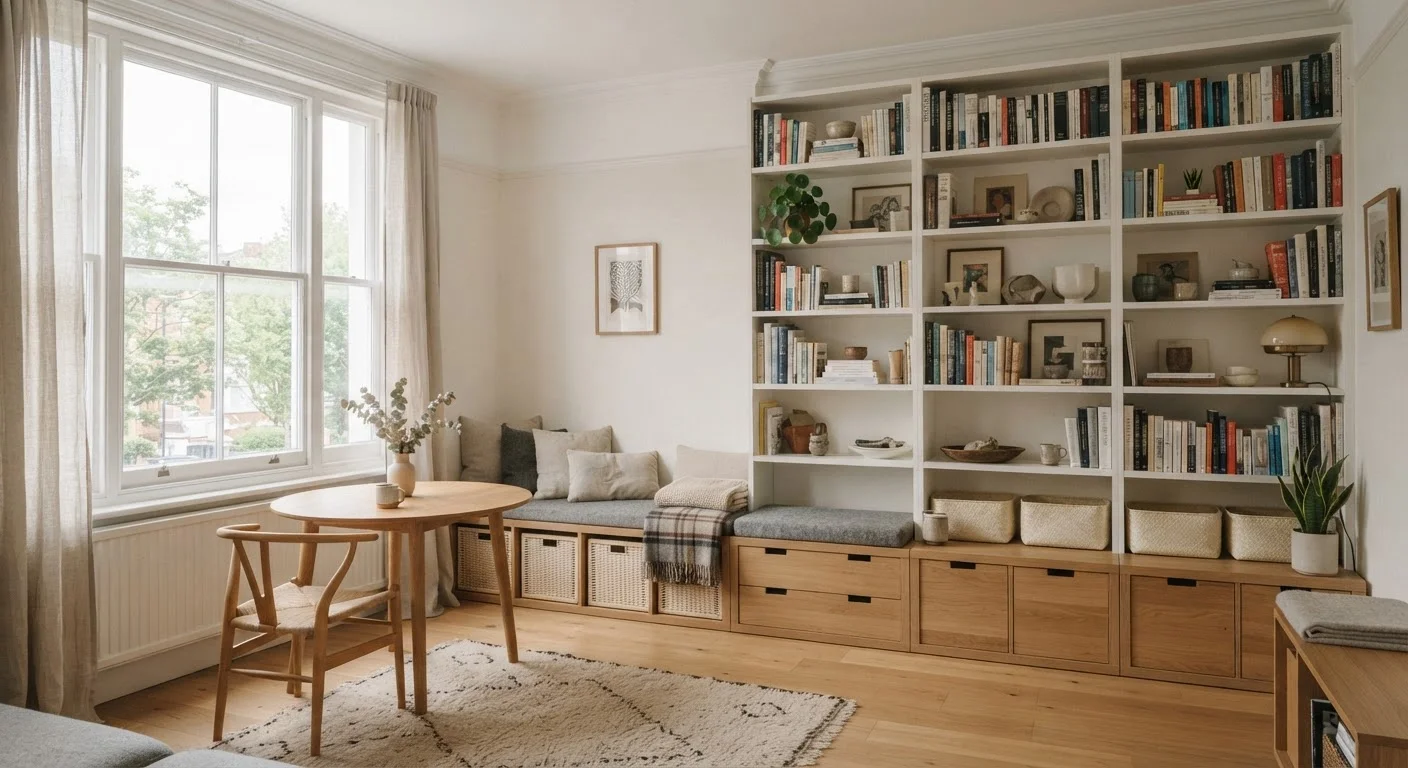
In most small rooms, the most effective strategy is intentional layering: anchor the room with vertical storage for capacity, and supplement with horizontal pieces for accessibility and visual balance.
A practical example: in a small home office, floor-to-ceiling shelves handle reference books, equipment, and archived materials. A desk with shallow drawers and a low two-drawer file cabinet handle everyday tools at working height. Neither approach alone would be as effective.
The same logic applies to bedrooms, living rooms, and entry halls. Tall storage works hardest when it holds things you reach for weekly or seasonally, not daily. Horizontal storage earns its footprint when it handles the things that move in and out of use constantly.
For a deeper look at how systematic storage habits reinforce this balance over time, see storage habits that make small homes more functional. And if your household includes people with varying organizational preferences, organizing shared spaces addresses how to build systems everyone can actually maintain.
A Note on Wall Anchoring and Safety
Tall shelving units — particularly those exceeding five feet in height — should be anchored to wall studs to prevent tipping, especially in households with children. This is not a step to skip for aesthetic reasons. Many jurisdictions also recommend anti-tip hardware as a basic safety standard. If you are unsure how to locate studs or anchor units securely, a handyperson or carpenter can complete this work quickly and inexpensively.