
Open Shelving vs. Closed Cabinets in the Kitchen: What the Trade-offs Really Look Like

Key Takeaways
- Open shelving creates visual openness but demands consistent tidiness and regular dusting.
- Closed cabinets conceal clutter effectively but can make a small kitchen feel boxier.
- Your household's actual daily habits should drive the decision more than aesthetics alone.
- A hybrid approach — some open, some closed — suits many kitchens better than committing to one style.
- Open shelves can make items easier to grab quickly; cabinets protect contents from grease and dust.
Creates visual openness in smaller kitchens
Removing upper cabinet doors eliminates visual bulk and allows sightlines to travel further, making a kitchen feel less enclosed — particularly effective in galley-style or narrow layouts.
Items are immediately visible and accessible
With everything in plain sight, grabbing the right pan or finding a specific spice takes seconds rather than a search through multiple closed compartments.
Encourages intentional, curated organization
Because contents are always visible, open shelving creates a natural incentive to keep only what you use and display it in an orderly way — a habit that can make the whole kitchen more efficient.
Lower installation cost in some renovations
Simple floating shelves typically cost less to install than full upper cabinet runs, making open shelving a practical choice during budget-conscious kitchen updates.
Grease and dust accumulate on exposed surfaces
Kitchen cooking produces airborne grease and moisture that settle on open shelves and stored dishes, requiring more frequent cleaning than items kept behind cabinet doors.
Demands consistent, visible organization
Unlike closed cabinets, open shelves make any disorder immediately visible to anyone in the kitchen — a real consideration in households where everyone has different tidiness habits.
Not suited to storing mismatched or bulky items
Open shelving rewards uniform, attractive storage; practical kitchen clutter — irregular appliances, half-open packages, mismatched containers — looks messy on display and tends to defeat the intended aesthetic.
Some items need protection from light and air
Certain pantry staples, oils, and spices degrade faster when exposed to light and fluctuating air conditions — factors that closed cabinet storage naturally manages.
Our Verdict
Neither open shelving nor closed cabinets is universally superior — each suits a different kind of household and kitchen. Open shelving rewards those who maintain consistent organization habits and enjoy a curated, airy aesthetic. Closed cabinets serve households that prioritize low-maintenance storage and don't want visible clutter as part of their daily environment. For many kitchens, a thoughtful mix of both delivers the most practical and visually balanced result.
Open shelving is best for tidy, organized households that enjoy displaying their kitchenware; closed cabinets suit those who prefer effortless concealment and lower upkeep.
The Core Difference: What Each System Actually Does
Open shelving and closed cabinets both solve the same problem — storing kitchen items — but they do it with very different consequences for your daily life. Open shelves put everything on display, making contents immediately visible and accessible. Closed cabinets hide contents behind doors, creating a cleaner visual surface at the cost of instant visibility.
The choice isn't just aesthetic. It shapes how you organize, how often you clean, and how much mental energy kitchen upkeep takes. Understanding the real trade-offs — rather than making the decision based on a design trend — is what leads to a kitchen that works for years rather than just photographing well.
For a broader look at how storage systems affect everyday functionality, see our guide to storage habits that make homes feel more functional.
Pros and Cons of Open Shelving
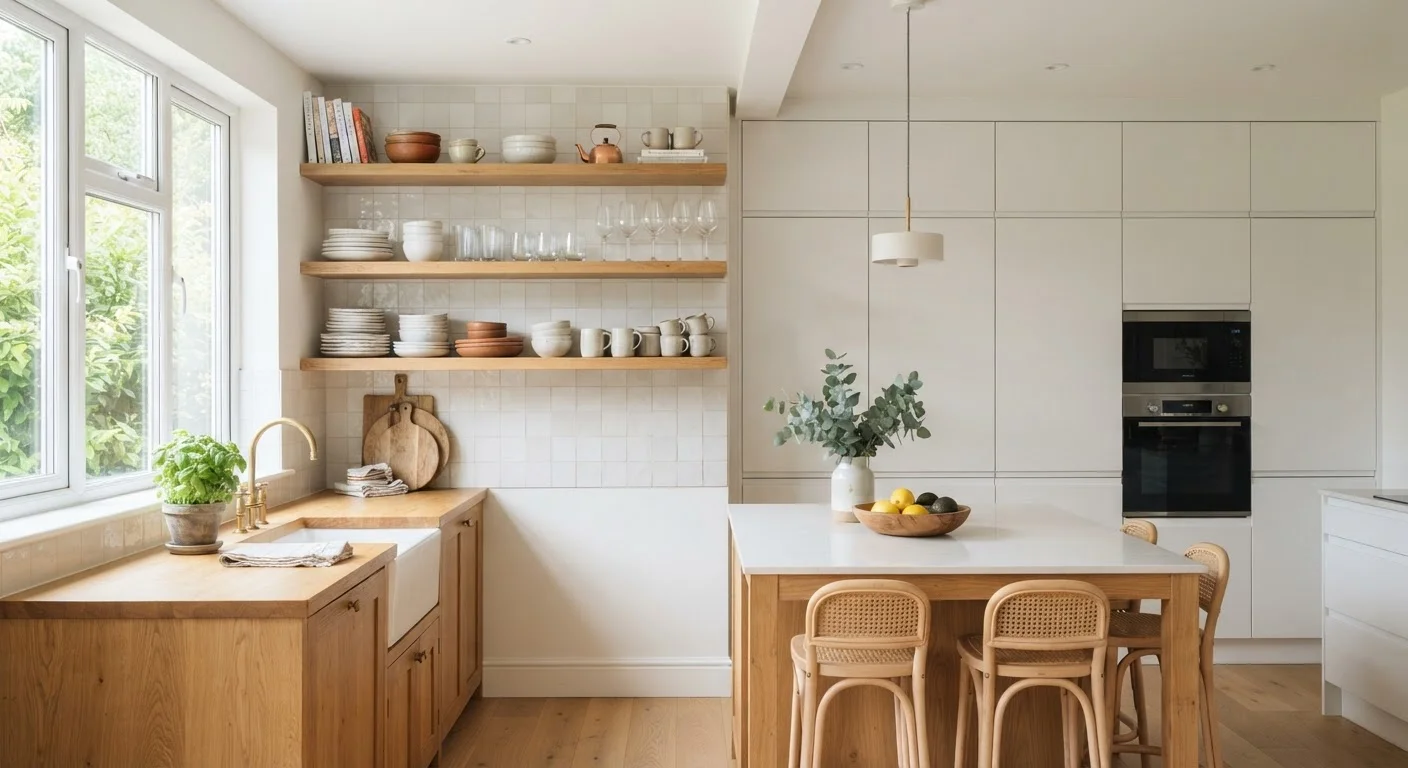
Open shelving has genuine advantages, particularly in kitchens where natural light is limited or the layout feels cramped. Removing upper cabinet doors immediately opens up sightlines and makes a kitchen feel larger. Items stored on open shelves are visible at a glance, which can reduce the time spent searching for the right pot or spice jar.
Creates visual openness in smaller kitchens
Removing upper cabinet doors eliminates visual bulk and allows sightlines to travel further, making a kitchen feel less enclosed — particularly effective in galley-style or narrow layouts.
Items are immediately visible and accessible
With everything in plain sight, grabbing the right pan or finding a specific spice takes seconds rather than a search through multiple closed compartments.
Encourages intentional, curated organization
Because contents are always visible, open shelving creates a natural incentive to keep only what you use and display it in an orderly way — a habit that can make the whole kitchen more efficient.
Lower installation cost in some renovations
Simple floating shelves typically cost less to install than full upper cabinet runs, making open shelving a practical choice during budget-conscious kitchen updates.
The downsides are equally real. Kitchen air carries grease particles and cooking steam, and open shelves collect both. Dishes left on open shelves in an active cooking kitchen will need more frequent washing than those stored behind doors. Dust accumulates faster than most homeowners expect, particularly on surfaces above eye level.
Grease and dust accumulate on exposed surfaces
Kitchen cooking produces airborne grease and moisture that settle on open shelves and stored dishes, requiring more frequent cleaning than items kept behind cabinet doors.
Demands consistent, visible organization
Unlike closed cabinets, open shelves make any disorder immediately visible to anyone in the kitchen — a real consideration in households where everyone has different tidiness habits.
Not suited to storing mismatched or bulky items
Open shelving rewards uniform, attractive storage; practical kitchen clutter — irregular appliances, half-open packages, mismatched containers — looks messy on display and tends to defeat the intended aesthetic.
Some items need protection from light and air
Certain pantry staples, oils, and spices degrade faster when exposed to light and fluctuating air conditions — factors that closed cabinet storage naturally manages.
There's also a psychological dimension: open shelving essentially makes your organizational system a permanent part of your kitchen's visual design. If your household struggles to return items to consistent places — a common reality in shared homes — open shelves can feel chaotic rather than inviting. See our article on organizing shared spaces for strategies when household members have different tidiness standards.
Pros and Cons of Closed Cabinets
Closed cabinets are the default in most American kitchens for practical reasons. They protect contents from grease, steam, and dust, meaning dishes stay cleaner longer between uses. They also make it straightforward to store mismatched items — odd-sized appliances, half-used bags, and the general accumulation of kitchen life — without those items becoming visual noise.
Cabinet Depth and Accessibility
Standard upper kitchen cabinets are typically 12 inches deep, while base cabinets run around 24 inches. Deeper base cabinets in particular can create dead zones at the back where items get lost or forgotten. Pull-out inserts and drawer organizers help address this — see our guide to storage tools for options suited to cabinet interiors.
The drawback of closed cabinets is primarily spatial and perceptual. Full upper cabinetry, particularly in darker finishes, can make a kitchen feel enclosed. In smaller kitchens, a wall of cabinet doors can create a tunnel-like effect that no amount of lighting fully corrects.
Cabinets also have a tendency to become disorganized over time precisely because that disorganization is hidden. Items pushed to the back of deep shelves go unused and forgotten — a dynamic that affects food waste as much as kitchen efficiency. Our guide on organizing a kitchen to reduce food waste explores how storage decisions connect directly to shopping and waste habits.
When a Hybrid Approach Makes Sense
Many kitchens benefit from a deliberate combination of both systems. A common approach is to keep lower cabinets closed — where bulkier, less decorative items like pots, pans, and cleaning supplies live — while using open shelving for upper storage of everyday dishes, glasses, and items that benefit from quick access.
Another strategy is reserving open shelving for a single, intentional display zone — a run of shelves on one wall — while keeping the rest of the kitchen cabinetry closed. This gives the aesthetic benefit of open shelving without committing the entire kitchen to its upkeep demands.
If you're weighing how to maximize a compact kitchen, our comparison of vertical and horizontal storage approaches offers useful context for thinking about shelf placement and depth.
~30%
Cabinet space commonly unused in typical kitchens
Kitchen organization studies consistently find that a significant portion of cabinet storage holds items used rarely or never, suggesting that the type of storage matters less than how it is organized.
2–3×
More frequent cleaning open shelves may require
Interior designers and kitchen specialists commonly note that open shelves in active cooking kitchens need wiping down several times more often than the interiors of closed cabinets.
The right split depends on what you actually store, how often you cook, and how much cleaning time you're genuinely prepared to invest. A kitchen designed around honest self-assessment will serve you better than one designed around an aspirational version of your habits.