

Key Takeaways
- Shared households need organizing systems designed around actual behaviors, not ideal ones.
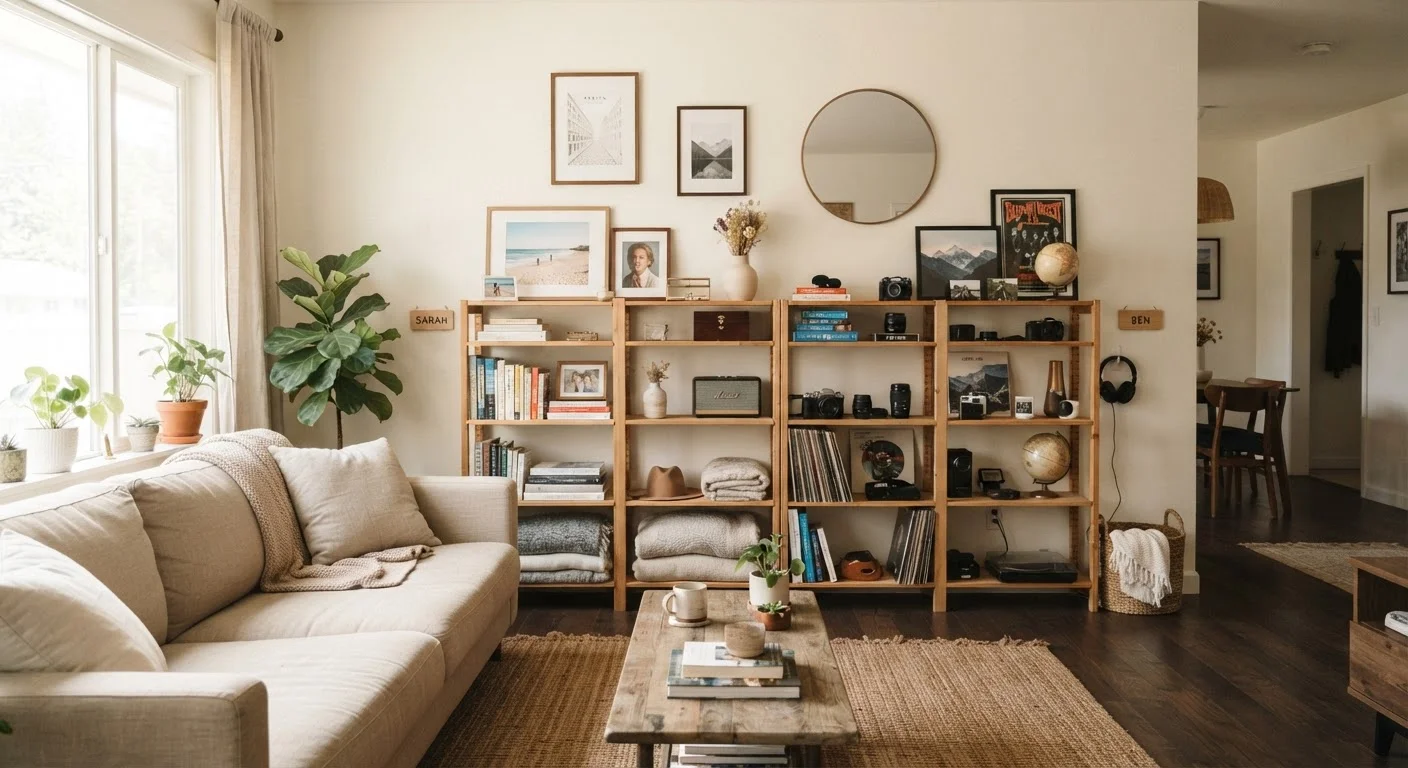
- Defining clear personal zones reduces friction without requiring everyone to share identical standards.
- Low-friction storage — where putting things away is easier than leaving them out — works across tidiness levels.
- Regular, brief household check-ins prevent small clutter disputes from becoming entrenched habits.
- Flexible systems with built-in tolerance for variation are more durable than rigid perfection-based ones.
Why One-Size-Fits-All Organizing Fails Shared Households
Most organizing advice is written as though one person controls the entire home. In reality, most households include partners, roommates, children, or extended family — each with different tolerances for clutter, different daily rhythms, and different ideas about what "clean" means. When a system is built around the most orderly person's standards, it fails the moment anyone else uses it.
The goal isn't to convert every household member into a minimalist or to enforce a single standard. It's to design systems that are easy enough to use that most people will use them most of the time. That shift in framing — from compliance-based to behavior-based organizing — is what separates systems that hold from those that collapse within a week.
For a deeper look at why even well-intentioned organizing efforts unravel, see why organized homes don't stay that way.
Proven Practices for Organizing Across Different Standards
The practices below are drawn from household management principles that prioritize durability over aesthetics. Apply them selectively based on your household's specific friction points.
Design storage around actual habits, not aspirational ones
Systems built around how people actually move through a space get used; systems built around how they should behave get ignored. Observing where things actually land — keys, bags, mail, shoes — tells you where storage is genuinely needed. Placing it there removes the friction of the extra step that causes pile-ups.
Establish clear personal zones within shared spaces
When everyone owns a defined area, the implicit rules about shared surfaces become much clearer. Personal zones also reduce defensiveness — each person has somewhere that operates on their own terms, which makes it easier to agree on minimum standards for common areas.
Make putting things away the easiest option
Low-friction storage — lids that come off easily, bins without complicated sorting, open containers in high-traffic spots — works across tidiness levels because it removes the small resistance that causes avoidance. If returning something takes more effort than leaving it out, most people will leave it out.
Set shared minimum standards, not maximum ones
Shared households function better when the standard for common spaces is "functional and navigable" rather than "guest-ready at all times." A minimum standard — dishes washed within 24 hours, counters cleared before bed — is easier to sustain and easier to agree on than a perfection benchmark that only one person values.
Schedule brief, regular resets rather than relying on ongoing tidiness
Expecting continuous maintenance from people with different standards is a source of chronic resentment. A shared 15-minute reset — same time each week — distributes the responsibility and provides a predictable endpoint, which is more sustainable than open-ended tidying expectations.
Audit and simplify intake before reorganizing storage
Shared households accumulate more items faster than solo ones. Organizing systems that aren't sized for actual volume will overflow regardless of how well-designed they are. Reducing what enters the home — or establishing clear rules about it — prevents the system from being outpaced by incoming clutter.
Quick Wins You Can Put in Place This Week
Not every improvement requires a whole-household conversation. Some changes reduce friction immediately — and when people notice something working, it builds momentum for larger shifts.
Negotiating Shared Standards Without Resentment
The hardest part of organizing a shared home isn't the storage — it's the conversation. Tidiness preferences are often tied to deeper values: respect, autonomy, comfort, and how people were raised. Framing organizing discussions around shared outcomes rather than personal habits tends to go further.
Focus on the specific problem, not the person. "Mail piling up on the counter makes it hard to find bills" is more productive than "you never put anything away." Identifying the actual friction point — the thing that genuinely disrupts daily life — keeps the conversation grounded.
It also helps to separate shared spaces from personal ones. A bedroom, a desk corner, or a dedicated shelf can operate under the occupant's own rules. Shared spaces like the kitchen, entryway, and living room benefit from agreed-upon minimum standards — not a perfect system, just a workable floor.
Understanding how zoning can divide rooms into functional areas gives households a structural tool for making these boundaries concrete rather than abstract. You can also explore common organizing myths that may be shaping unrealistic expectations in your household.