

Key Takeaways
- Vertical space is almost always underused — walls and door backs are prime storage real estate.
- Multi-purpose furniture consistently outperforms single-use pieces in tight floor plans.
- Zoning — assigning specific functions to defined areas — reduces daily friction and visual clutter.
- Intake rules like one-in-one-out prevent new clutter from undoing organized systems.
- Consistency of habit matters more than the initial organizing effort.
Why Small Homes Demand Smarter Systems
Square footage sets a ceiling on what you can own, but it doesn't determine how functional your space feels day-to-day. The difference between a cramped home and a comfortable one is almost always a matter of systems — how deliberately storage is designed, and how consistently it's used.
The habits below aren't about buying more containers or doing a one-time purge. They're about building an environment where things have a logical home, where retrieval is effortless, and where clutter doesn't quietly accumulate. If you're also curious about common misconceptions that trip people up, home organization myths worth questioning are worth reading alongside this guide.
Claim Your Vertical Real Estate
Most small-home storage problems are actually floor-space problems. Walls, however, extend several feet above eye level and are often completely empty. Installing shelving from mid-wall up to ceiling height — in living rooms, hallways, and even bathrooms — multiplies usable storage without consuming a single square foot of floor area.
Door backs are another overlooked surface. Over-the-door organizers on pantry, bedroom, and bathroom doors can hold cleaning supplies, shoes, accessories, and dry goods without any construction. For a thorough comparison of the tradeoffs involved, vertical vs. horizontal storage in small spaces lays out when each approach makes sense.
Walls extending to ceiling height offer storage capacity that floor plans simply can't match.
Invest in Furniture That Does Double Duty
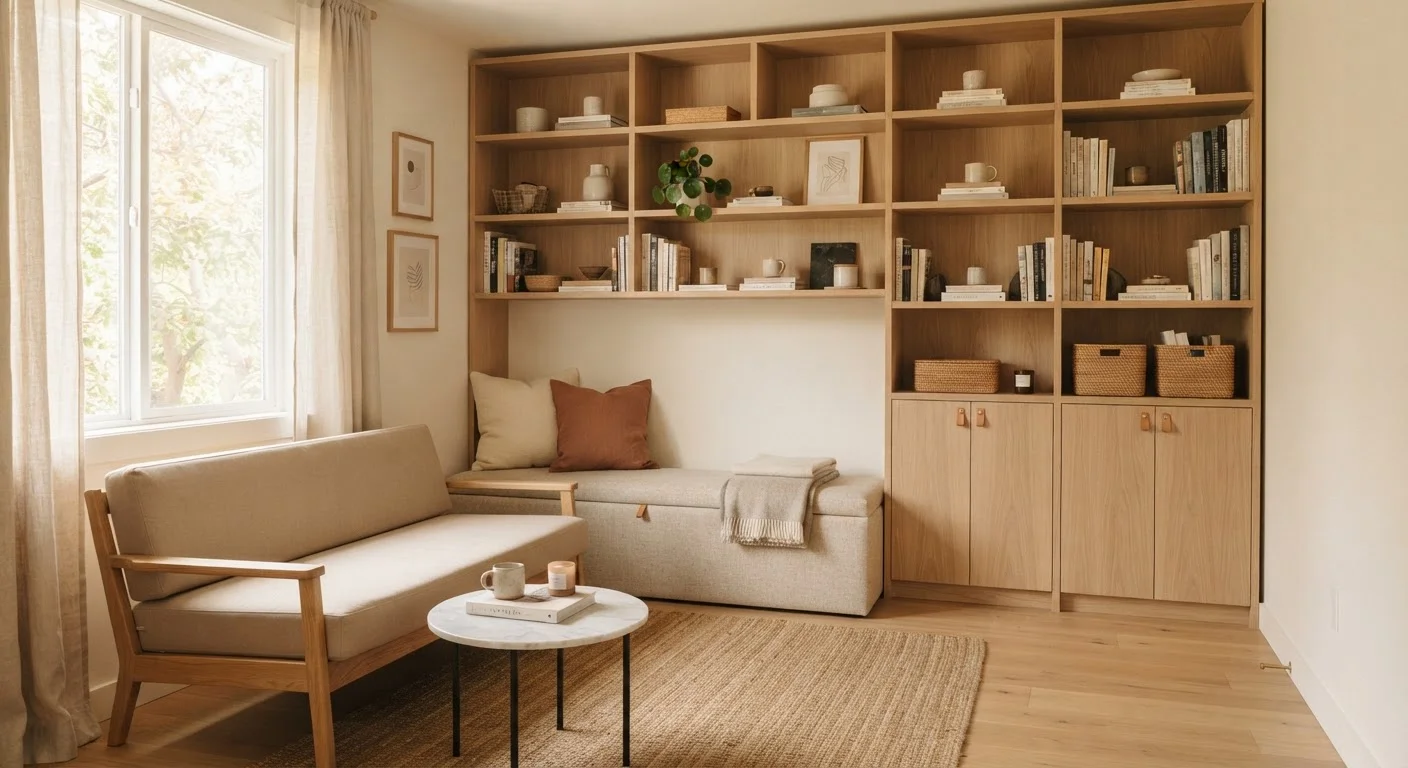
In a small home, every piece of furniture should justify its footprint. A storage ottoman replaces both a coffee table and a linen closet. A bed frame with drawers eliminates the need for a separate dresser. A bench at the entryway provides seating, shoe storage, and a drop zone simultaneously.
Before purchasing any new furniture, ask what single-purpose item it could replace. If the answer is nothing, it's worth reconsidering whether you need it at all. This isn't about minimalism as an aesthetic — it's about making every square foot earn its keep.
Every piece of furniture in a small home should replace something else, not just add to it.
Zone Every Room for Its Real-World Use
Zoning means assigning specific functions to defined areas within a room — even when rooms overlap in purpose. A living room might have a reading zone, a TV zone, and a work zone, each with its own storage logic. Items belonging to each zone stay within it, which means less hunting and fewer stray objects drifting to surfaces.
This principle is especially valuable in studio apartments and open-plan layouts where rooms blur together. Even a simple visual boundary — a rug, a shelving unit, a change in lighting — reinforces zones and keeps associated clutter contained. For a deeper look at how zoning reduces daily friction, zoning as an organizing principle is worth exploring.
Defined zones mean items have a logical home, which dramatically reduces the time spent searching.
Apply Intake Rules Before Clutter Accumulates
Storage systems fail when inflow outpaces capacity. Intake rules — simple personal policies about what enters the home — are the most underrated clutter-prevention tool available. The one-in-one-out rule (bringing in one item means removing one of similar type) is the most well-known, but it's one of several approaches that work in practice.
Other effective intake policies include a 48-hour hold before purchasing non-essentials, a seasonal review of clothes and equipment, and a designated holding box for items you're uncertain about donating. intake rules that prevent clutter from creeping back covers these in detail. In the kitchen specifically, intake discipline also has a direct effect on food waste — something kitchen organization for less food waste explores practically.
Controlling what enters the home is more effective than repeatedly reorganizing what's already there.
Match Storage Tools to Actual Behavior
A storage solution only works if it matches how people actually behave in a space — not how they intend to behave. Shallow open baskets work well for items grabbed quickly and frequently. Deep bins work for seasonal or low-frequency items. Drawer dividers prevent the inevitable collapse of organized drawers into jumbled ones over time.
Choosing the right container for the right context is a practical skill. matching storage tools to the job gives a clear breakdown of what each type of storage tool is suited for and where it commonly gets misused. Closed cabinet versus open shelf decisions in the kitchen follow their own logic too — the trade-offs between open shelving and closed cabinets covers that terrain honestly.
Storage tools that match actual behavior get used; those that require new behavior get abandoned.
Run a Seasonal Audit, Not a One-Time Purge
A single large decluttering session can reset a space, but it doesn't maintain it. Homes accumulate over time, and a quarterly or seasonal audit — brief, focused, and systematic — catches drift before it compounds. Even 30 minutes per zone, four times a year, is enough to keep storage systems from being overwhelmed.
During each audit, the questions are simple: What hasn't been used since the last audit? What's being stored somewhere inconvenient relative to where it's actually needed? What's being duplicated unnecessarily? These aren't moral judgments about possessions — they're practical questions about whether your storage is still calibrated to how you actually live.
Regular small audits prevent the buildup that makes large decluttering sessions feel necessary.
Keeping the System Working Long-Term
The gap between a tidy home and a perpetually messy one usually isn't effort — it's system design. When storage is intuitive, putting things back requires almost no decision-making. When it isn't, even motivated people drift back to drop zones and surface piles.
Start With One Habit, Not Six
Attempting to overhaul every storage system at once is the most common reason home organization efforts stall. Pick the single habit from this list that addresses your biggest friction point — likely the area where you spend the most time searching for things or clearing surfaces. Embed that habit until it runs automatically before adding another. Sustainable organization is built one reliable behavior at a time.
If you share your space with others who have different tidiness standards, the strategies for organizing shared spaces article covers how to build systems that multiple people will actually use. And for a deeper look at why organized homes tend to unravel — and what structurally prevents it — see why organized homes don't stay that way.
Start with one habit from the list above, embed it until it's automatic, then layer in the next. That compounding approach is what separates homes that feel reliably functional from those that cycle through chaos and catch-up tidying.