

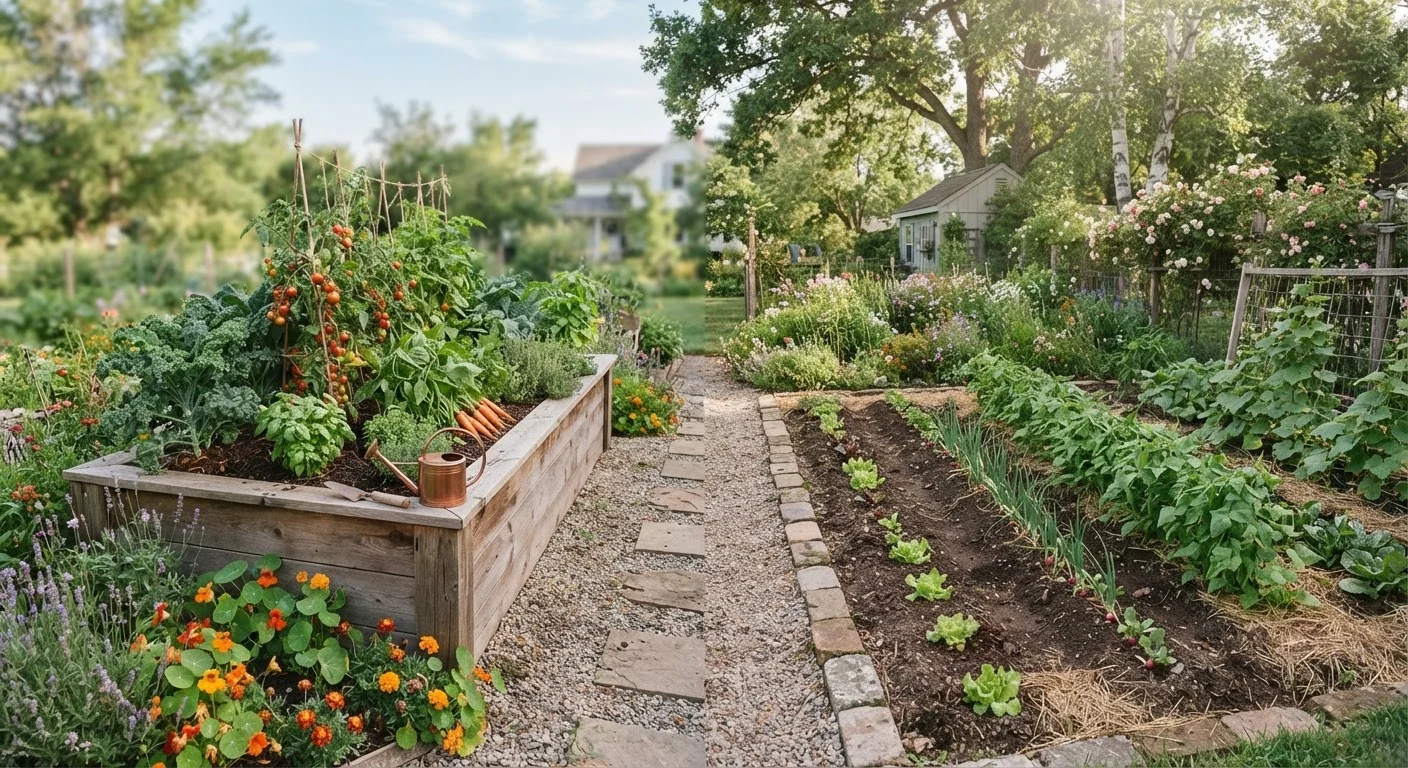
Key Takeaways
- Raised beds offer better drainage and soil control but require upfront material and filling costs.
- In-ground planting suits larger plantings and naturally fertile soils, with minimal setup expense.
- Raised beds tend to warm faster in spring, giving crops a head start in cooler climates.
- In-ground gardens can support deeper-rooted plants like fruit trees and large shrubs more easily.
- Weed pressure and soil compaction are typically lower in raised beds than in-ground plots.
- Neither method is universally superior — the right choice depends on your site, budget, and goals.
Option A
Raised Beds
The controlled, high-performance growing environment.
Best for: Gardeners dealing with poor native soil, limited mobility, or wanting precise control over growing conditions.
Option B
In-Ground Planting
The traditional, expansive approach to garden growing.
Best for: Homeowners with good existing soil who want to grow at scale without the upfront material cost.
If your yard has compacted, clay-heavy, or contaminated soil
Raised Beds
Raised beds let you bypass problematic native soil entirely by filling with a custom growing mix, giving plants ideal conditions from day one.
If you want to grow at scale or plant large crops like corn or sprawling squash
In-Ground Planting
In-ground plots offer unlimited horizontal space and suit large root systems far more affordably than filling multiple raised beds.
If you have back, knee, or mobility concerns
Raised Beds
A raised bed at the right height significantly reduces bending and kneeling, making gardening more accessible over the long term.
If you already have healthy, well-draining loam soil
In-Ground Planting
Good native soil needs only modest amendment — there's little reason to incur the cost of building and filling raised beds.
If you're gardening in a rental or want to take your garden with you
Raised Beds
Freestanding raised beds can be dismantled and moved, making them a practical choice when long-term land access is uncertain.
Soil Control and Drainage
One of the clearest dividing lines between raised beds and in-ground planting is how much control you have over what your plants grow in. With raised beds, you fill the structure with a custom mix — typically a blend of topsoil, compost, and an aerating amendment like perlite or aged wood chips. This means you can dial in the drainage, texture, and nutrient profile before a single seed goes in.
In-ground planting works with whatever native soil your yard provides. In some regions, that's excellent loam that needs only light compost to thrive. In others, it's compacted clay or sand that drains poorly and lacks organic matter. Understanding your baseline is essential either way — see our guide on soil health and how to test it before committing to either method.
Drainage is where raised beds particularly shine. Because the growing medium sits above grade, excess water moves through more freely. This reduces the risk of root rot and allows planting earlier in wet springs. In-ground plots in heavy soils can remain waterlogged well into the season unless you invest in drainage work or raised-row techniques.
| Criterion | Raised Beds | In-Ground Planting |
|---|---|---|
| Upfront cost | Moderate to high (materials + fill) | Low (amendments only) |
| Soil control | Full — custom mix | Limited by native conditions |
| Drainage | Excellent | Varies by soil type |
| Weed pressure | Lower, especially early on | Higher — open soil invites weeds |
| Scalability | Limited by frame size and cost | Easily expanded |
| Soil warming in spring | Faster — up to 10°F warmer | Slower in cold climates |
| Deep-rooting plant support | Limited by bed depth | Unrestricted |
| Accessibility | High — reduced bending | Lower — ground-level work |
| Portability | Can be disassembled | Fixed to site |
Cost, Setup, and Long-Term Maintenance
Upfront cost is a genuine consideration. Building raised beds requires purchasing materials for the frame — cedar, composite lumber, or galvanized metal are common choices — plus enough quality growing medium to fill the volume. A single 4×8-foot bed filled 12 inches deep requires roughly 32 cubic feet of soil mix. Multiply that across several beds and costs accumulate quickly.
In-ground planting's main startup costs are soil amendment (compost, aged manure) and basic tools. If your soil is workable, this path is considerably cheaper to begin. That said, in-ground beds often require more ongoing effort: repeated loosening to prevent compaction from foot traffic, annual heavy composting to replenish nutrients, and more vigilant weed management as seeds blow in and germinate freely in open ground.
Raised beds naturally discourage soil compaction because you never walk inside them. They also tend to have fewer weed problems early on, though weed seeds will eventually arrive by wind or mulch. The contained space is also easier to cover with row cloth or netting for pest and frost protection — a practical advantage when planning a garden that stays productive year-round.
Plant Suitability and Yield
Raised beds tend to produce well for vegetables, herbs, strawberries, and shallow-rooted flowers — crops where 10–18 inches of quality soil is sufficient. The warmer soil temperature (raised beds can warm 8–10°F faster than ground soil in spring) gives cool-season crops a measurable head start, which matters in climates with short growing windows.
In-ground planting is better suited to deep-rooting plants: fruit trees, large perennial shrubs, long taproots like parsnip and burdock, or sprawling plants like pumpkins and watermelons that need unrestricted lateral spread. It also supports large plantings of a single crop — a row of corn or a bed of garlic — at a scale that would be expensive to replicate in raised beds.
Companion planting strategies work in both systems, though the close spacing typical in raised beds can make it easier to pair compatible plants deliberately. Our guide on companion planting techniques covers how thoughtful pairings can reduce pest pressure regardless of which method you use. For drought-prone areas, in-ground plants can sometimes access subsoil moisture that raised beds — which dry out faster — cannot, making mulching and irrigation planning more important for raised-bed growers. See drought-tolerant gardening principles for strategies that apply to both methods.
New to Gardening? Start Small Either Way
Whether you choose raised beds or in-ground planting, beginning with a modest footprint reduces overwhelm and lets you learn your site before scaling up. A single 4×8-foot raised bed or a 50-square-foot in-ground plot gives you meaningful growing experience without the commitment of a large build-out. Our first-year gardening roadmap walks through planning and setup in practical detail.