

Key Takeaways
- Healthy soil depends on biology, chemistry, and physical structure — all three work together.
- Organic matter is the single most versatile input for improving almost any soil type.
- A simple home soil test reveals pH and nutrient gaps before you buy anything.
- Overworking soil destroys beneficial structure and harms the microbial communities plants rely on.
- Composting is one of the most effective and low-cost ways to build soil health over time.
Soil Health
Soil health refers to the ongoing capacity of soil to function as a living ecosystem — supporting plant growth, filtering water, cycling nutrients, and sustaining the billions of microorganisms that make all of this possible. Healthy soil is not simply dirt; it is a complex, dynamic environment made up of minerals, organic matter, water, air, and living organisms working together. When soil health declines, plants struggle regardless of how much water or fertiliser they receive.
Soil scientists often describe health in terms of biological activity (microbial biomass and diversity), chemical properties (pH, nutrient availability, cation exchange capacity), and physical structure (aggregate stability, porosity, and water-holding capacity). All three dimensions interact and must be considered together.
What Soil Is Actually Made Of
Most gardeners think of soil as a backdrop — something plants sit in. In reality, it is the most active part of any garden. A single teaspoon of healthy garden soil may contain hundreds of millions of bacteria, along with fungi, protozoa, nematodes, and other organisms that form an intricate food web. These organisms break down organic matter, release nutrients, suppress certain pathogens, and help build the physical structure that gives good soil its characteristic crumble.
Soil has four main components: mineral particles (sand, silt, and clay in varying ratios), organic matter, water, and air. The proportion of each determines your soil's texture and drainage. Sandy soils drain quickly but struggle to hold nutrients; clay soils retain moisture and nutrients but compact easily and drain slowly. Loam — a roughly balanced mix of sand, silt, and clay — is the texture most gardeners aim for, though all soil types can be improved significantly with organic matter.
Understanding your starting point matters. If you're planning your first garden, knowing whether you have sandy, clay, or loamy soil shapes every decision that follows, from watering schedules to planting depth.
The Three Pillars: Biology, Chemistry, and Structure
Soil health researchers typically describe three interconnected dimensions, and all three need to be functioning for a garden to truly thrive.
Biology
Soil biology — the community of bacteria, fungi, worms, and other organisms — drives nutrient cycling. Mycorrhizal fungi, for instance, form partnerships with plant roots and dramatically extend their reach for water and phosphorus. Disrupting this community through heavy pesticide use, excessive tilling, or leaving soil bare over winter can take years to recover.
Chemistry
Soil chemistry governs which nutrients are available to plants and in what form. pH (the measure of acidity or alkalinity on a scale of 0–14) is the most influential chemical factor. When pH is outside a plant's preferred range, nutrients that are physically present in the soil become chemically locked and unavailable, no matter how much fertiliser you add. Most garden vegetables perform well in a pH range of 6.0–7.0.
Physical Structure
Structure refers to how soil particles clump together into aggregates, creating pore spaces for air and water movement. Good structure means roots can penetrate easily, water drains without waterlogging, and soil doesn't crust after rain. Compaction — caused by foot traffic, heavy machinery, or working wet soil — collapses these pore spaces and is one of the most common, underappreciated problems in home gardens.
~1 billion
Bacteria per teaspoon of healthy soil
According to USDA Natural Resources Conservation Service estimates, a single teaspoon of productive soil may contain close to a billion bacteria alone.
5%
Organic matter in ideal garden soil
Soil scientists generally consider 3–5% organic matter content a healthy target for productive garden beds, though many suburban soils fall well below this.
6.0–7.0
Optimal pH range for most vegetables
The majority of common vegetable crops reach peak nutrient uptake in this slightly acidic to neutral pH range, as established in standard horticultural guidelines.
How to Test Your Soil at Home
Before adding any amendment, it helps to know what your soil actually needs. Guessing can lead to over-correcting — raising pH when it's already high, for example, or adding nutrients that are already abundant.
Inexpensive home test kits are widely available and measure pH along with basic macronutrient levels (nitrogen, phosphorus, potassium). For a more detailed picture — especially useful before establishing a new bed — many US states offer mail-in testing through their cooperative extension service, often at low cost. These tests typically include recommendations tailored to your specific results.
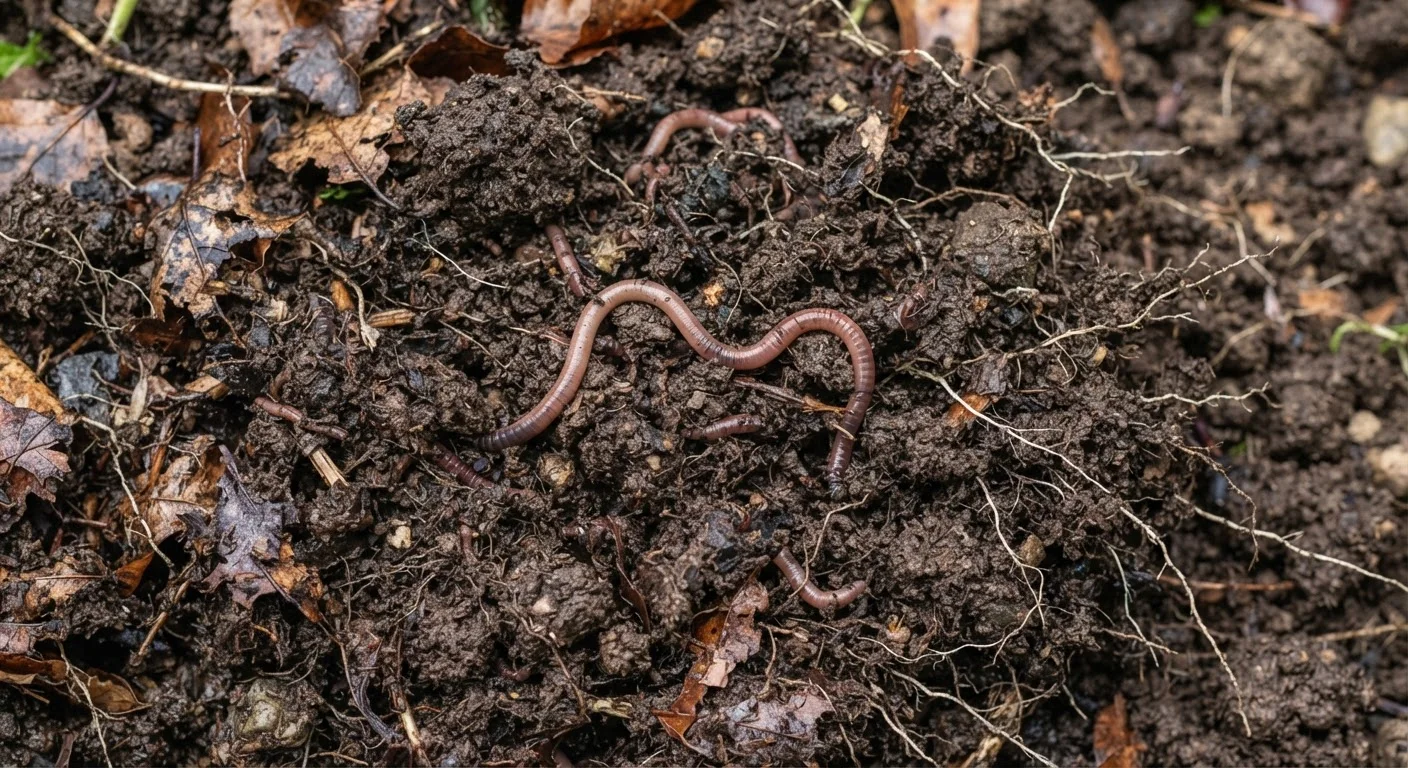
A few simple physical observations can also tell you a lot. Dig down six inches and look at the color and texture. If soil crumbles loosely and smells earthy, microbial activity is present. If it forms a dense, sticky clod or has a gray or mottled appearance, drainage or compaction may be a problem. Digging up ten minutes after rainfall and counting earthworms is another informal gauge — five or more per square foot generally signals healthy biology.
Test Before You Amend
Resist the urge to add lime, sulfur, or fertiliser based on guesswork. A basic soil test costs very little and prevents the common mistake of over-correcting a problem that doesn't exist. Many US cooperative extension offices offer subsidised testing — search your state's extension service website to find local options.
Building Soil Health Over Time
The good news is that soil health is improvable, even from a poor starting point. Progress takes seasons rather than weekends, but the inputs are simple and compound over time.
Organic matter is the most versatile lever. Compost, aged manure, leaf mold, and cover crops all feed soil biology while improving both drainage (in clay) and water retention (in sand). If you're not already composting, our guide to composting at home walks through setting up a system that turns kitchen and garden waste into a genuine soil-building resource.
Mulching is often overlooked. A two- to three-inch layer of wood chips, straw, or shredded leaves on the soil surface moderates temperature, reduces moisture loss, suppresses weeds, and slowly decomposes to feed the organisms below. It mimics the natural leaf-litter layer that forest soils maintain year-round.
Minimising disturbance is equally important. Every time soil is tilled, fungal networks are severed and the layered microbial communities built up over seasons are mixed and disrupted. Where possible, shift to a no-dig approach: add amendments on the surface and let organisms incorporate them. This is particularly relevant when weighing raised beds versus in-ground growing, since raised beds allow you to build soil composition from the start with minimal disturbance later.
Watering habits also affect soil health in ways many gardeners underestimate. Overwatering compacts surface layers and drives out oxygen; consistently shallow watering discourages deep root growth. For a closer look at common mistakes, see garden watering myths that quietly harm plants.