

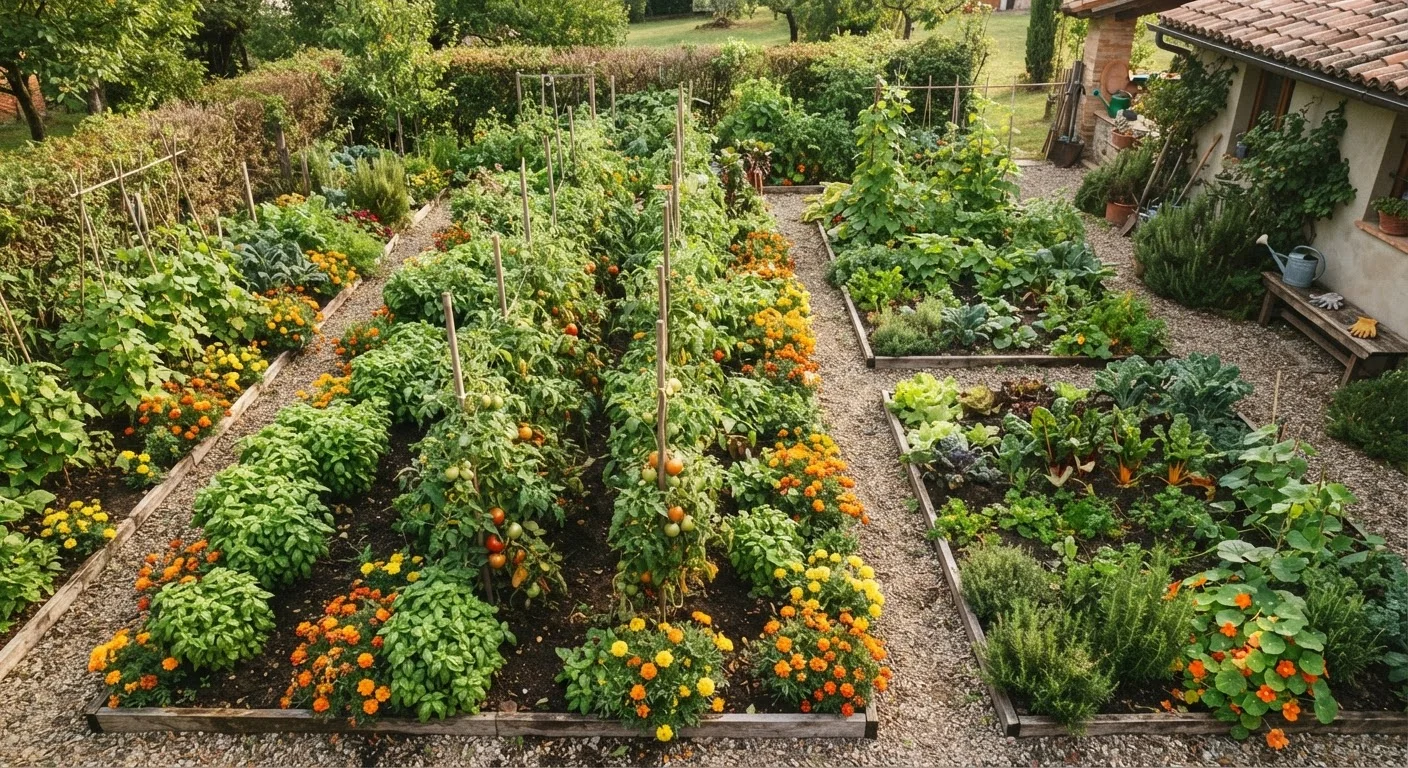
Key Takeaways
- Companion planting uses plant relationships to reduce pests, improve soil, and support pollinators.
- Some pairings, like tomatoes with basil, have strong practical evidence behind them.
- Not all plant combinations are beneficial — some can compete for the same nutrients or light.
- The practice works best alongside healthy soil management and good garden planning.
- Even small gardens and raised beds can benefit from thoughtful plant pairings.
Companion Planting
Companion planting is the practice of growing different plants near each other to create mutually beneficial relationships. Some pairings deter harmful insects, others attract pollinators, and some improve the soil or provide physical shelter for neighboring plants. It's a low-input strategy rooted in ecological principles that gardeners have used for centuries.
The mechanisms behind companion planting include allelopathy (chemical suppression of pests or competing plants), habitat modification for beneficial insects, and nitrogen cycling through legume root nodules.
Why Plant Relationships Matter
Gardens are not simply collections of individual plants — they're ecosystems where neighbors influence each other constantly. Root systems share soil chemistry, foliage creates microclimates, and flowering plants attract or repel specific insects. Companion planting asks you to take those relationships seriously and plan them deliberately.
The concept draws on principles that Indigenous agricultural traditions, particularly the Three Sisters method of growing corn, beans, and squash together, demonstrated long before modern agronomy named them. The corn provides a climbing structure for beans, the beans fix atmospheric nitrogen into the soil, and the squash spreads wide leaves that shade out weeds and retain moisture — each plant contributing something the others benefit from.
Understanding these dynamics doesn't require advanced botany. It starts with knowing what each plant needs and what it naturally produces or deters. Good soil health provides the foundation on which companion relationships can actually function — without it, even well-matched pairs will underperform.
How Companion Planting Works in Practice
Companion planting influences your garden through several distinct mechanisms. Knowing which one applies to a pairing helps you place plants strategically rather than randomly.
Pest Deterrence
Certain plants emit compounds that confuse, repel, or mask the scent of target crops from pests. Marigolds (Tagetes species) are among the most studied examples — they release a substance from their roots that is toxic to root-knot nematodes, and their scent may deter aphids and whiteflies from nearby vegetables. Planting them around tomatoes, peppers, or eggplant is a widely practiced application.
Attracting Beneficial Insects
Flowers like dill, fennel (planted away from other vegetables), and sweet alyssum attract parasitic wasps and hoverflies that prey on aphids and caterpillars. Allowing some herbs to bolt — go to flower — rather than cutting them back serves a similar purpose.
Physical and Microclimate Support
Taller plants can shade shorter, heat-sensitive crops during summer. Lettuce grown beneath pole beans or trellised cucumbers often withstands summer heat longer than lettuce grown in open sun. Meanwhile, dense low-growing plants like thyme or clover used as ground cover can suppress weeds and retain soil moisture.
Nitrogen Fixation
Legumes — beans, peas, clover — work with soil bacteria to convert atmospheric nitrogen into a form plants can use. Growing legumes alongside or before nitrogen-hungry crops like corn or brassicas can reduce the need for supplemental fertilizer over time.
Start with one or two pairings
Trying to companion-plant your entire garden at once can become overwhelming and makes it hard to observe what's actually working. Pick one or two well-documented pairings — like marigolds with tomatoes or nasturtiums with brassicas — and track results over a full growing season before expanding. This gives you reliable information specific to your garden's conditions.
Pairings Worth Knowing — and Some to Avoid
Not every combination is beneficial. Here are some reliable pairings and a few that cause problems.
Classic Beneficial Pairings
- Tomatoes + Basil: Widely used; basil may repel thrips and improve air circulation when plants are spaced properly. Many growers also find it a practical use of space.
- Brassicas + Nasturtiums: Nasturtiums act as a trap crop, drawing aphids away from cabbages and kale onto themselves, where you can remove them.
- Carrots + Onions: The scent of each is thought to deter the other's primary pest — carrot fly and onion fly, respectively.
- Corn + Beans + Squash (Three Sisters): The original well-documented companion system, offering structural, nutritional, and weed-suppression benefits simultaneously.
Combinations to Avoid
- Fennel + Most Vegetables: Fennel releases allelopathic compounds that inhibit the growth of many common vegetables, including tomatoes and peppers. Keep it isolated or grow it in a container.
- Onions + Beans: These are reported to suppress each other's growth; keep them in separate beds or areas.
- Brassicas + Strawberries: Both are heavy feeders that compete aggressively in close proximity.
If you're planning your layout and weighing bed options, see our comparison of raised beds vs. in-ground planting for advice on which setup supports the most flexible companion strategies.
Building Companion Planting Into Your Garden Plan
The most practical way to adopt companion planting is to incorporate it during your annual planning — not as an afterthought once plants are already in the ground. Sketch your beds, identify your main crops, and then identify which support plants (pest deterrents, nitrogen fixers, pollinator attractors) are compatible and where they fit spatially.
Pay attention to light and spacing needs. A companion plant that shades out your main crop is more hindrance than help. Taller companions should generally go on the north side of beds in the Northern Hemisphere to avoid casting shade over shorter plants.
Rotate your companion plantings along with your main crops from season to season. If you grew beans alongside corn this year, moving the bean section to where your brassicas will grow next year lets the nitrogen-enriched soil benefit a different crop family.
For those just starting out, our first-year garden roadmap covers how to build planning habits that make integrating companion planting straightforward from the beginning. And if you're working with limited sun, the principles still apply — see our shade garden guide for pairings suited to lower-light conditions.
3-in-1
Functions of the Three Sisters companion system
Corn, beans, and squash together provide structural support, nitrogen fixation, and weed suppression simultaneously — a system refined over generations by Indigenous North American farming traditions.
~30%
Potential reduction in pest pressure with companion planting
Some research on intercropping systems suggests pest populations can be meaningfully reduced through companion strategies, though results vary widely by crop type and environment.