

Key Takeaways
- Hardscaping provides structure and drainage control; softscaping delivers seasonal color and ecological function.
- Most successful landscapes use both elements in deliberate proportion rather than favoring one exclusively.
- Climate, maintenance capacity, and intended use should guide how much of each element you incorporate.
- Hardscaping typically involves higher upfront costs but lower ongoing labor; softscaping costs spread over time.
- Impervious hard surfaces can increase stormwater runoff — permeable materials and strategic planting can offset this.
Option A
Hardscaping
The structural, permanent framework of any outdoor space.
Best for: Homeowners who want low-maintenance, durable surfaces for paths, patios, retaining walls, and defined outdoor rooms.
Option B
Softscaping
The living, evolving layer that brings color, texture, and ecology.
Best for: Gardeners who want seasonal interest, biodiversity, and the flexibility to change plantings as tastes and conditions shift.
If you want a low-maintenance yard with defined gathering areas
Hardscaping
Patios, gravel paths, and retaining walls require little seasonal upkeep once installed and provide reliable, usable surfaces year-round.
If you want to support pollinators, improve soil health, and add seasonal color
Softscaping
A thoughtfully planted landscape with trees, shrubs, perennials, and ground covers offers ecological and aesthetic benefits that hard surfaces cannot replicate.
If you're designing a complete outdoor space from scratch
Hardscaping
Lay structural elements — paths, drainage, walls — before planting, since construction can disturb established plants and soil.
If you live in a hot, dry climate and want to reduce water use
Softscaping
Drought-adapted plants, mulch, and shade trees can cool a yard and reduce runoff more effectively than extensive paving. See our drought-tolerant gardening guide for plant strategies.
If you want year-round functionality regardless of weather
Hardscaping
Covered pergolas, sealed stone paths, and level patios remain usable across seasons without the seasonal die-back or mud associated with lawn and bare soil.
What Each Term Actually Means
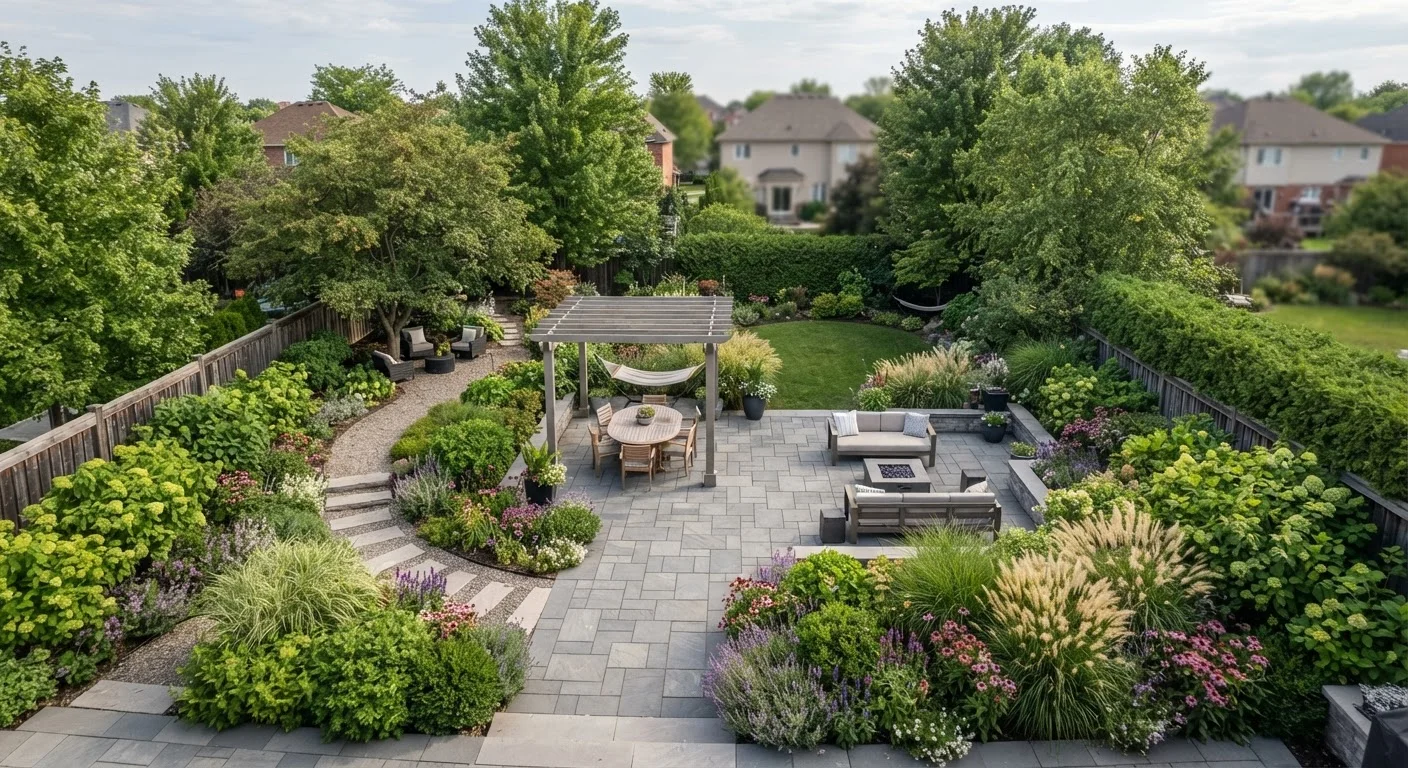
The landscape design world divides outdoor elements into two broad categories. Hardscaping refers to all the non-living, constructed components of a landscape: patios, walkways, driveways, retaining walls, fences, pergolas, raised bed frames, and edging. These are the bones of a yard — fixed features that define space and movement.
Softscaping covers everything that grows: trees, shrubs, perennials, annuals, ornamental grasses, ground covers, lawn grass, and even edible plants. If it roots in soil and changes through the seasons, it's softscaping.
Neither term is value-laden. Neither is inherently better. They describe function and materiality, and the most considered outdoor spaces treat them as complementary systems rather than competing choices. For a plain-language refresher on gardening terminology, the gardening term glossary is a useful starting point.
How They Compare Across Key Criteria
Understanding the practical differences between hardscaping and softscaping helps homeowners allocate budget, effort, and space more intentionally. The comparison below covers the most common decision points.
| Criterion | Hardscaping | Softscaping |
|---|---|---|
| Upfront cost | Generally higher | Variable; can be modest |
| Ongoing maintenance | Low once installed | Seasonal and ongoing |
| Flexibility to change | Low; removal is labor-intensive | High; plants can be moved or replaced |
| Stormwater management | Can increase runoff (varies by material) | Absorbs and filters runoff |
| Seasonal appearance | Consistent year-round | Changes with seasons |
| Ecological benefit | Minimal | High — supports pollinators and soil life |
| Permit requirements | Often required for structural elements | Rarely required |
| Usable in all weather | Yes, with proper drainage | Limited in wet or cold conditions |
One nuance worth noting: impervious hardscape surfaces — concrete, solid stone, asphalt — can concentrate stormwater runoff and contribute to erosion and drainage problems. Permeable pavers, gravel, and decomposed granite are hardscape materials that allow water infiltration, partially bridging this gap. Combining them with planted areas gives the most drainage control.
The Case for Prioritizing Structure First
Landscape designers broadly recommend resolving hardscape before introducing plants. The reasoning is practical: excavation for a patio base, grading for drainage, and laying retaining wall footings all disturb soil and existing vegetation. Installing hardscape on top of established plantings risks damaging root systems and compacting the soil profile that plants depend on.
From a budget standpoint, hardscape elements also carry higher upfront material and labor costs. Stone, concrete, and quality lumber require skilled installation for durability and safety — particularly for anything structural like retaining walls over 24 inches tall, which in many jurisdictions require permits and engineered plans. Always verify local permit requirements before beginning any structural landscape project.
Once hardscape is in place, softscaping fills in around it. This sequence also makes maintenance easier: defined edges between paved areas and planting beds reduce the spread of mulch onto paths and make mowing or weeding cleaner work. For a broader look at planning outdoor spaces so they function well in every season, see our guide on designing an outdoor space that works through every season.
Why Softscaping Does the Ecological Heavy Lifting
Living plants provide functions no paved surface can replicate. Trees create canopy shade that can meaningfully reduce surface and ambient temperatures on hot days. Roots stabilize slopes and take up stormwater. Flowering perennials and shrubs support pollinators. Densely planted ground covers outcompete weeds and reduce bare soil erosion.
Soil health sits at the center of all of this. Healthy planting beds with good organic matter and soil structure support robust root systems and retain moisture more effectively than compacted or depleted soil. Our article on soil health explains how to evaluate and improve what's beneath your plantings — a step that pays dividends regardless of what you grow.
Softscaping also allows for flexibility over time. Perennials can be divided and relocated. Shrubs can be pruned to shape. Annual color can shift from year to year. This adaptability suits homeowners whose tastes, budgets, or sun exposure changes as trees mature and shade patterns shift. In shadier spots, carefully chosen plants can still thrive — the shade garden ideas guide covers layouts and plant selections suited to low-light conditions.
A Note on Artificial Turf
Artificial grass occupies an unusual middle ground — it looks like softscaping but functions more like hardscape. It provides no ecological benefit, can retain more heat than natural turf, and raises environmental questions around production and disposal. If you're weighing synthetic lawn as part of your landscape, our article on the trade-offs of artificial grass lays out the full picture before you commit.
Finding the Right Balance for Your Property
There's no single correct ratio of hard to soft. A small urban courtyard might be 80% hardscape with container plantings providing greenery. A rural property with acreage might have just a gravel path connecting a barn to a house, with the rest planted. What matters is that both systems support each other.
A useful starting framework: identify how you want to use the space first. Outdoor dining and entertaining lean toward hardscape. Relaxed naturalistic gardens lean toward softscape. A kitchen garden combining raised beds with gravel paths blends both — the raised beds vs. in-ground planting comparison explores how to structure growing areas within a larger landscape design.
Consider maintenance capacity honestly. A yard that's 60% lawn may look soft and green, but turf is one of the most labor- and water-intensive softscape choices. Replacing sections of lawn with mulched planting beds, groundcovers, or permeable gravel reduces ongoing work while keeping the landscape balanced and livable.