

Key Takeaways
- Shade gardens thrive when plants are layered by height to mimic natural woodland structure.
- Soil preparation — especially adding organic matter — is critical in compacted, root-heavy shaded areas.
- Many shade-tolerant plants offer striking foliage colour and texture, not just flowers.
- Reflective surfaces and light-coloured hardscaping can brighten dark garden areas noticeably.
- Matching plants to the specific type of shade — deep, partial, or dappled — prevents failure.
Why Shade Doesn't Mean Settling for Less
Shaded corners and north-facing borders are often treated as problem areas — spaces where gardening feels like a losing battle. In reality, shade gardens can be among the most visually compelling outdoor spaces, layered with rich textures, subtle colour shifts, and a cool, restful atmosphere that sunny beds rarely achieve.
The key is understanding what kind of shade you're working with. Deep shade (under dense evergreens or against a solid north-facing wall) receives little to no direct light. Partial shade gets two to four hours of sun daily, typically in the morning. Dappled shade — the most forgiving — filters light through a deciduous tree canopy throughout the day. Each type calls for a different plant palette and approach.
Before choosing plants, also assess the soil. Shaded spots near tree roots are often dry and compacted, while shaded low points may stay wet. Amending with compost addresses both extremes and gives new plantings the best possible start. See our guide to balancing hardscaping and softscaping for ideas on integrating structural elements alongside your planting scheme.
Layer Plants by Height to Create Depth
Woodland ecosystems naturally organise themselves into canopy, understory, ground layer, and floor. Mimicking this structure in a shade garden creates visual depth and ensures that every plant receives the light level it needs.
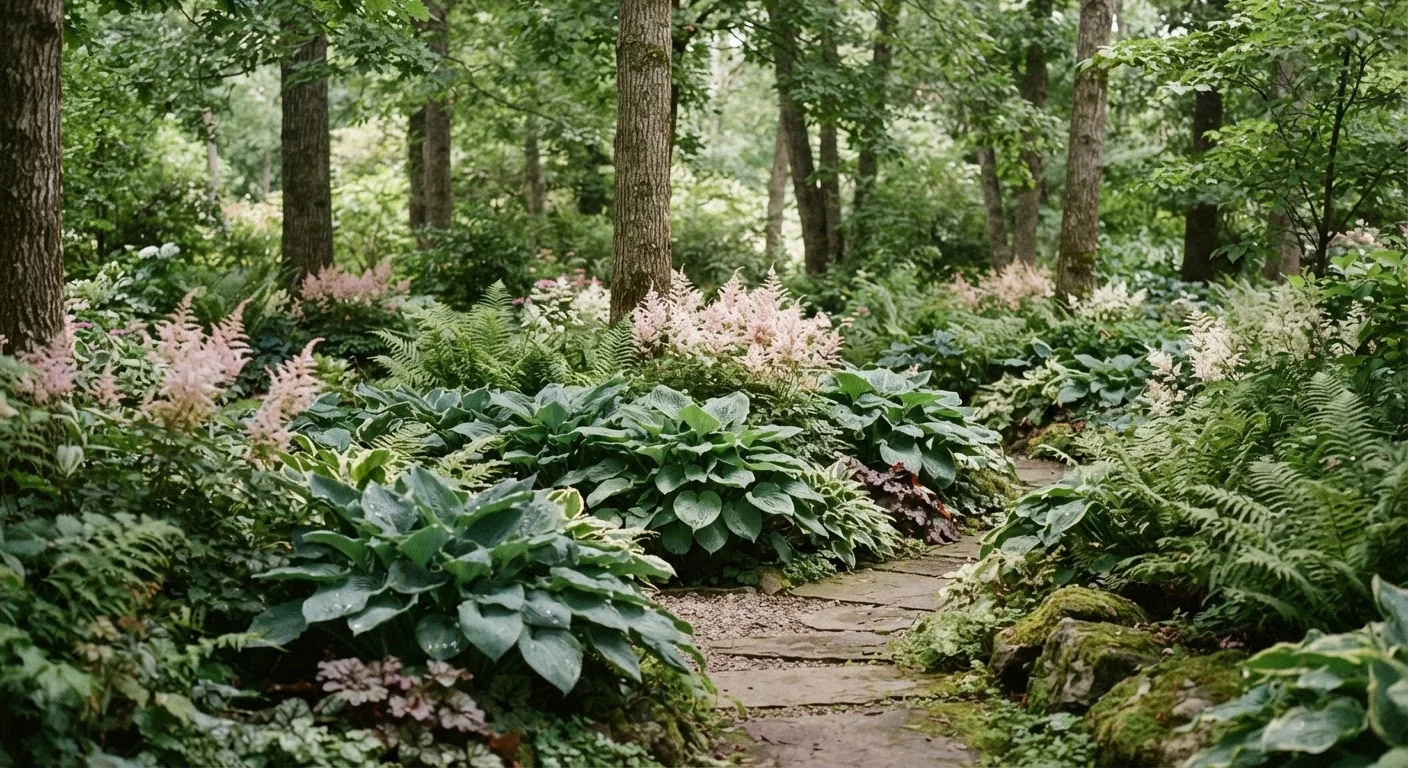
Start with a small deciduous tree or large shrub — such as a serviceberry or witch hazel — as an anchor. Beneath it, place mid-height shrubs like oakleaf hydrangea or mountain laurel. Then fill the ground layer with perennials such as hostas, hellebores, or astilbes. Finally, let low-growing ground covers like sweet woodruff or creeping Jenny fill the gaps. This tiered approach also reduces bare soil, which limits weeds and retains moisture.
Layering by height mirrors natural woodland structure and gives every plant the right light level.
Prioritise Foliage Over Flowers
In shade gardens, flowers are a bonus — foliage is the main event. Many shade-tolerant plants offer leaves in silver, chartreuse, burgundy, and deep blue-green, providing colour that endures long after blooms fade.
Hostas are the classic example, with hundreds of varieties ranging from tiny mounds to large architectural clumps. Heucheras (coral bells) add burgundy or amber tones. Japanese painted ferns bring silvery grey markings that catch what little light reaches the ground. Combining contrasting leaf shapes — broad and rounded against feathery and fine — creates a tapestry effect that's striking even without a single flower. Consider how these plants interact as companions; strategic plant pairing applies just as usefully in shade borders as in vegetable beds.
In shade, foliage texture and colour carry the design far more reliably than seasonal flowers.
Introduce Hardscaping to Brighten Dark Areas
Light-coloured hardscaping — pale gravel paths, limestone stepping stones, or white-painted walls — reflects ambient light back into a shaded space and makes it feel more open. Dark surfaces absorb what little light is available, compounding the dimness.
A simple gravel path winding through a shade bed serves double duty: it improves drainage, keeps foot traffic off the root zone of sensitive plants, and visually brightens the area. Mirrors positioned carefully on a fence or wall can also direct light into deep shade, though they require thoughtful placement to avoid glare or overheating plants directly in front of them.
Light-coloured surfaces reflect ambient light into shaded spaces, making them feel larger and brighter.
Choose Seasonal Bloomers to Extend Interest
Even in shade, a sequence of flowering plants can carry the garden from early spring through autumn. Snowdrops and winter aconites push through in late winter. Hellebores follow closely, blooming from late winter into spring. Astilbes take over in early summer with feathery plumes in pink, red, and white. Japanese anemones close the season with elegant late-summer flowers.
Planning this succession means the garden never lapses into a single dull phase. It also helps to include plants with attractive seed heads or winter foliage — dried astilbe plumes and the evergreen rosettes of hellebores hold their own even in the coldest months.
Sequencing shade bloomers from late winter through autumn ensures the garden rarely looks bare.
Address Dry Shade Directly — Don't Work Around It
Dry shade — typically found under established trees whose roots compete aggressively for moisture — is the most challenging condition in any garden. Attempting to grow moisture-loving plants there will only result in repeated failure.
Instead, select plants genuinely adapted to dry shade: epimedium (barrenwort), hardy cyclamen, Solomon's seal, and ivy all tolerate these conditions once established. Before planting, work in generous amounts of organic matter — well-rotted compost or leaf mould — to improve moisture retention, then mulch thickly each autumn. Avoid planting right up against a tree trunk; a ring of mulch there protects roots without competing with them. For principles on managing difficult garden moisture conditions, our drought-tolerant gardening guide offers additional strategies that translate well to dry shade situations.
Dry shade demands plants genuinely adapted to it — soil improvement and mulching are non-negotiable first steps.
Use Containers to Introduce Colour and Flexibility
Container planting offers a practical solution for deeply shaded spots where in-ground planting is limited by tree roots or poor drainage. Pots and planters can be moved seasonally to follow the best available light, or swapped out as plants go past their peak.
Ferns, impatiens (in climates where downy mildew pressure is managed), begonias, and caladiums all perform well in containers in partial to deep shade. Use a high-quality potting mix rather than garden soil, which compacts quickly in pots. Ensure containers have adequate drainage holes — shaded spots can stay wet, and waterlogged roots are a common cause of failure in container shade planting.
Containers in shade offer flexibility that in-ground planting cannot — move them where light is best.
Bringing It All Together
A shade garden rewards patience. Many woodland plants establish slowly but reward you with increasingly bold displays each season. Plan for a mix of evergreen and deciduous species so the garden holds interest year-round — designing for every season is a principle that applies just as much in shade as in full sun.
Pay attention to watering needs as the garden matures. Shaded areas under tree canopies can be surprisingly dry, and newly planted shade perennials need consistent moisture while establishing. Our guide to watering myths can help you separate helpful habits from harmful ones. With the right foundation, a shade garden becomes one of the most low-maintenance and rewarding spaces on your property.
Test Your Shade Before You Plant
Shade levels shift dramatically with the seasons. A spot that's deeply shaded in summer may receive several hours of direct sun in early spring before deciduous trees leaf out. Walk your garden at different times of day across different months and note what you observe. Many spring ephemerals — trout lilies, Virginia bluebells — exploit this early-season window of light before the canopy closes, making them ideal choices for spots that seem too dark for much else.