

Key Takeaways
- Stopping distance is made up of thinking distance plus braking distance — both matter equally.
- Speed has a disproportionate effect: doubling speed quadruples braking distance.
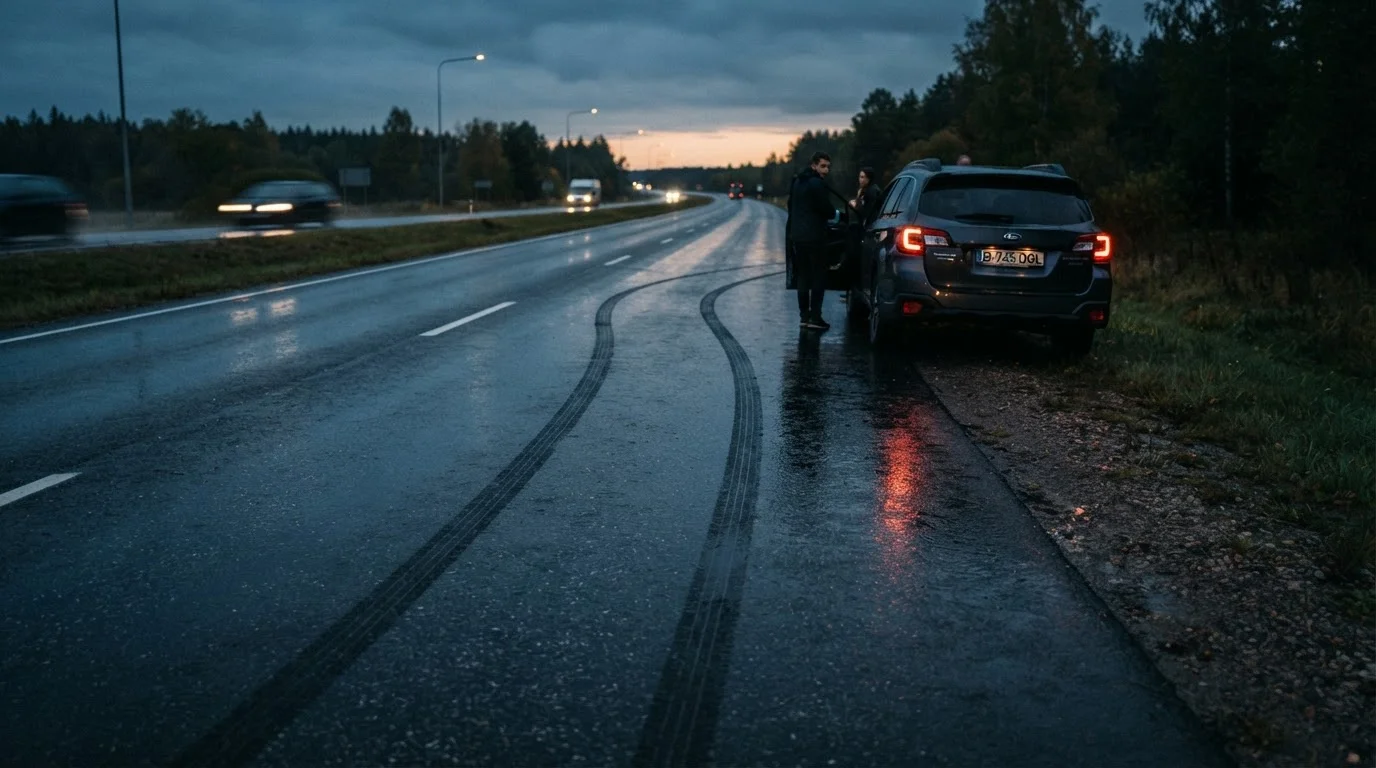
- Wet or icy roads can extend stopping distances by two to ten times compared to dry conditions.
- Driver impairment — from fatigue, alcohol, or distraction — significantly increases thinking distance.
- Tyre condition and vehicle load directly affect how quickly brakes can bring a car to a stop.
- Maintaining adequate following distance is the single most effective way to use this knowledge safely.
Stopping Distance
Stopping distance is the total distance a vehicle travels from the moment a driver perceives a hazard to the moment the vehicle comes to a complete halt. It has two components: thinking distance (how far the car travels while the driver reacts) and braking distance (how far it travels once the brakes are fully applied). Together, these determine the minimum safe following gap between vehicles.
Braking distance increases with the square of speed — doubling your speed roughly quadruples the distance needed to stop, not merely doubles it.
Two Distances, One Outcome
Every time you brake in an emergency, your car is really covering two separate distances before it stops. The first is thinking distance — the ground your vehicle covers while your brain detects a hazard, processes it, and sends the signal to your foot to press the brake. The second is braking distance — the distance covered from the moment maximum braking force is applied until the vehicle reaches zero speed.
These two phases are governed by completely different factors. Thinking distance is determined almost entirely by how alert and attentive you are. Braking distance is shaped by physics: your speed, the condition of your tyres, the road surface, and how well your braking system performs. Understanding the difference helps explain why simply having good brakes is not enough to guarantee a short stop.
For context, at 30 mph on a dry road, the typical overall stopping distance is around 23 metres — roughly the length of six cars. At 70 mph, that figure rises to approximately 96 metres, or about 24 car lengths. The jump is not proportional to the speed increase, which is a point most drivers underestimate.
The Physics of Braking Distance
Braking distance is governed by kinetic energy. A moving vehicle carries kinetic energy proportional to the square of its speed. Because brakes must absorb all of that energy to bring the car to a stop, the braking distance grows exponentially with speed — not linearly. Double your speed, and you need roughly four times the distance to stop. Triple it, and you need about nine times the distance.
4×
Braking distance increase when speed doubles
Due to the squared relationship between speed and kinetic energy, doubling vehicle speed requires approximately four times the braking distance to stop.
~40 m
Distance covered during average reaction time at 60 mph
At 60 mph with a typical 1.5-second reaction time, a vehicle travels roughly 40 metres before the brakes are even applied.
2×
Minimum recommended following gap increase in wet conditions
Driver training guidance widely advises at least doubling the normal following gap on wet roads to account for reduced braking friction.
This squared relationship is why speed reductions at the higher end of the scale matter so much. The difference between travelling at 60 mph and 70 mph on braking distance is far greater than the difference between 20 mph and 30 mph, even though both represent a 10 mph increase.
Road surface friction plays an equally important role. Dry tarmac offers relatively high tyre grip; wet tarmac reduces that grip substantially. Ice and compacted snow can reduce friction to a fraction of dry-road values. This is why the risks of following too closely are compounded in adverse weather — the gap that feels safe on a dry summer road offers little margin on a wet November evening.
Reaction Time: The Hidden Variable
Thinking distance gets less attention than braking distance, but it accounts for a substantial share of total stopping distance. At 60 mph, a vehicle travels approximately 27 metres every second. An average unimpaired reaction time of around 1.5 seconds means the car covers roughly 40 metres before braking even begins. That figure climbs sharply under less ideal conditions.
Fatigue is one of the most significant and underappreciated contributors. Research into driver fatigue consistently finds that severely tired drivers show reaction-time impairments comparable to those measured at or above legal alcohol limits. Distraction — including glancing at a phone or adjusting in-car controls — adds further delay. The misconceptions around impairment and driving extend beyond alcohol: any factor that slows cognitive processing will lengthen thinking distance.
Because reaction time is human rather than mechanical, it cannot be improved with better tyres or brakes. The only reliable mitigation is maintaining adequate space between your vehicle and the one ahead — giving yourself the time your brain needs to respond.
How Vehicle Condition Changes the Equation
Even with the same speed and road surface, two vehicles can stop at very different distances depending on their mechanical condition. Tyre tread depth is the most direct factor: tread channels disperse water and maintain contact between rubber and road. As tread wears down, wet-weather grip deteriorates meaningfully. Tyres at or below the legal minimum tread depth — 1.6mm across the central three-quarters of the tyre in the US — perform significantly worse in emergency stops than tyres with adequate tread.
Brake system condition also matters. Worn brake pads, low brake fluid, or unevenly worn rotors reduce the maximum braking force the system can deliver. Modern vehicles equipped with Anti-lock Braking Systems (ABS) prevent tyre lockup, which helps drivers maintain steering control during hard braking. However, ABS does not automatically shorten stopping distances — on loose gravel or deep snow, it can actually increase them slightly. Understanding what your vehicle's systems do and do not do is part of being an informed driver.
Vehicle load is another underappreciated variable. A heavily loaded car, van, or SUV carries more kinetic energy at any given speed and therefore requires more distance to stop. This is particularly relevant for drivers who regularly carry passengers or heavy cargo.
Check Your Tyres Before Winter Driving
Before cold-weather or wet-season driving, check tyre tread depth using the coin or tread indicator method, and inspect for uneven wear. Ensure tyre pressure matches the manufacturer's recommended level — under-inflated tyres reduce contact area and extend stopping distances. If your tread is close to the legal minimum, replacement before winter conditions arrive is a straightforward step that measurably improves braking performance.
Putting It Into Practice on the Road
The most actionable use of stopping-distance knowledge is calibrating your following gap. A common rule of thumb is the two-second rule on dry roads: pick a fixed point ahead and ensure at least two seconds elapse between the vehicle in front passing it and your vehicle reaching it. In wet conditions, that gap should at least double. In fog or ice, a much larger margin is warranted.
Speed choice is equally important. Even small reductions from the posted limit on high-risk roads — in rain, near schools, or in areas with limited sight lines — produce meaningful reductions in braking distance. Defensive driving principles are built around this kind of anticipatory thinking: reading the road ahead so that emergency braking becomes a last resort rather than a routine response.
If you drive frequently at higher speeds, understanding stopping distances is also directly relevant to how you interpret speed limits. How speed limits are set and enforced is informed by stopping-distance research — limits are not arbitrary and are generally calibrated to conditions and road type.
The physics cannot be negotiated. Maintaining appropriate speed, following distance, tyre condition, and attentiveness are not cautious habits — they are the direct application of how stopping distances actually work.