

Key Takeaways
- Defensive driving centers on anticipating hazards before they become emergencies, not just reacting quickly.
- Maintaining a consistent following distance gives you time to respond to sudden stops or road changes.
- Scanning well ahead and checking mirrors regularly expands your situational awareness significantly.
- Reducing distractions and managing fatigue are as critical as any steering or braking technique.
- Your vehicle's condition directly affects how defensive techniques perform — maintenance matters.
What Defensive Driving Actually Means
Defensive driving is often misunderstood as timid or overly cautious driving. In practice, it means staying ahead of developing situations rather than simply reacting to them. The goal is to manage risk by reading the road environment, other drivers' behavior, and your own vehicle's limitations — before any of those factors force a crisis.
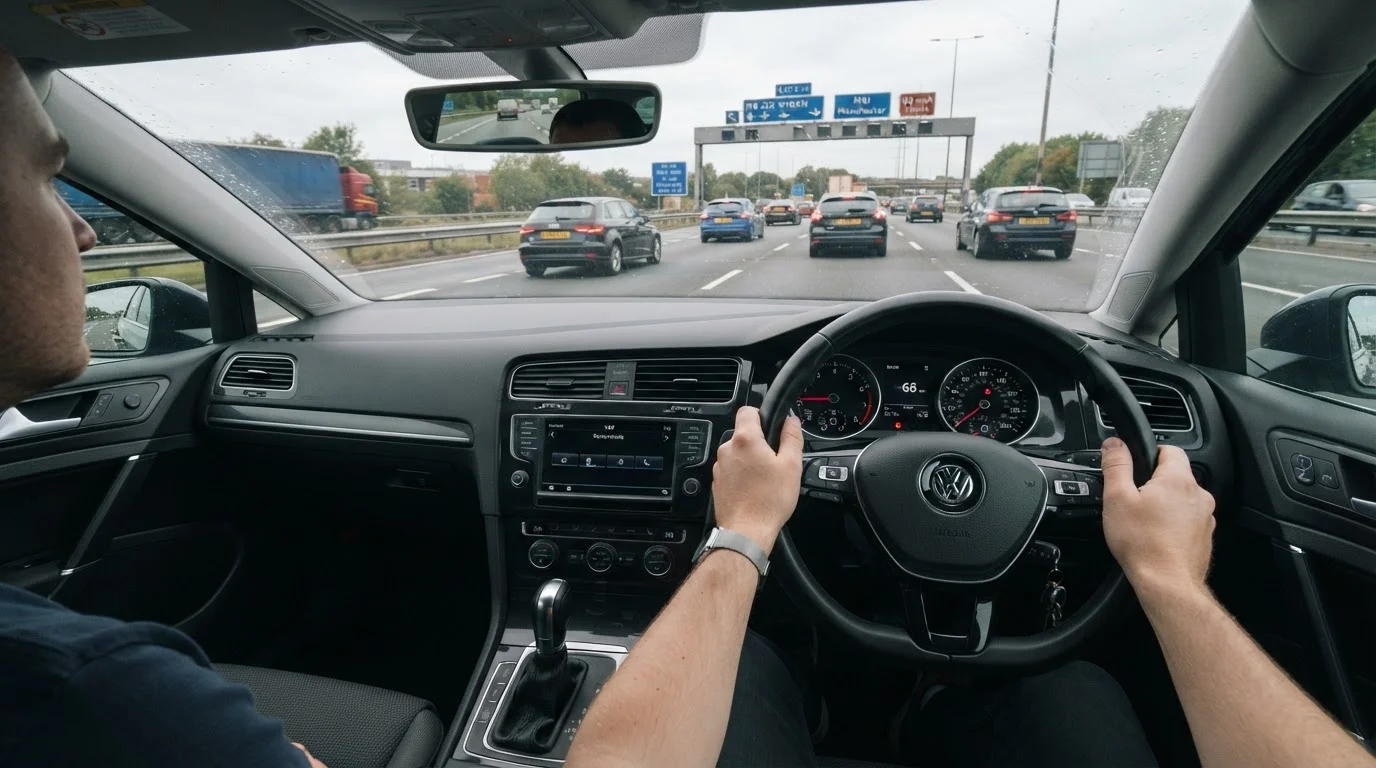
It's an approach grounded in anticipation. A defensive driver doesn't just watch the car directly in front; they track conditions two, three, or four vehicles ahead and factor in weather, road type, and traffic patterns simultaneously. This wider picture allows decisions to be made earlier, which is where safety margin actually comes from.
For context on how environment shapes your required technique, see how motorway and rural road hazards differ.
Core Principles That Reduce Collision Risk
The following practices represent widely supported guidance from driver training organizations and road safety research. None of them require advanced skill — they require consistent attention and deliberate habit.
Scan at least 12 seconds ahead at all times
Looking further up the road gives you time to identify slowing traffic, obstacles, or merging vehicles before they become immediate threats. This longer view is the foundation of hazard anticipation, allowing gradual speed adjustments instead of abrupt braking.
Maintain a consistent following distance appropriate to conditions
Following distance is your reaction buffer. The faster you travel or the worse the conditions, the more space you need. Reducing that gap doesn't save meaningful time — it removes your ability to stop safely.
Check your mirrors every five to eight seconds
Regular mirror checks keep you aware of vehicles entering your blind spots or approaching quickly from behind. This knowledge allows you to make lane changes and speed adjustments that account for your full surroundings, not just what's in front.
Eliminate in-vehicle distractions before moving
Cognitive distraction — not just visual distraction — significantly delays hazard detection. Even hands-free phone calls reduce a driver's ability to process the road environment. Addressing distractions before you begin driving removes a variable that consistently appears in crash investigation data.
Communicate your intentions clearly and early
Using signals well in advance and positioning your vehicle predictably allows other road users to anticipate your actions. Unpredictable driving forces others into reactive decisions, compressing available response time across the whole traffic flow.
Adjust your driving to conditions, not just the posted speed limit
Speed limits represent maximum safe speeds under ideal conditions. Fog, wet roads, low visibility, or heavy traffic all reduce the margin within which those limits were set. Driving to conditions rather than just to the limit is a core defensive judgment call.
Space, Speed, and Stopping Distance
Two of the most controllable variables in any driving situation are following distance and speed. Many drivers underestimate how much both affect their ability to avoid a collision. At highway speeds, even a two-second gap can vanish in a fraction of a second if the vehicle ahead brakes hard.
A commonly cited guideline is the three-second rule: pick a fixed point on the road, and ensure at least three seconds pass between when the vehicle ahead clears it and when you reach it. In poor conditions — rain, fog, ice — that minimum should double. Understanding the physics behind these numbers is covered in detail in the science behind stopping distances.
Tailgating is one of the most preventable causes of rear-end crashes. Why tailgating is more dangerous than most drivers realize breaks down the physics and psychology that make close following so risky.
~94%
Crashes involving human error as a factor
According to analysis by the National Highway Traffic Safety Administration (NHTSA), the vast majority of crashes involve a human choice or error as a critical contributing factor.
3 sec
Minimum recommended following gap in dry conditions
Driver training organizations in the US widely recommend a minimum three-second following distance under normal conditions, with the gap extending in adverse weather.
Start Today: Quick Actions That Make an Immediate Difference
Adopting defensive driving habits doesn't require a formal course — though those courses do offer measurable benefits, including documented reductions in at-fault incidents among graduates. Several practices can be applied on your very next trip.
Keeping your vehicle in sound mechanical condition is part of defensive driving too. Worn tires or delayed brake service undermine every other technique. Car maintenance habits for new drivers provides a practical starting point for building that foundation.