

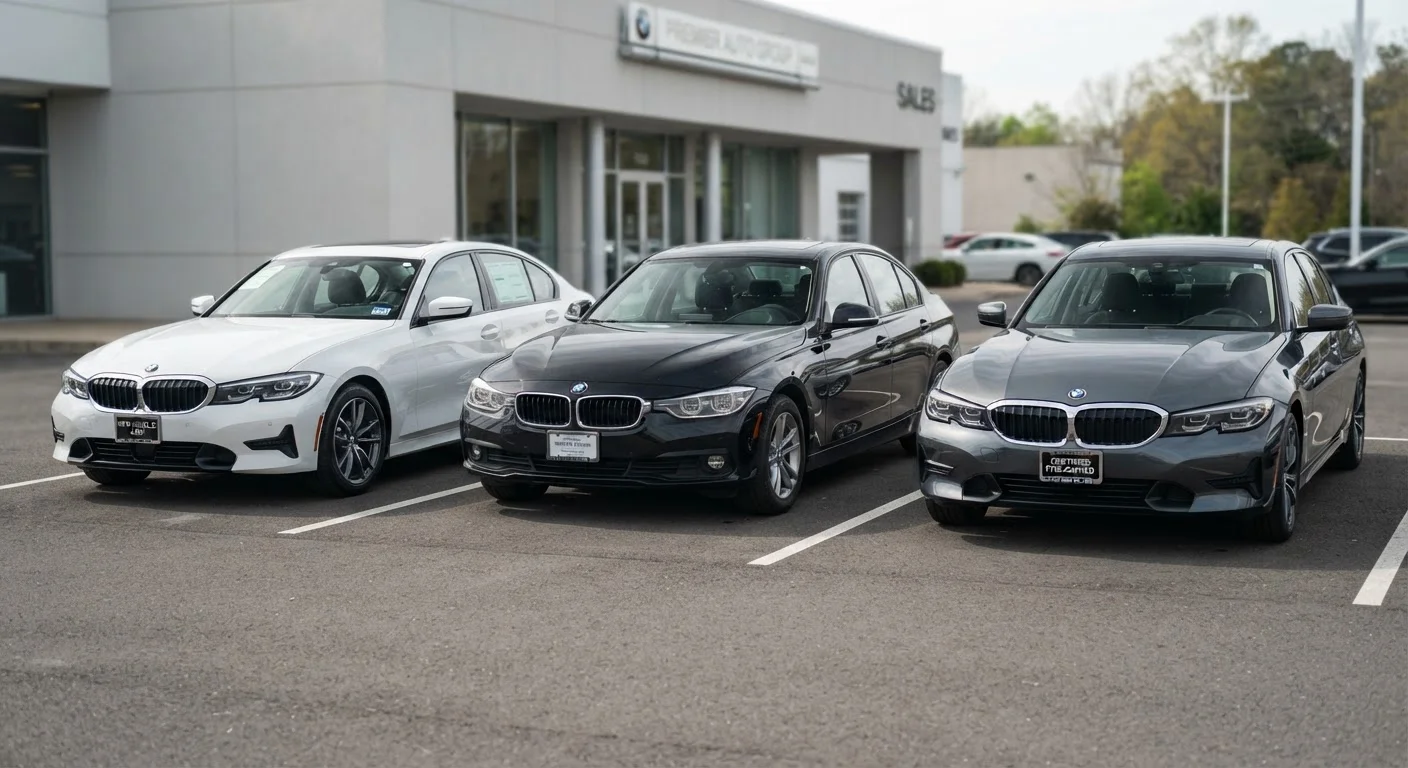
Key Takeaways
- New cars carry the highest upfront cost but offer full warranty coverage and zero prior ownership history.
- Used cars offer the lowest purchase price but require more due diligence to assess mechanical condition.
- Certified pre-owned vehicles sit between the two, combining lower prices with manufacturer-backed inspection standards.
- Depreciation hits hardest in the first two years — timing your purchase around this can affect long-term value.
- Total cost of ownership, not just sticker price, is the most useful frame for comparing all three options.
Our Verdict
No single option wins across the board. New cars suit buyers who want certainty and plan to keep the vehicle long-term. Used cars reward buyers willing to do thorough research for the lowest acquisition cost. Certified pre-owned occupies a pragmatic middle ground — meaningful protection without the full depreciation hit of buying new.
| Best for | Recommended |
|---|---|
| Buyers who prioritize warranty coverage and long ownership periods | New Car |
| Budget-conscious buyers comfortable doing research and inspections | Used Car |
| Buyers wanting a balance of lower cost and manufacturer-backed assurance | Certified Pre-Owned |
Why the Choice Matters More Than It Might Seem
The decision between a new, used, or certified pre-owned (CPO) vehicle isn't just about what you can afford today — it shapes your ownership costs, reliability exposure, and financial position for years afterward. Buyers who focus only on the monthly payment often miss the bigger picture: depreciation, insurance rates, maintenance costs, and warranty coverage all vary significantly across the three paths.
If you're earlier in the buying process, the fundamentals of car buying are worth reviewing before diving into this comparison. And if financing is part of your plan, understanding how dealer and bank financing compare will sharpen your decision-making further.
New Cars: Maximum Certainty, Maximum Upfront Cost
A new car comes with a clean ownership history, the latest safety and technology features, and a full manufacturer warranty — typically three years or 36,000 miles bumper-to-bumper, with a separate powertrain warranty that often extends to five years or 60,000 miles. These are meaningful protections, especially for buyers who don't want to budget for unexpected repairs early in ownership.
The trade-off is depreciation. New vehicles lose a notable portion of their value within the first two to three years — industry data consistently shows this as one of the steepest phases of a car's depreciation curve. That loss is absorbed by the first owner. Buyers who hold the car for ten or more years effectively spread that depreciation cost over a longer period, which can make new-car ownership more defensible financially over time. See also: the long-term case for keeping a car longer.
Insurance premiums also tend to be higher on new vehicles, particularly if the lender requires comprehensive and collision coverage.
Used Cars: Lower Entry Cost, Higher Research Burden
The primary draw of a used vehicle is price. A car that's two to four years old may carry 30–40% less of its original price tag while still having substantial service life remaining. For buyers with a defined budget, this gap can be significant.
The risk is that you're buying a vehicle with an unknown maintenance history and no manufacturer warranty. A private seller is under no obligation to disclose all known issues, and even well-maintained cars can have problems that aren't visible on a test drive. That's why a pre-purchase inspection by an independent mechanic is a practical necessity, not an optional extra.
There are also less obvious risks. Several factors beyond price and mileage — including title status, accident history, and regional rust exposure — can determine whether a used car is a sound purchase or a costly mistake. And the source of the vehicle matters: private sales and dealership purchases carry different risks and protections.
| New Car | Certified Pre-Owned | Used Car | |
|---|---|---|---|
| Purchase Price | Highest | Moderate | Lowest |
| Depreciation Exposure | Absorbs full early drop | Partially absorbed | Minimal — already depreciated |
| Warranty Coverage | Full manufacturer warranty | Extended manufacturer-backed warranty | None (unless purchased separately) |
| Ownership History | None — first owner | Verified, inspected | Unknown unless researched |
| Research Burden | Low | Moderate | High |
| Insurance Cost (typical) | Highest | Moderate | Lower |
| Financing Rate Potential | Often competitive | Moderate | Typically higher |
Certified Pre-Owned: The Middle Path
CPO programs are offered by manufacturers through franchised dealerships and represent a specific category: used vehicles that have passed a multi-point inspection and are backed by an extended manufacturer warranty. Requirements and coverage vary by manufacturer, but most CPO programs include vehicles under a certain age and mileage threshold — commonly within five to six years old and under 80,000 miles.
The practical value of CPO is risk reduction. You get a used car's lower price relative to new, plus a degree of assurance that approaches — though doesn't fully replicate — buying new. Roadside assistance is commonly included, and some CPO programs offer powertrain coverage extending several years beyond the original warranty.
The cost premium over a comparable non-CPO used vehicle is real, however. CPO pricing reflects the inspection, reconditioning, and warranty coverage baked in. Whether that premium is worth it depends on your risk tolerance and how confident you are in independently evaluating a used car's condition.
Total Cost of Ownership: The Frame That Matters
Sticker price is only one piece of the equation. When comparing options, consider all the costs over your expected ownership period:
- Depreciation: Steepest in years one through three for new vehicles; CPO and used buyers absorb less of this curve.
- Insurance: Generally higher on newer, more expensive vehicles. Gap insurance may be required on financed new cars.
- Maintenance and repairs: New and CPO vehicles carry warranty coverage that shields you from early repair costs. Used cars outside warranty age require a repair reserve.
- Financing costs: Interest rates on new cars are sometimes lower than used, depending on market conditions and lender terms — this can partially offset the price difference.
- Reliability: Newer vehicles benefit from modern engineering improvements; older models may have higher failure rates on certain components.
Running these numbers for your specific situation — expected annual mileage, how long you plan to keep the car, and what you can realistically budget for repairs — gives a more honest comparison than price alone. For ongoing ownership costs once you've purchased, routine maintenance fundamentals are worth understanding regardless of which option you choose.