

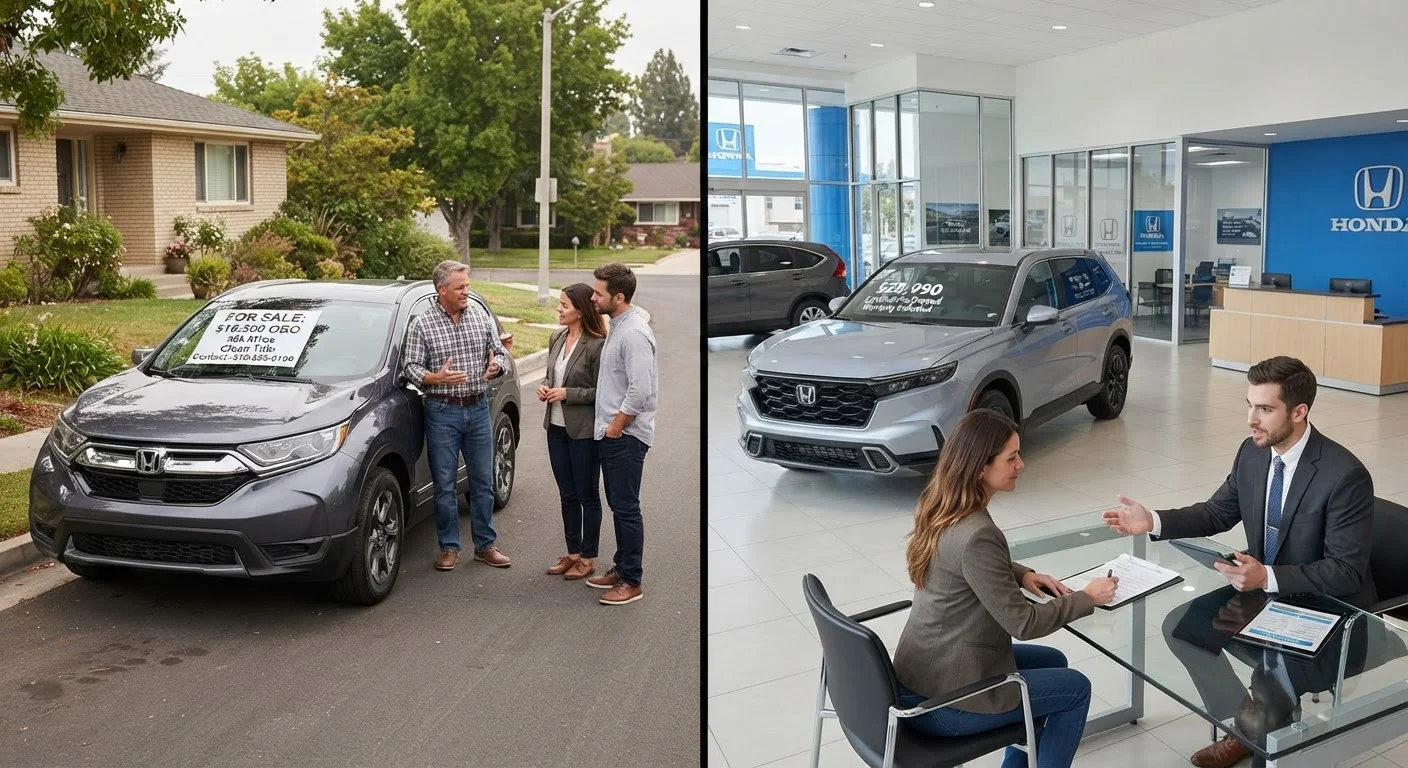
Key Takeaways
- Private sales often yield lower purchase prices but carry no consumer protections or warranty coverage.
- Dealerships are legally required to disclose known defects and must comply with federal and state consumer protection laws.
- Financing is typically only available through dealerships or third-party lenders — private sales are usually cash or pre-arranged loan transactions.
- A pre-purchase inspection by an independent mechanic is essential regardless of where you buy.
- Understanding both channels lets you negotiate more confidently and avoid costly surprises.
Why the Channel You Buy Through Matters
Choosing between a private seller and a dealership isn't just about price — it shapes everything from legal protections and financing options to how much due diligence falls on your shoulders. Each channel comes with genuine advantages and real trade-offs, and neither is universally the right choice.
If you're still deciding how to structure the purchase itself, it's worth reading about leasing versus buying before committing to a purchase path at all. And if you're planning to finance, understanding car loans versus personal loans will affect which channel even makes sense for your situation — private sellers rarely work with dealer-arranged financing.
Best Practices for Evaluating Each Option
The practices below apply across both purchase channels, though some carry more weight in one setting than the other. Apply them methodically before any money changes hands.
Always obtain a vehicle history report before negotiating price.
A vehicle history report surfaces title issues, odometer discrepancies, accident records, and past ownership count. Skipping this step means negotiating blind — problems discovered after purchase can cost far more than the report itself.
Commission an independent pre-purchase inspection by a qualified mechanic.
Visual inspections by buyers rarely catch mechanical or structural issues that a lift inspection would reveal. An independent mechanic has no stake in the sale and will report findings objectively. This is especially critical in private sales where no implied warranty applies.
Understand what consumer protections apply in your state for each channel.
Dealerships are regulated under federal law (including FTC Used Car Rule disclosure requirements) and state consumer protection statutes. Private sellers generally have no equivalent obligations. Knowing these boundaries prevents you from assuming protections that don't exist.
Get any verbal representations from a seller in writing before signing.
Verbal promises — about recent repairs, included accessories, or the reason for selling — are nearly impossible to enforce after the fact. Written documentation creates a paper trail and discourages exaggeration.
Research fair market value using multiple data sources before any negotiation.
Knowing the realistic market range for a specific year, make, model, trim, mileage, and condition prevents both overpaying and anchoring to an inflated asking price. It also gives you factual grounds to counter rather than guessing.
Quick Actions You Can Take Before You Start Shopping
A little preparation before you visit a lot or respond to a listing dramatically narrows your exposure to bad deals. These actions take under an hour and can save significant money or frustration.
For a broader orientation to the paperwork and process, especially if this is your first purchase, see what every first-time car buyer should understand.
Financing: How the Channel Affects Your Options
One of the most consequential — and often overlooked — differences between private and dealer purchases is financing. Dealerships can arrange financing on the spot through their lending partners, but that convenience sometimes comes at a cost. Dealer-arranged loans may carry higher interest rates than what your bank or credit union would offer independently.
Private sales almost never include seller-arranged financing. You'll need to arrive with cash, a cashier's check, or a pre-approved loan from your own lender. This actually puts you in a stronger negotiating position — you know your exact budget ceiling and don't need to negotiate monthly payments, which is a common tactic used to obscure the true cost of a dealership transaction.
For a clear breakdown of how dealer financing compares to securing your own loan, see how the numbers actually compare.
~30%
Price premium: dealer vs. private sale
Industry observers and consumer research have consistently found that dealer listed prices for used vehicles run roughly 20–30% higher than comparable private-party listings, reflecting overhead, reconditioning, and profit margin.
1 in 5
Used vehicles with undisclosed damage history
Analyses of vehicle history databases have found that a meaningful share of used vehicles on the market carry accident or damage records not proactively disclosed by sellers.