

Key Takeaways
- Ownership history and title status can reveal problems that mileage alone never will.
- Skipping an independent pre-purchase inspection is one of the costliest shortcuts buyers make.
- Total cost of ownership — insurance, parts availability, and fuel — varies significantly by vehicle.
- A vehicle history report is a useful starting point, but it has real gaps buyers must understand.
- Test-driving in varied conditions exposes mechanical issues that a parking-lot glance won't catch.
Why the Obvious Checks Aren't Enough
Most used-car buyers know to look at mileage, ask about accidents, and take a test drive. What fewer do is look past those surface signals to the factors that tend to determine whether a vehicle becomes a dependable daily driver or a recurring source of unplanned expenses.
The stakes are real. A vehicle that looks clean and drives fine in a parking lot can still carry hidden structural damage, deferred maintenance, or title complications that surface only after the sale. The mistakes below reflect where buyers — including experienced ones — most consistently leave themselves exposed.
Focusing only on purchase price and ignoring total ownership cost.
Why it happens: The sticker price is the most visible number, so buyers anchor to it and underestimate recurring costs like insurance premiums, fuel economy, and parts availability.
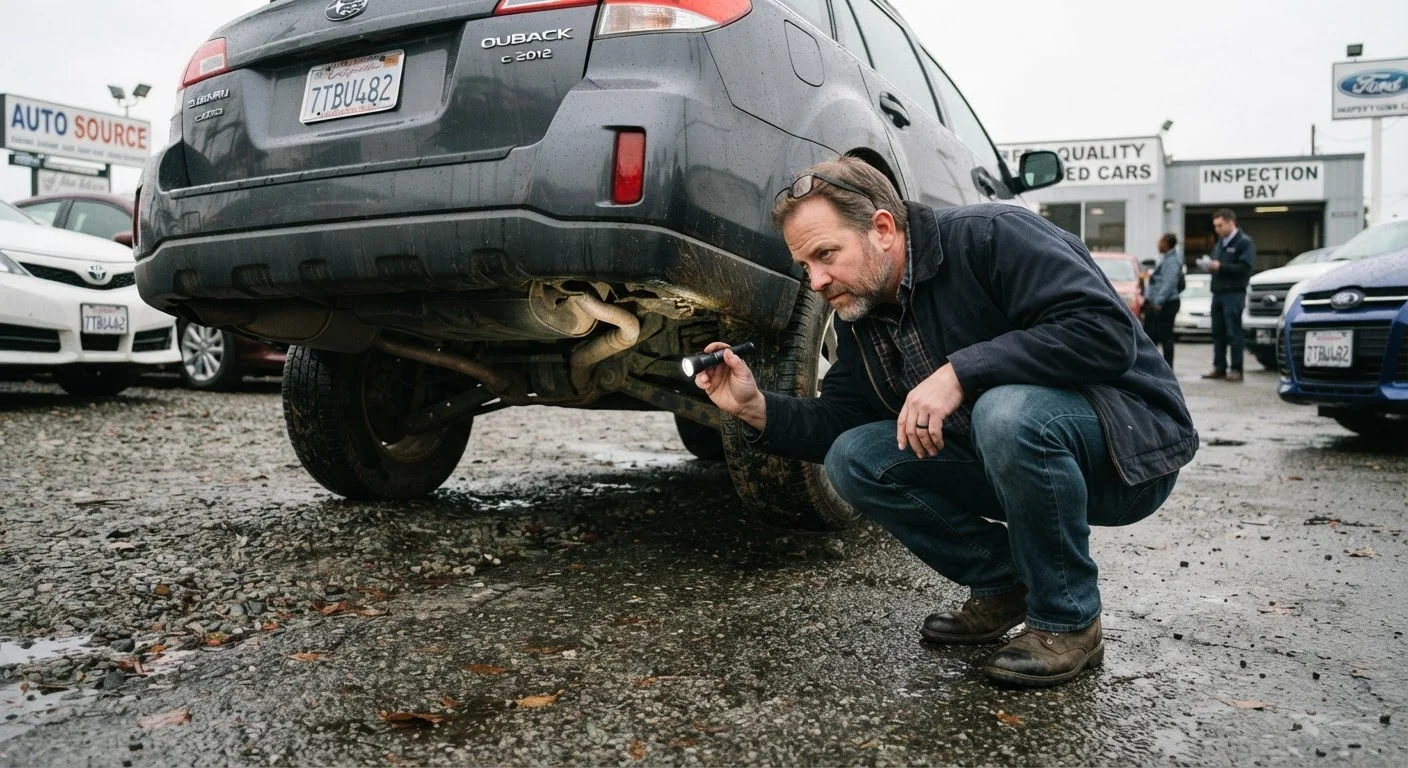
Skipping or shortcutting the independent pre-purchase inspection.
Why it happens: Buyers often feel the inspection fee is unnecessary if the car looks clean and the seller seems trustworthy, or they're eager to close the deal before someone else does.
Treating a vehicle history report as a comprehensive guarantee.
Why it happens: History reports feel authoritative and official, which leads buyers to assume they capture everything — including unreported damage and private repairs.
Neglecting to verify the title status and any outstanding liens.
Why it happens: Many buyers assume that if the seller has the keys and the car runs, the paperwork must be in order — especially in private-party sales.
Test-driving only in ideal, low-stress conditions.
Why it happens: Sellers often suggest short, flat-road drives. Buyers, not wanting to seem demanding, go along with it.
Ignoring the long-term maintenance demands of the specific vehicle.
Why it happens: Buyers evaluate a car based on how it feels and looks today, without researching whether it requires expensive scheduled services — like timing belt replacements — in the near future.
Making Sense of the Information Available to You
Between a vehicle history report, a pre-purchase inspection, and a direct conversation with the seller, buyers have more tools available than most use effectively. The challenge is knowing what each tool can and can't tell you.
Don't Rely Solely on History Reports
Vehicle history reports only capture events that were formally reported — unreported accidents, private repairs, and flood damage that was never filed with an insurer will not appear. A clean report is encouraging but not a guarantee of a clean vehicle. Pair any history report with a professional inspection for a more complete picture. See our guide on reading a vehicle history report without getting misled for a deeper look at these limitations.
History reports work best as a conversation starter. Use discrepancies or gaps as questions to put directly to the seller: Why was the car registered in three states in five years? Why is there no service record for a 12-month period? A seller who can't answer clearly, or who becomes defensive, is giving you information too.
Similarly, confirm title status and any outstanding financial encumbrance before making any payment — even a deposit. See our checklist on what to confirm before collecting a car you've agreed to buy for a full rundown of documentation and condition checks to complete at handover.
Title Issues Can Void Your Purchase
A salvage, rebuilt, or lien-encumbered title can make a vehicle difficult to insure, finance, or resell — and in some cases the sale itself may be legally complicated. Always verify title status through your state's DMV or an official title search before handing over any money. If a seller is reluctant to provide title documentation upfront, treat that as a serious red flag.
Finally, if you're weighing a used purchase against other options, it's worth understanding the full financial picture. Leasing versus buying involves different cost structures, and how depreciation works affects the resale value of whatever you choose.