

Key Takeaways
- The average US household loses an estimated 5–10% of its total electricity use to standby power alone.
- Common culprits include televisions, cable boxes, gaming consoles, phone chargers, and microwave ovens with digital displays.
- Phantom load costs money continuously — 24 hours a day, every day of the year — without any benefit to the user.
- Smart power strips and unplugging unused devices are among the most straightforward ways to cut standby waste.
- Identifying and reducing phantom load is one step toward lower bills, but it works best alongside a broader home energy audit.
Standby Power (Phantom Load)
Standby power — also called phantom load, idle current, or vampire power — is the electricity a device consumes while plugged in but not actively in use. This includes devices in sleep mode, chargers left in outlets, and appliances waiting for a remote signal. Most electronics draw some power around the clock, even when you think they are off.
Standby consumption is measured in watts (W) and accumulates in kilowatt-hours (kWh) on your electricity bill. A device drawing 5W continuously consumes roughly 3.6 kWh per month — a small number per device that scales quickly across a household.
What Is Phantom Load and Where Does It Come From?
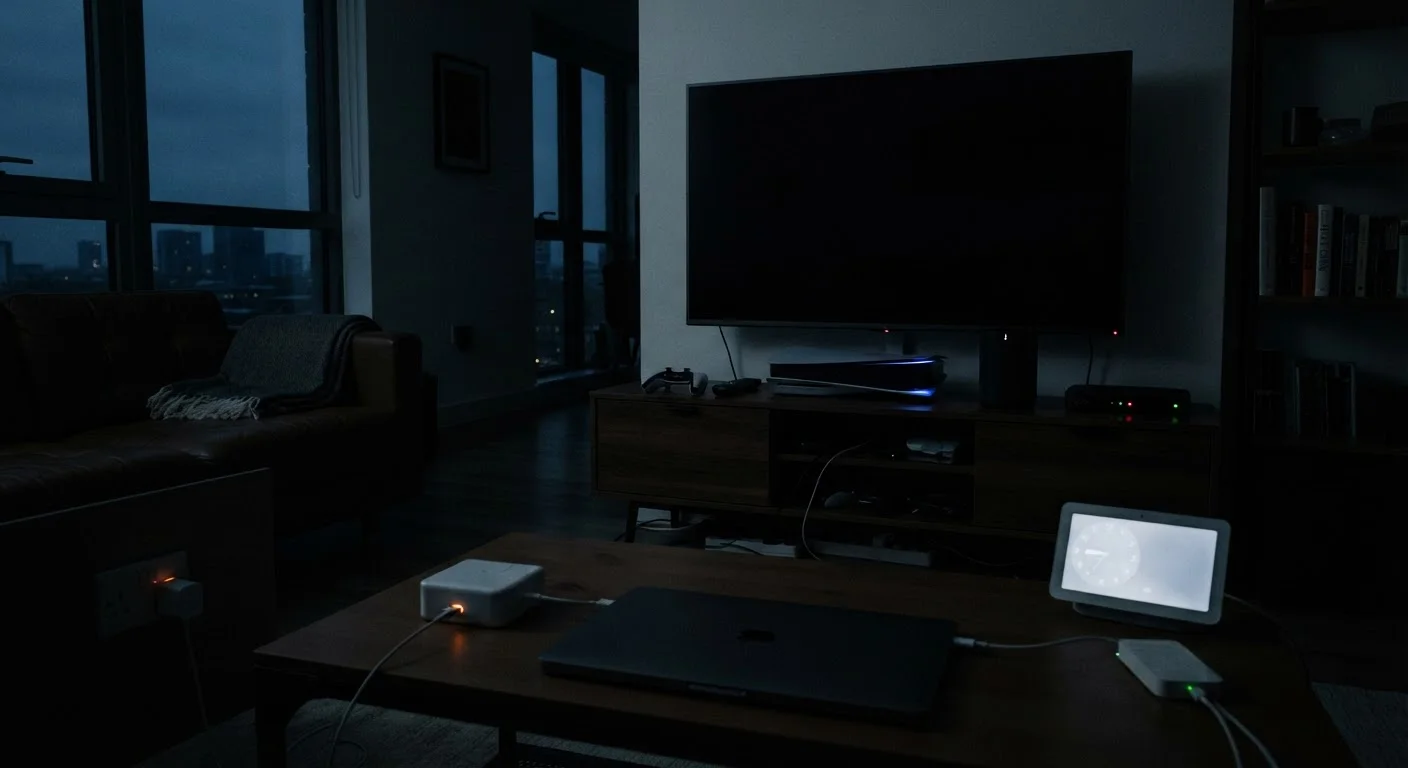
Every time you leave a charger plugged in, keep a television on standby, or let a gaming console idle in rest mode, electricity flows — whether you're using the device or not. This continuous, unnoticed drain is called phantom load, and it exists because most modern electronics are designed to remain partially on. They listen for remote signals, maintain network connections, keep internal clocks running, or simply hold a display active.
The list of devices involved is longer than most people expect: cable boxes, smart TVs, desktop computers, microwave ovens with digital clocks, stereo receivers, inkjet printers, and even some kitchen appliances with digital controls all draw power continuously. Each individual device may consume only a handful of watts, but a fully furnished home can have dozens of such devices running simultaneously, around the clock.
If your electricity costs have stubbornly resisted cutbacks, phantom load may be part of the explanation. See our guide to why home energy bills stay high for a broader look at overlooked efficiency drains.
5–10%
Share of home electricity used by standby devices
The US Department of Energy estimates standby power accounts for approximately 5–10% of total residential electricity consumption in a typical US household.
~$100
Estimated annual standby cost per household
The Lawrence Berkeley National Laboratory has found that standby power costs the average US household roughly $100 per year, varying by device count and local electricity rates.
40+
Devices drawing standby power in a typical home
Research from the Natural Resources Defense Council suggests modern homes commonly have more than 40 devices drawing power continuously in idle or standby states.
How the Costs Add Up Across a Typical Household
The math on standby power is straightforward but easy to underestimate. A cable box drawing 15–17 watts continuously — a figure consistent with published energy efficiency research — uses more electricity per year than a modern LED television does during regular viewing. A gaming console left in standby can draw 10 watts or more depending on its settings. When you multiply these figures across a home with 20, 30, or more plugged-in devices, the cumulative drain becomes significant.
The US Department of Energy has estimated that standby power accounts for roughly 5–10% of residential electricity use nationally. At average US electricity prices, that translates to a meaningful annual sum for most households — not a dramatic bill shock, but a steady, invisible leak. It's a close parallel to the way forgotten subscriptions quietly drain a budget; our piece on the hidden cost of forgotten subscriptions explores that same dynamic in personal finance.
The frustrating part is that this consumption delivers no benefit whatsoever to the user. You're paying for the device to wait.
Practical Steps to Reduce Standby Waste
Reducing phantom load doesn't require replacing your appliances or significant upfront investment. The most accessible steps involve changing how and where devices are connected.
- Unplug chargers and small appliances when not in use. Phone and laptop chargers continue to draw a small current even with no device attached. Unplugging them takes seconds and costs nothing.
- Use power strips with individual switches. Grouping related devices — a TV, soundbar, and streaming stick, for instance — on a single switchable power strip lets you cut power to all of them with one action at the end of the day.
- Investigate smart power strips. These automatically cut power to peripherals when a primary device powers down, removing the need to remember manual steps.
- Adjust device settings. Many televisions, computers, and gaming consoles have energy-saving settings that reduce standby draw significantly. Check your device menus for sleep timers and low-power standby modes.
- Prioritise high-draw culprits first. Cable and satellite boxes, older plasma televisions, and gaming consoles typically lead household standby consumption. Targeting these delivers the most reduction per action.
Start With a Simple Outlet Audit
Walk through each room and count every device that remains plugged in when not in active use. Pay particular attention to entertainment centres, home offices, and kitchens. A basic plug-in energy meter — available at most hardware stores — can measure exactly how many watts each device draws in standby, helping you prioritise where to focus.
For a more systematic approach to understanding your home's consumption patterns, home energy monitoring can reveal your baseline load — the power your home draws when everything you consider switched off is actually off.
Standby Power in Context: Where It Fits in Home Efficiency
It's important to keep phantom load in perspective. Addressing standby waste is worthwhile and low-effort, but it won't replace heating and cooling improvements, appliance upgrades, or insulation as the largest levers in home energy efficiency. Think of it as plugging a slow drip rather than fixing the main supply.
The real value of addressing standby power is partly financial and partly about developing clearer habits around energy awareness. Households that audit their phantom load tend to become more attentive to consumption broadly — and that shift in awareness often leads to more meaningful changes over time.
For those who want to take a more automated approach, home automation for efficiency offers a balanced look at what smart home systems can and can't realistically deliver. Automation can help manage standby loads systematically, but it comes with its own costs and complexity worth weighing carefully.
The bottom line: standby power is a real, quantifiable cost that most households are paying without realising it. A few deliberate changes — unplugging more, switching off at the outlet, and adjusting device settings — can reduce that waste without disrupting daily life.