

Key Takeaways
- Behavioral changes alone rarely eliminate high energy bills if underlying structural or mechanical issues exist.
- Air leaks in the building envelope are among the most common and overlooked sources of energy loss.
- Aging HVAC systems can consume significantly more energy than their rated efficiency suggests.
- Phantom load from plugged-in devices contributes meaningfully to baseline electricity consumption.
- Rate structure changes from your utility provider can raise bills even when consumption drops.
- A systematic room-by-room audit is the most reliable way to identify what's actually driving costs.
Hidden Energy Inefficiency
Hidden energy inefficiency refers to energy losses that occur in a home even when occupants are actively trying to conserve. These losses stem from structural gaps, aging systems, and device behaviors that quietly consume power or allow conditioned air to escape — independent of daily habits. Because they're invisible in routine use, they rarely get addressed by behavior changes alone.
Building scientists often distinguish between operational energy (driven by behavior) and embodied or structural energy loss (driven by the building envelope, mechanical systems, and equipment efficiency ratings). Behavioral changes only address the former.
The Gap Between Effort and Results
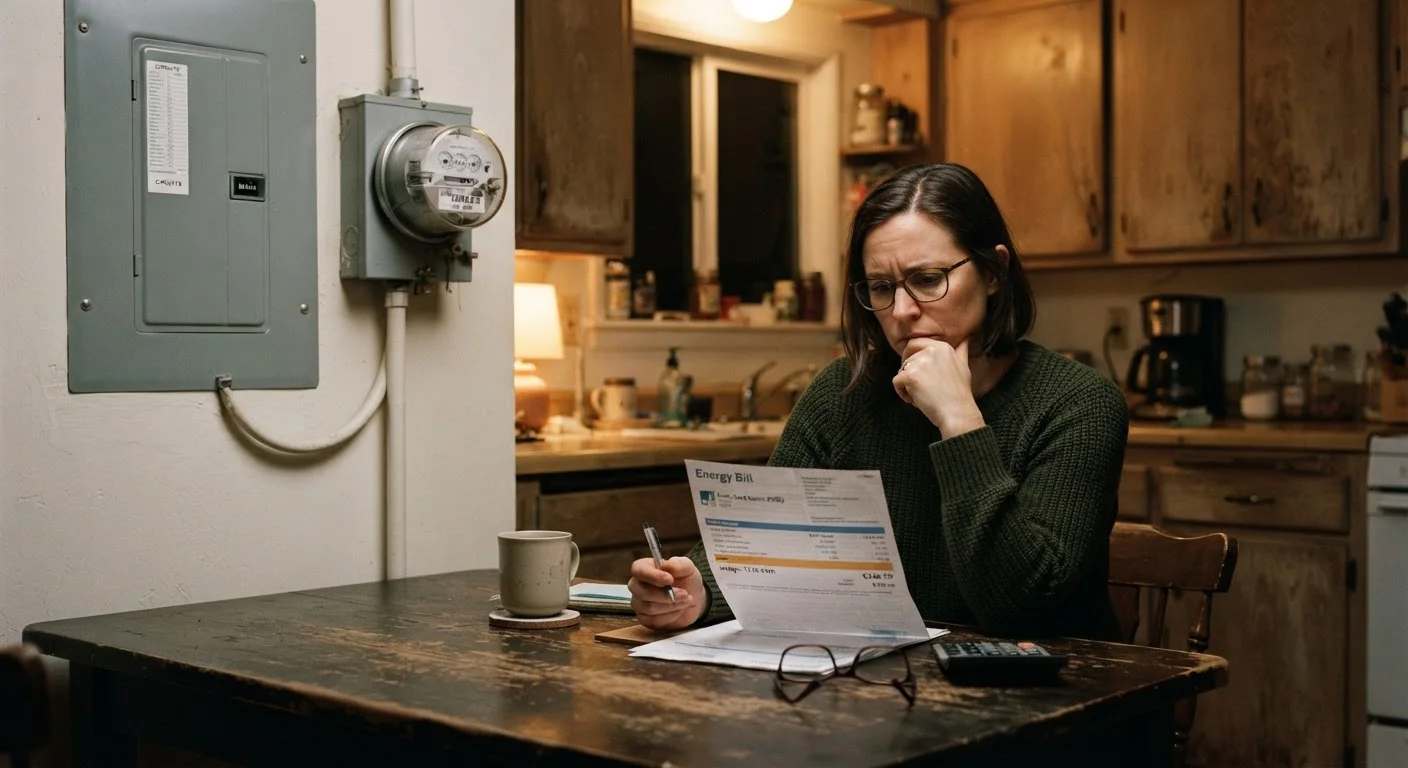
You've switched to LED bulbs, adjusted the thermostat, and shortened your showers — and your energy bill is still stubbornly high. This frustrating gap between conscious effort and actual savings is more common than most people realize, and it has a straightforward explanation: behavioral changes only address a portion of what drives household energy costs.
The rest is structural. Air leaks, aging equipment, rate changes, and passive consumption from plugged-in devices operate in the background regardless of how disciplined your habits are. Until those underlying factors are identified and corrected, cutbacks hit a ceiling.
Understanding which hidden inefficiencies are at work in your home is the first step toward costs that actually reflect your effort. A good starting point is a room-by-room home efficiency audit — a structured walkthrough that surfaces problems behavioral changes can't reach.
Your Building Envelope Is Likely Working Against You
The building envelope — walls, roof, windows, doors, and foundation — is the boundary between conditioned indoor air and the outside. When that boundary has gaps, your heating and cooling system has to work continuously to compensate for the losses it can't overcome.
Air leakage is particularly impactful. The US Department of Energy has noted that air leaks can account for a substantial share of heating and cooling costs in typical American homes, with common problem areas including attic hatches, recessed lighting fixtures, electrical outlets on exterior walls, and gaps around plumbing penetrations. These are easy to miss on a visual inspection but show up clearly in a professional blower door test.
Insulation quality compounds the issue. Insulation that has settled, degraded, or was installed incorrectly from the start allows heat to transfer more freely than R-value ratings suggest. Adding insulation without air sealing first is a common mistake — drafts bypass even well-rated insulation.
Start With Air Sealing Before Insulating
If you're planning to improve your home's thermal performance, address air leaks before adding insulation. Caulking and weatherstripping around doors, windows, and penetrations is inexpensive and prevents drafts from bypassing even well-rated insulation. A licensed contractor or certified energy auditor can identify less obvious leakage points using a blower door test.
Aging Systems Consume More Than Their Ratings Suggest
HVAC equipment has rated efficiency levels — SEER ratings for cooling, AFUE for furnaces — but those ratings reflect performance when the equipment is new and clean. Real-world efficiency degrades with age, accumulated dust in coils and filters, refrigerant drift, and wear on mechanical components.
A central air conditioner that's 15 years old may be operating at a fraction of its original efficiency even if it still technically works. The same applies to water heaters, which account for a meaningful share of household energy use and whose efficiency drops as sediment builds up in the tank.
25–30%
Heating/cooling energy lost through ducts
The US Department of Energy estimates that duct leakage in forced-air systems can account for 25–30% of heating and cooling energy loss in a typical home.
5–10%
Household electricity from standby power
The Lawrence Berkeley National Laboratory has estimated that standby power accounts for roughly 5–10% of residential electricity consumption in US homes.
~18%
Share of home energy use from water heating
According to the US Energy Information Administration, water heating typically represents around 18% of a household's total energy consumption.
Duct leakage is a related issue that often goes unexamined. If your forced-air system has leaky ducts running through unconditioned spaces like attics or crawlspaces, a significant portion of the air you've paid to condition escapes before it reaches living areas. The system runs longer to compensate, and bills rise accordingly.
Phantom Load and Rate Structures: Two Overlooked Culprits
Devices in standby mode — televisions, gaming consoles, cable boxes, chargers, and smart appliances — draw power continuously even when not actively in use. This is called phantom load or standby power. Individually, each device draws little; collectively, they can represent a meaningful share of baseline electricity consumption. The hidden cost of standby power is easy to underestimate without actually measuring it.
Separately, your utility's rate structure may have changed without your bill clearly flagging it. Tiered pricing means the cost per kilowatt-hour rises once you cross usage thresholds. Time-of-use rates charge more during peak demand hours. Base service fees have risen at many utilities. If your usage held steady but rates shifted, your bill goes up — and behavior changes won't reverse it.
Automation tools can help optimize when and how energy is consumed, but they work best when the underlying inefficiencies have been addressed first. For a balanced perspective on what these tools can and can't deliver, see our look at home automation for efficiency.
This article is for general informational purposes only. For personalized advice about your home's energy systems, consult a licensed energy auditor or qualified contractor.