

Key Takeaways
- Annuals complete their full life cycle in one growing season; perennials return year after year from established roots.
- Annuals typically cost less upfront per plant but require repurchasing each season, while perennials represent a longer-term investment.
- Perennials provide garden structure and reduce replanting labor; annuals offer more flexibility and extended bloom periods.
- Most experienced gardeners use a strategic mix of both types to balance color, cost, and low-maintenance structure.
- Soil preparation and climate zone awareness are essential before committing to either planting approach.
Our Verdict
Neither annuals nor perennials are universally superior — the right choice depends on your budget, time commitment, and design goals. Annuals shine for bold seasonal color and filling gaps, while perennials build the structural backbone of a low-maintenance garden over time. Most homeowners benefit from using both strategically.
| Best for | Recommended |
|---|---|
| Homeowners wanting bold, season-long color with flexibility to change designs year to year | Annuals |
| Those looking to reduce replanting effort and build a garden that grows in value each year | Perennials |
| Gardeners balancing upfront cost control with long-term garden development | A mixed planting approach |
Understanding the Core Difference
At the most basic level, the difference comes down to lifespan. Annuals germinate, flower, set seed, and die within a single growing season. Perennials die back to their roots in winter but re-emerge from the same root system the following spring, often for many years.
There's also a middle category — biennials — which complete their cycle over two growing seasons, flowering in year two. Examples include foxglove and hollyhock. However, most homeowners are primarily choosing between annuals and perennials when planning a garden bed.
If you're new to gardening terminology, our gardening term glossary explains key concepts like deadheading, hardiness zones, and more in plain language.
Understanding your USDA Hardiness Zone is particularly important for perennials. A plant labeled as a perennial in zone 8 may behave as an annual in zone 5, where winters are harsher. Always check zone compatibility before purchasing.
Cost and Long-Term Value Compared
| Annuals | Perennials | |
|---|---|---|
| Lifespan | One growing season | Returns for multiple years |
| Upfront cost | Lower per plant | Higher per plant |
| Long-term cost | Recurs each season | Spread over many years |
| Bloom duration | Continuous through season | Defined window, weeks long |
| Replanting effort | Every year required | Rare once established |
| Design flexibility | High — change annually | Lower — committed placement |
| Root establishment | Shallow, seasonal | Deep, improving over years |
Annuals are typically less expensive per plant at the point of sale, but that cost recurs every single season. Perennials cost more upfront — sometimes two to three times as much per plant — but that investment spreads across multiple years as the plant returns and often spreads or multiplies.
A garden built primarily on perennials may require significant initial spending in year one, but maintenance costs can drop noticeably by years two and three as plants mature and fill in. Annuals, by contrast, keep the garden budget fairly predictable but perpetual.
For homeowners thinking about long-term garden value, the first-year garden roadmap offers practical guidance on budgeting and phasing plant purchases over time.
Color, Bloom Time, and Aesthetic Flexibility
Annuals have one clear advantage when it comes to visual impact: they bloom heavily and continuously throughout the growing season. Because their biological goal is to reproduce before dying, they pour energy into flowers. This makes them ideal for containers, window boxes, and filling gaps in garden beds.
Perennials, by contrast, tend to have defined bloom windows — often two to six weeks per year — before the foliage takes over. The trade-off is that their foliage, form, and texture contribute to the garden's structure even when not in bloom. Tall ornamental grasses, hostas, and coneflowers all provide visual interest beyond their flowering period.
Designing a garden that looks attractive year-round requires thoughtful layering. Our guide on designing an outdoor space through every season covers how to sequence bloom times and balance structural plantings.
Maintenance Requirements and Effort
Annuals demand replanting each season — that means purchasing, preparing soil, and establishing new plants every spring. They may also need more frequent watering and fertilizing because they lack the established root systems that perennials develop over time.
Perennials require different maintenance: dividing clumps every few years to prevent overcrowding, cutting back dead foliage in fall or early spring, and occasionally managing aggressive spreaders. However, once established, many perennials need less consistent attention than annuals.
Divide Perennials to Expand Your Garden for Free
Many perennials — including hostas, daylilies, and coneflowers — can be divided every three to four years when their clumps become crowded. Dig up the clump in early spring or fall, split it into sections using a garden fork or spade, and replant the divisions elsewhere in your yard. This is one of the most cost-effective ways to expand your perennial plantings over time without additional purchases.
Soil preparation matters for both plant types. Before planting, test and amend your soil to give plants the best foundation. Our article on soil health and garden foundations explains how organic matter, drainage, and pH affect plant performance far more than any fertilizer alone.
How to Build a Garden That Uses Both
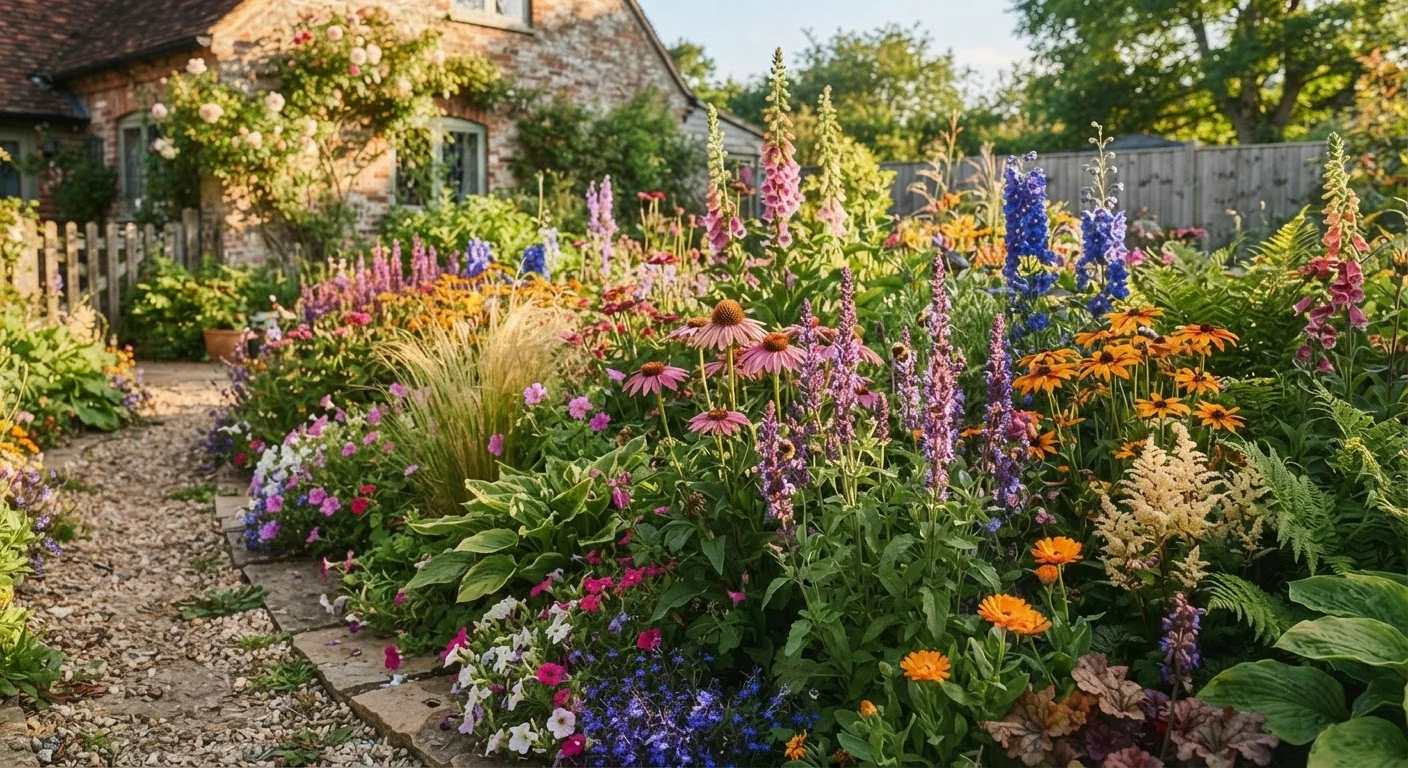
The most functional approach for most homeowners is a mixed planting strategy. Use perennials as the structural backbone — plants that reliably return and define the bed's shape — then fill gaps with annuals to add season-long color and visual density while the perennials mature.
A simple framework to follow:
- Foundation layer: Choose three to five perennial species suited to your zone, light, and soil conditions. Space them according to their mature spread.
- Color fill layer: Plant annuals in the gaps between perennials. As perennials mature and spread over subsequent years, reduce or eliminate annual fill accordingly.
- Container accents: Annuals in pots or planters give you maximum flexibility to change the look seasonally without committing to ground planting.
This approach reduces the cost of annuals over time while giving you immediate visual results in year one when the perennials are still establishing themselves. For those considering different bed configurations, comparing raised beds versus in-ground planting may also help you decide how to structure your overall garden layout.