

| SAE Grade System Origin | Established by the Society of Automotive Engineers (SAE International standard J300) |
| "W" in Oil Grade Stands For | Winter (not weight) (SAE J300 specification) |
| Hot-side Test Temperature | 100°C (212°F) (SAE J300 viscosity testing standard) |
| Most Common Passenger Car Grade | 5W-30 or 5W-20 (varies by manufacturer) (General industry reference; confirm in your owner's manual) |
| When Most Engine Wear Occurs | Within seconds of cold start-up (General engineering consensus on lubrication studies) |
| Authoritative Source for Your Grade | Vehicle owner's manual (Always supersedes general guidance) |
Decoding the Oil Grade Label
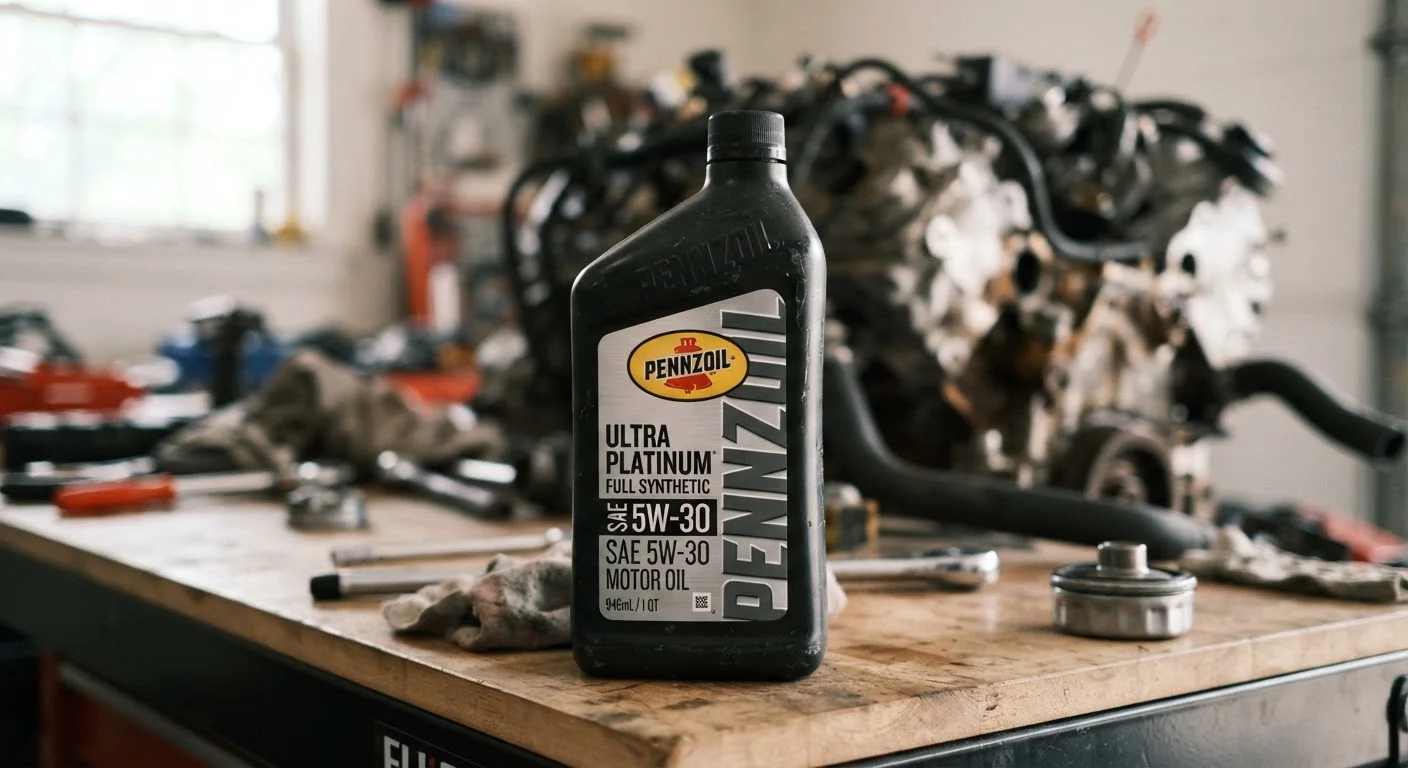
Pull any bottle of motor oil off a shelf and you'll see a code like 5W-30 or 10W-40. These aren't brand identifiers — they're standardized viscosity grades set by the Society of Automotive Engineers (SAE). Understanding them is one of the most practical things a driver can know.
Viscosity
A fluid's resistance to flow. In motor oil, higher viscosity means the oil is thicker and flows more slowly; lower viscosity means it flows more freely. The right viscosity depends on engine design and operating temperature.
SAE Grade
A standardized viscosity classification system developed by the Society of Automotive Engineers. Grades like 5W-30 tell you how an oil performs at both cold and operating temperatures.
Multi-grade Oil
An oil engineered to perform adequately across a range of temperatures, expressed with two numbers (e.g., 5W-30). It replaced single-grade oils that required seasonal changes in many climates.
Viscosity Index Improver
An additive in multi-grade oils that helps the oil resist thinning at high temperatures, allowing a single formulation to cover a wider operating temperature range.
API Certification
A quality designation from the American Petroleum Institute confirming that a motor oil meets current performance, lubrication, and emissions-protection standards for gasoline or diesel engines.
Cold-start Wear
Engine wear that occurs in the first seconds after ignition, before oil has fully circulated. Choosing the correct cold-weight grade minimizes the time critical parts run without adequate lubrication.
The number before the "W" describes the oil's flow characteristics in cold conditions. The "W" stands for winter, not weight. The number after the hyphen describes how the oil behaves at normal operating temperature — roughly 212°F (100°C). A lower cold-rating number means the oil flows more freely in frigid starts; a higher hot-rating number means the oil maintains more resistance to thinning under heat.
So 5W-30 flows more easily at cold start than 10W-30, but both reach similar viscosity once your engine is fully warmed up. That distinction matters when you turn the key on a January morning and oil needs to reach every moving part within seconds.
Why Viscosity Matters for Engine Health
Engine oil serves multiple roles: it lubricates metal surfaces, carries heat away from components, suspends contaminants until the next oil change, and helps seal microscopic gaps between moving parts. The oil's viscosity — its resistance to flow — determines how well it does each of these jobs across the temperature range your engine actually experiences.
| SAE Grade System Origin | Established by the Society of Automotive Engineers (SAE International standard J300) |
| "W" in Oil Grade Stands For | Winter (not weight) (SAE J300 specification) |
| Hot-side Test Temperature | 100°C (212°F) (SAE J300 viscosity testing standard) |
| Most Common Passenger Car Grade | 5W-30 or 5W-20 (varies by manufacturer) (General industry reference; confirm in your owner's manual) |
| When Most Engine Wear Occurs | Within seconds of cold start-up (General engineering consensus on lubrication studies) |
| Authoritative Source for Your Grade | Vehicle owner's manual (Always supersedes general guidance) |
Too thin an oil under high heat and the lubricating film between metal parts breaks down, increasing wear. Too thick an oil in cold conditions and the engine is essentially oil-starved for those first critical seconds after start-up, when the majority of engine wear occurs. This is why matching oil grade to your climate and engine design isn't a minor detail — it directly affects longevity.
Modern multi-grade oils (the kind with two numbers) handle a much wider temperature range than the single-grade oils used decades ago, thanks to additives called viscosity index improvers. But they still have limits, which is why your owner's manual specifies a particular grade rather than leaving it open-ended.
For a broader view of how oil changes fit into overall vehicle care, see your complete maintenance schedule guide. And if you're weighing oil types as well as grades, the differences between synthetic and conventional oil are worth understanding alongside viscosity basics.
How to Find the Right Grade for Your Vehicle
The single most reliable source is your vehicle's owner's manual. Manufacturers specify oil grades based on engine tolerances, clearances, and the operating conditions the engine was designed for. Using a grade outside that specification — even one that seems close — can subtly affect fuel economy, emissions performance, and wear rates over time.
A few practical points to keep in mind:
- Climate matters: Owners in colder climates sometimes use a lower cold-weight oil (e.g., moving from 10W-30 to 5W-30) during winter months if the manufacturer permits it — but always confirm this against your manual first.
- High-mileage engines: Some vehicles with significant mileage may benefit from oils formulated for older engines, which often carry a slightly higher viscosity to compensate for increased clearances. Check the manufacturer's guidance rather than assuming.
- API and ILSAC certifications: Beyond the SAE viscosity grade, look for API (American Petroleum Institute) or ILSAC certification symbols on the label. These confirm the oil meets current performance and emissions-protection standards.
Common myths about oil — including the idea that thicker is always better — are addressed in common car maintenance myths worth questioning. If you're considering changing oil yourself, what a DIY oil change actually involves walks through the full process, including when to hand the job to a professional.