

Automotive Advice

What to Confirm Before Collecting a Car You've Agreed to Buy

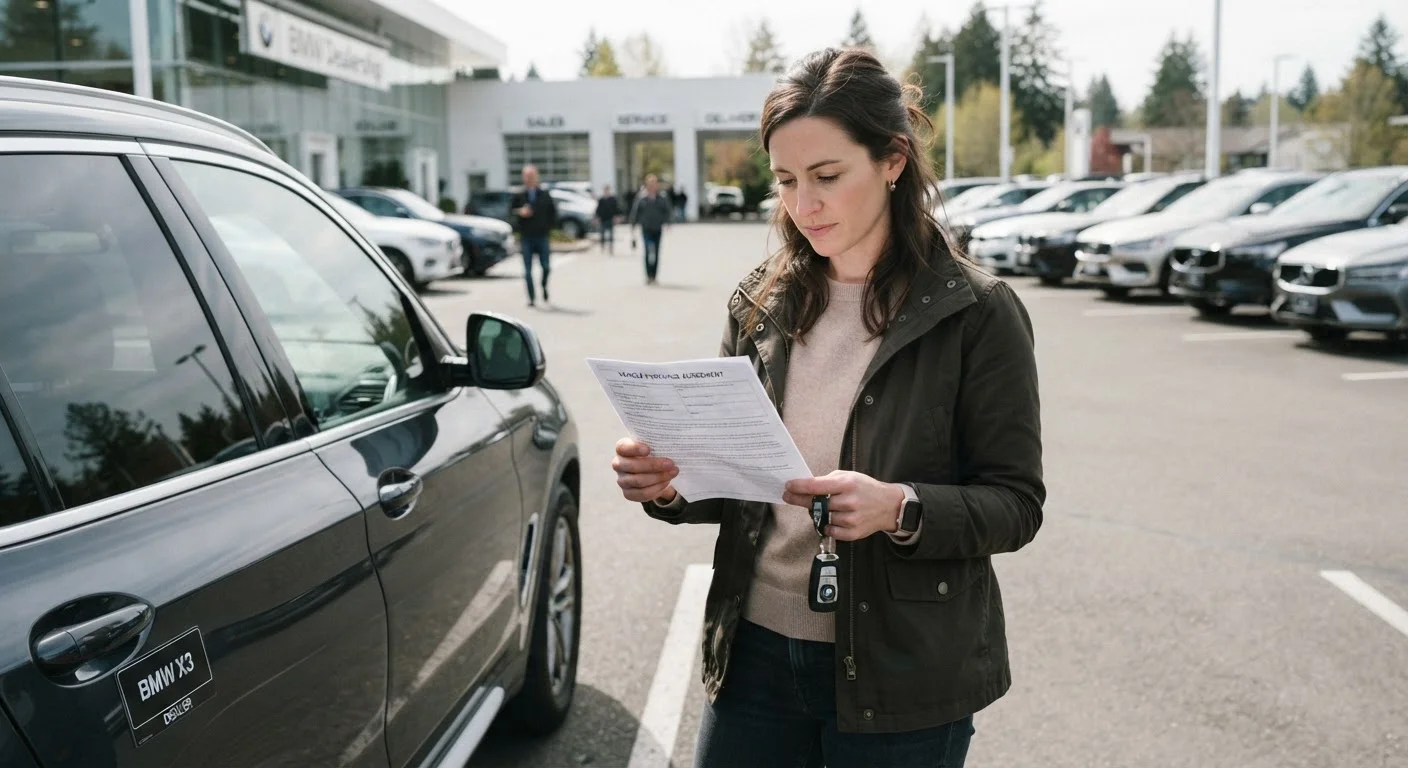
Driver reviewing vehicle documents and holding car keys in a dealership parking lot

Key Takeaways

  • Verify all ownership documents match the seller's identity before handing over any payment.
  • Confirm the vehicle's VIN on the title, dashboard, and door jamb all agree.
  • Check for outstanding liens, recall notices, and accident history using a vehicle history report.
  • Inspect the physical condition in daylight and confirm all agreed extras are present.
  • Never drive away without proof of insurance in your name for that specific vehicle.
30–60 min

Summary

22 items · 30–60 minutes

Why This Checklist Matters

Agreeing on a price is only the midpoint of a vehicle purchase. The collection day — when money changes hands and keys are exchanged — is where overlooked details can turn a good deal into a costly headache. Titles that don't match, undisclosed liens, and missing service records are among the most common problems buyers discover only after the fact.

This checklist is designed to be worked through systematically before you sign the final bill of sale or hand over payment. It applies whether you're buying from a franchised dealer, an independent lot, or a private seller. If you're still weighing which route to take, our guide to new, used, and certified pre-owned trade-offs can help you frame that decision first.

Work through each group below at the collection point, ideally in daylight and without time pressure. If a seller resists giving you adequate time to complete these checks, treat that as a significant warning sign.

Required

Government-issued photo ID (seller's)

Verify the seller's identity matches the name on the vehicle title.

Required

Vehicle History Report (VIN-based service)

Check for accident history, title brands, odometer discrepancies, and past owners.

Required

NHTSA Recall Lookup (nhtsa.gov)

Confirm no open safety recalls are unresolved on the specific VIN.

Optional

Tyre tread depth gauge

Accurately measure remaining tread depth on all four tyres.

Optional

Flashlight or phone torch

Inspect undercarriage, engine bay, and interior crevices in low-light areas.

Required

Printed or digital copy of this checklist

Work through each item systematically so nothing is skipped under time pressure.

The Full Collection-Day Checklist

The items below are grouped by category. Print or save this page and check off each item on-site. For used vehicles, a pre-purchase inspection by an independent mechanic should ideally happen before collection day — but the physical checks in the Condition group below remain essential even if you've already had one done.

Ownership & Title Documents

Confirm the seller's name on the title exactly matches their government-issued photo ID — ask to see both side by side. Must
Verify the title is clean (no lien holder listed) or, if a lien exists, obtain written confirmation it will be satisfied before or at the time of sale. Must
Check that the VIN printed on the title matches the VIN on the dashboard plate and the door-jamb sticker — all three must agree. Must
Confirm the odometer reading on the title disclosure matches the dashboard reading at the moment of sale. Must
Obtain a bill of sale signed by both parties that includes the sale price, vehicle description, VIN, and date. Must

Vehicle History & Legal Status

Run a vehicle history report using the VIN and review it for accident records, salvage or flood branding, and title problems. Must
Check the National Highway Traffic Safety Administration (NHTSA) recall database for any open safety recalls on this specific VIN that haven't been remedied. Must
Ask the seller to provide a maintenance and service record — a credible history of oil changes, inspections, and major work adds confidence and value. Should
If buying from a private seller, confirm the vehicle is not listed as stolen by verifying the VIN through your state DMV or a reputable history service. Must

Physical Condition

Inspect all body panels in natural daylight for mismatched paint, rippling, or uneven panel gaps that may indicate prior collision repair. Must
Test every electrical feature including lights, windows, mirrors, air conditioning, infotainment, and backup camera before accepting the vehicle. Should
Check tyre tread depth on all four corners and inspect for uneven wear patterns, which can point to alignment or suspension issues. Must
Start the engine cold if possible, listen for unusual noises, and check that no warning lights remain illuminated after startup. Must
Confirm all items agreed as part of the deal — spare tyre, floor mats, second key fob, charger cables — are present and in working order. Should

Financial & Payment Confirmation

Confirm the final purchase price, tax, title, and any dealer or documentation fees match what was agreed in writing before collection day. Must
If financing through a lender, verify your loan documents clearly state the APR, total amount financed, monthly payment, and loan term before signing. Must
Use a traceable payment method (cashier's check, bank wire) for large sums — avoid carrying large amounts of cash. Should
Obtain written receipts for any deposit already paid and confirm it is credited correctly against the final balance. Must

Insurance & Registration

Contact your insurer before collection day to add the new vehicle to your policy — do not drive it without coverage in your name. Must
Confirm you understand your state's timeline and process for transferring or registering the title in your name after purchase. Must
For dealer purchases, clarify whether temporary transit tags are provided and how long they are valid in your state. Should

Never Drive Away Uninsured

Driving a newly purchased vehicle without active insurance in your name is illegal in virtually every US state and leaves you personally liable for any accident, theft, or damage that occurs. Call your insurer the day before collection to bind coverage on the new vehicle — have the VIN ready. Do not assume a dealer's lot policy or your existing policy automatically extends to a vehicle you now own.

Once you've taken possession, your next priority is setting up an ongoing maintenance schedule. Our car maintenance hub covers the essential upkeep your vehicle needs from day one. And when you're ready for your first longer trip, the pre-journey safety checklist will help you confirm the vehicle is road-ready.

Automotive Advice Editorial Team is the collective byline for our editorial team and contributor network. Articles published under this byline or an editorial pen name are researched, written, and reviewed according to our editorial standards for clarity, consistency, and independence before publication.

View all articles by Automotive Advice Editorial Team →
Disclaimer: The content provided on our blog site traverses numerous categories, offering readers valuable and practical information. Readers can use the editorial team’s research and data to gain more insights into their topics of interest. However, they are requested not to treat the articles as conclusive. The website team cannot be held responsible for differences in data or inaccuracies found across other platforms. Please also note that the site might also miss out on various schemes and offers available that the readers may find more beneficial than the ones we cover.