

Key Takeaways
- New cars can lose 15–25% of their value in the first year alone.
- Vehicle type, brand reliability reputation, and market demand all influence depreciation rate.
- Trucks and SUVs with strong resale markets tend to depreciate more slowly than many sedans.
- Keeping a car well-maintained and limiting excess mileage helps preserve its resale value.
- Buying a used vehicle lets someone else absorb the steepest part of the depreciation curve.
- Electric vehicles are currently subject to rapidly shifting depreciation patterns due to evolving technology and incentives.
Vehicle Depreciation
Vehicle depreciation is the decline in a car's market value over time. From the moment a new car leaves the dealership, it begins losing worth — and continues to do so as it accumulates age, mileage, and wear. Depreciation is typically the single largest ownership cost over a vehicle's life, often exceeding fuel and insurance combined.
Depreciation is calculated as the difference between a vehicle's purchase price and its residual value at a given point in time, expressed either as a dollar amount or as a percentage of the original price.
How Depreciation Works — and Why the First Year Hits Hardest
Depreciation doesn't follow a straight line. A new vehicle loses value fastest in its earliest years, then the rate typically slows. This curve exists because the gap between "new" and "used" is largest the moment a car is driven off the lot — a psychological and market reality that immediately affects what a buyer would pay for it.
On average, a new car loses roughly 15–25% of its purchase price in year one. By the end of year five, total depreciation often reaches 50–60% of the original price, depending on the vehicle. After that, the curve tends to flatten considerably.
For drivers, this creates a practical consideration: the most expensive period of ownership, from a depreciation standpoint, is the first few years. See our annual ownership cost breakdown for how depreciation compares against fuel, insurance, and maintenance over time.
~20%
Average first-year new-car value loss
Industry estimates commonly cite a 15–25% depreciation range in year one, with 20% as a widely used midpoint across vehicle categories.
~50%
Typical five-year depreciation rate
Many new vehicles lose approximately half their original purchase value within five years, according to automotive valuation industry data.
12,000–15,000
Miles per year used in standard depreciation estimates
Most residual value and depreciation projections are based on this annual mileage range; driving significantly more accelerates value loss.
Factors That Determine How Fast a Vehicle Loses Value
Not all cars depreciate at the same rate. Several factors interact to determine where a specific vehicle lands on the depreciation curve:
- Brand reputation for reliability: Vehicles from manufacturers with strong long-term reliability records tend to retain value because buyers trust they'll remain dependable over time.
- Vehicle type and market demand: Pickup trucks and body-on-frame SUVs have historically held value well in the US market due to consistent consumer demand. Compact sedans often face stiffer depreciation because the used market is well-supplied.
- Fuel type: Gas and hybrid vehicles follow relatively established depreciation patterns. Electric vehicles are currently more unpredictable — incentive changes and evolving technology can cause rapid value shifts.
- Trim level and options: Popular configurations with sought-after features depreciate more slowly. Unusual color choices or uncommon trim levels can limit resale appeal.
- Mileage and condition: Higher-than-average mileage and visible wear accelerate depreciation. Consistent car maintenance directly supports resale value.
- Market conditions: Broader economic factors — inventory levels, fuel prices, consumer preferences — affect used-car pricing across the board.
Why Buying Used Can Shift the Depreciation Math in Your Favor
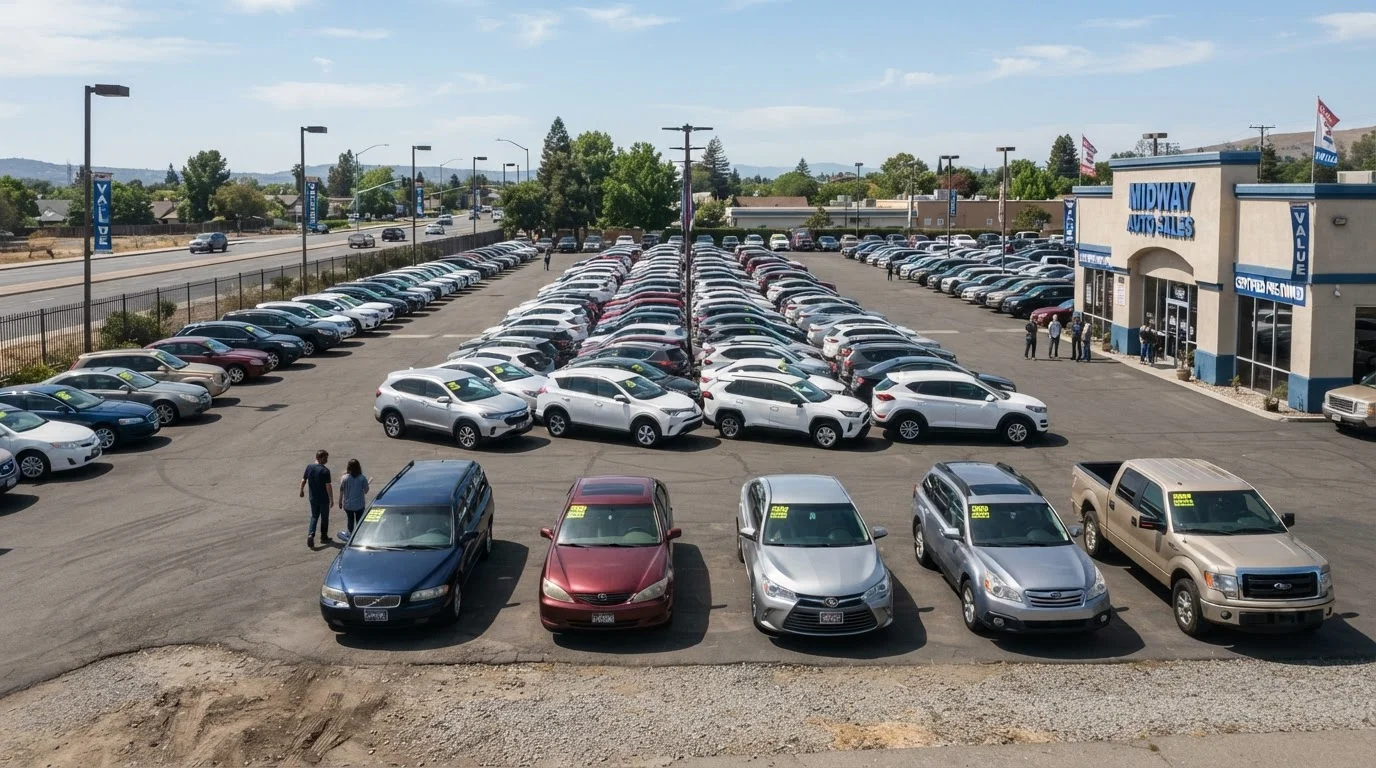
One practical implication of the depreciation curve is that buying a vehicle that's already one to three years old means someone else absorbed the steepest losses. A car with 20,000–30,000 miles that originally sold for $35,000 might now be available for $26,000–$28,000 — yet still carry significant remaining useful life.
This is a key financial argument for used vehicles, though it comes with trade-offs around warranty coverage, unknown history, and technology currency. For a fuller look at how new, used, and certified pre-owned options compare, see our guide to new, used, and CPO vehicles.
It's also worth noting that even used vehicles continue to depreciate. Understanding the remaining curve for any vehicle you're considering is part of calculating its true total cost of ownership.
How to Limit the Financial Impact of Depreciation
While you can't eliminate depreciation, you can make informed decisions that reduce its impact on your finances:
- Choose vehicles with proven resale demand. Research historical resale value data before purchasing. Industry sources like automotive valuation guides publish residual value data by model.
- Keep mileage in check where practical. Staying near or below the average annual mileage range helps preserve value.
- Maintain the vehicle consistently. A full service history signals responsible ownership and supports asking price at resale. Used car buyers increasingly check maintenance records — sellers who have them are in a stronger position.
- Consider holding the car longer. Once the steep early depreciation is absorbed and a loan is paid off, the cost-per-year of ownership drops significantly. The financial case for keeping a car longer is often more compelling than frequent upgrades suggest.
- Be realistic about timing. Trading in or selling during periods of high used-car demand can meaningfully improve what you receive — though market conditions aren't always predictable.
Depreciation is not a reason to avoid buying a vehicle — it's a cost of use, like any other. Understanding it puts you in a better position to choose wisely and plan accordingly.