

Key Takeaways
- Depreciation typically accounts for the largest single share of total ownership cost.
- Annual fuel, insurance, and maintenance costs routinely exceed $5,000 for average US drivers.
- Financing interest can add thousands of dollars to your real purchase cost over a loan term.
- TCO varies significantly by vehicle type, age, mileage, and where you live.
- Calculating TCO before buying helps you compare vehicles on an equal financial footing.
Total Cost of Vehicle Ownership
Total cost of vehicle ownership (TCO) is the full amount a driver spends on a car over a given period — not just the purchase price. It includes depreciation, fuel, insurance, financing interest, maintenance, registration fees, and taxes. Adding these together gives you the real annual or lifetime cost of owning and operating a vehicle.
TCO is often expressed as a cents-per-mile figure, which allows direct comparison across vehicles with different fuel types, insurance tiers, and expected lifespans.
Why the Sticker Price Is Only the Beginning
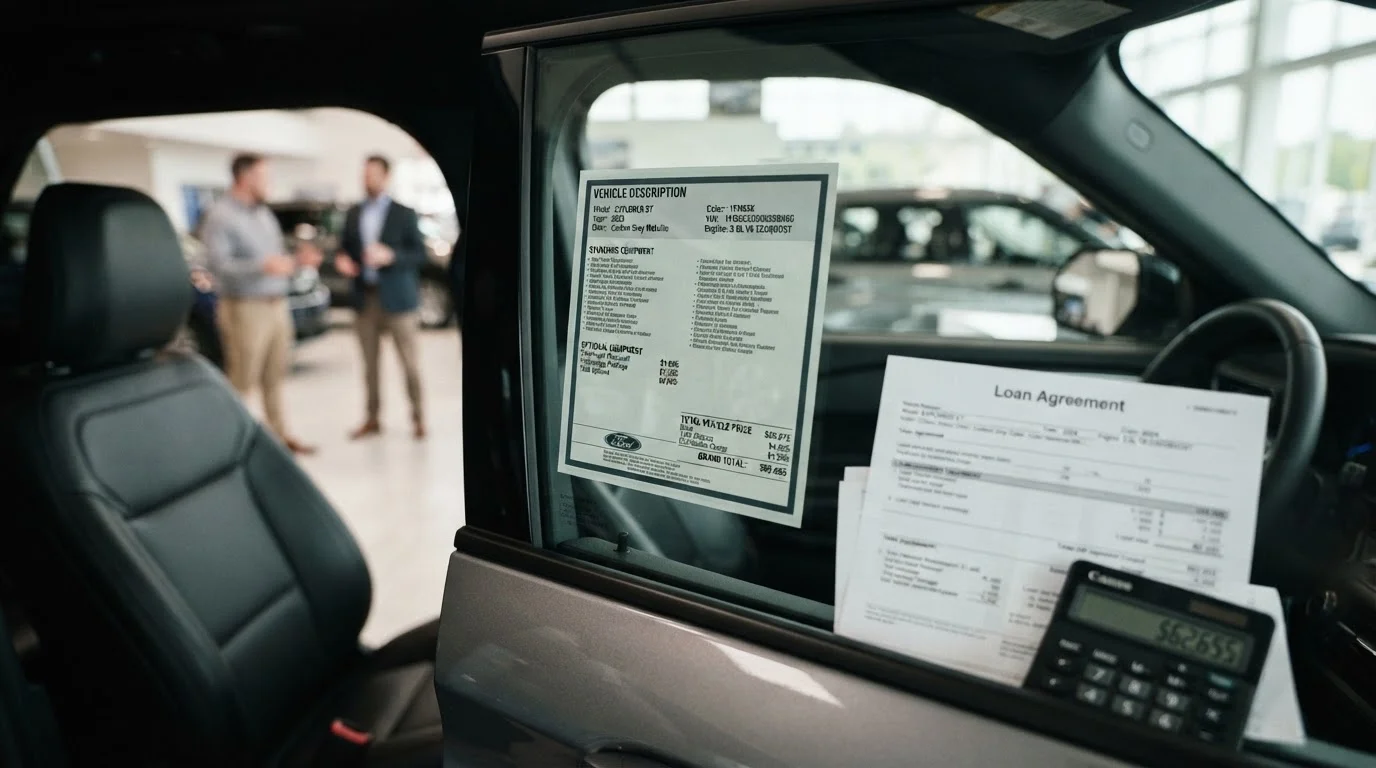
Walk onto any dealership lot and the number that dominates the conversation is the MSRP — the manufacturer's suggested retail price. It's printed large, negotiated hard, and used as the primary benchmark for whether a deal is 'good.' But for the overwhelming majority of drivers, the sticker price represents a minority of what they'll actually spend.
Total cost of vehicle ownership (TCO) accounts for every dollar that leaves your pocket because you own a car — not just the amount you paid to acquire it. When drivers skip this analysis, they can find themselves surprised by how expensive a 'cheaper' vehicle turns out to be, or how two cars with similar sticker prices carry dramatically different running costs. See our annual ownership cost reference breakdown for a category-by-category view of recurring expenses.
$10,000+
Average annual new vehicle ownership cost
AAA's Your Driving Costs study consistently finds total annual ownership expenses for a new vehicle exceed $10,000 when all cost categories are included.
15–25%
Typical first-year depreciation on a new car
Industry data from sources including Edmunds and Kelley Blue Book indicate most new vehicles lose 15–25% of their value within the first 12 months of ownership.
~50%
Value lost over five years (new vehicles)
On average, a new vehicle retains roughly half its original value after five years, though this varies significantly by make, model, and market conditions.
The Six Cost Categories That Drive Total Ownership Expense
1. Depreciation
Depreciation — the loss in a vehicle's market value over time — is consistently the largest single cost for new-vehicle buyers. A new car can shed 15–25% of its value within the first year, and roughly 50% or more over five years. Our vehicle depreciation explainer covers which vehicle types hold value better and the factors that influence that rate.
2. Fuel
Annual fuel cost depends on three variables: how much you drive, your vehicle's fuel economy (MPG or equivalent for EVs), and local fuel prices. A driver covering 15,000 miles per year in a vehicle averaging 25 MPG pays significantly more at the pump than one driving the same distance in a 40-MPG hybrid — a difference that compounds across a full ownership period.
3. Insurance
Insurance premiums vary by vehicle type, your driving record, location, and the coverage levels you carry. Sports cars, luxury models, and vehicles with expensive repair parts generally attract higher premiums. Lenders typically require comprehensive and collision coverage when a loan is outstanding, which adds to cost during the financing period.
4. Financing and Interest
If you borrow to buy, your effective purchase price rises with every interest payment. Loan term and interest rate are the primary drivers here. Understanding how these variables interact can meaningfully affect the total repayment figure — our guide to how interest rate, loan term, and balance interact explains this clearly.
5. Maintenance and Repairs
Scheduled maintenance — oil changes, tire rotations, brake service, fluid replacements — is a predictable and manageable cost if planned for. Unscheduled repairs introduce variability, particularly as a vehicle ages. Keeping a consistent maintenance routine reduces the likelihood of expensive unplanned repairs and helps preserve resale value. Refer to your owner's manual for manufacturer-recommended service intervals rather than relying on general rules of thumb.
6. Registration, Taxes, and Fees
State registration fees, personal property taxes (in states that levy them), and any applicable sales taxes all add to annual cost. These vary considerably by state and, in some cases, by vehicle value — meaning a pricier car carries higher annual fee obligations even after purchase.
How to Run a Simple TCO Comparison
You don't need specialized software to get a directionally accurate picture. A basic annual TCO estimate requires five inputs for each vehicle you're comparing:
- Estimated depreciation per year: Research the current resale value of a vehicle that is the same make, model, and mileage as where you'll be in three to five years. The difference from today's purchase price, divided by the years held, gives an annual figure.
- Annual fuel cost: Divide your expected annual mileage by the vehicle's EPA-rated MPG, then multiply by your local average fuel price.
- Insurance premium: Get an actual quote — don't estimate. Rates differ enough between vehicles that assumptions can skew your comparison significantly.
- Total financing interest: Use a loan amortization approach: multiply your monthly payment by the number of months, then subtract the principal borrowed. Divide by the loan term in years.
- Maintenance reserve: Use the manufacturer's scheduled maintenance cost as a baseline, then add a reasonable buffer for wear items (tires, brakes) based on your mileage.
Sum these five figures, divide by your expected annual mileage, and you have a cost-per-mile figure. This makes comparing an older used vehicle against a new one far more honest. Our article on new, used, and certified pre-owned trade-offs applies this thinking directly to vehicle selection.
The Long-Term Ownership Perspective
One of the most consistent findings in automotive cost analysis is that frequent vehicle upgrades tend to be expensive. Every time a driver trades in and buys new, they re-enter the steepest part of the depreciation curve and restart financing costs. Once a loan is paid off and the vehicle's major depreciation has occurred, per-year costs often fall considerably — even as maintenance needs increase modestly with age.
This doesn't mean holding a high-mileage vehicle indefinitely is always the right call. Reliability, safety technology, and fuel economy all change over time. But understanding the financial case for keeping a car longer gives drivers a clearer basis for deciding when it genuinely makes sense to trade versus when it's primarily driven by preference.
The sticker price is where negotiations start. Total cost of ownership is where financially sound vehicle decisions are made.
This article is for general informational purposes only and does not constitute financial or legal advice. Vehicle costs vary by individual circumstances, location, and market conditions. Consult a qualified financial professional for guidance specific to your situation.