

Travel Planning

Pre-Trip Planning Checklist for First-Time International Travelers

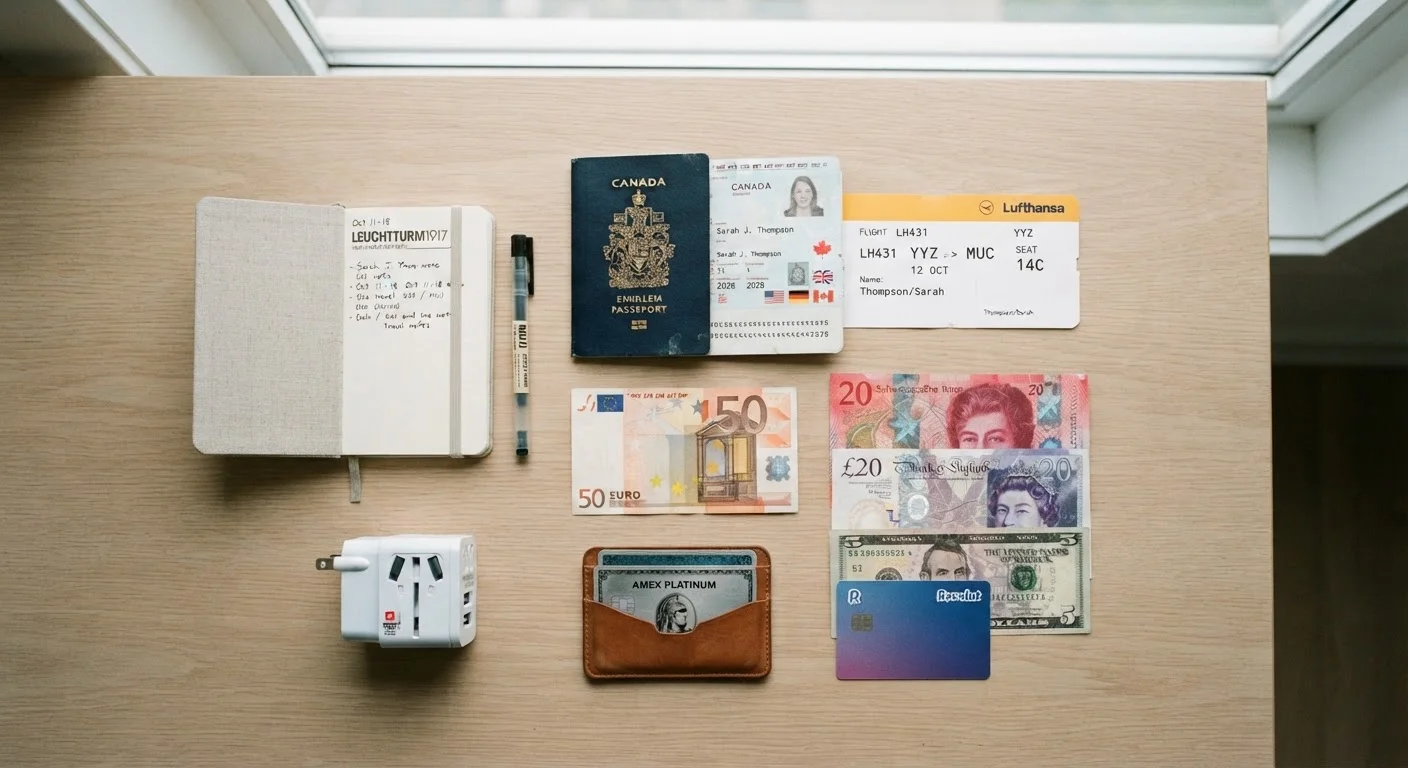
Flat lay of passport, boarding pass, currency, and travel documents on a light surface

Key Takeaways

  • Passport validity requirements vary by country — most require at least six months beyond your travel dates.
  • Visa applications can take weeks or months; begin the process as early as possible.
  • Travel health preparation, including vaccinations and prescriptions, should start at least four to six weeks before departure.
  • Keeping digital and physical copies of key documents reduces risk if originals are lost or stolen.
  • Notifying your bank and understanding currency exchange options prevents payment disruptions abroad.
  • Travel insurance is a practical safeguard, not a luxury — evaluate coverage before every international trip.
45–90 min

Summary

24 items · 45–90 minutes

Why First-Time International Travelers Need a Structured Checklist

First-time international travel involves a category of logistics that domestic trips simply don't require: government-issued documents, foreign entry requirements, health mandates, and financial systems that don't always work seamlessly across borders. Missing one piece — an expired passport, a missing visa, an unnotified bank — can unravel an otherwise well-planned trip.

This checklist is designed to give you a reliable framework, organized by category, so nothing falls through the cracks. Work through it methodically rather than trying to handle everything at once. For a broader planning framework, see our complete guide for first-time trip planners.

Note that entry requirements, visa rules, and health documentation standards change regularly. Always verify current requirements through official government sources — your own country's foreign affairs department and the destination country's embassy or consulate — before finalizing any plans.

What You'll Need to Work Through This Checklist

Before diving into the checklist items, gather the tools that make the process more efficient. Having everything in one place — physical and digital — reduces back-and-forth and helps you track what's done.

Required

Passport and travel document folder

Keeps your passport, visa approvals, insurance documents, and itinerary organized in one accessible place.

Required

Secure cloud storage or password manager

Stores encrypted digital copies of key documents for emergency access from anywhere.

Required

Official government travel registry (e.g., U.S. STEP)

Allows your government to contact you or locate you in a crisis situation abroad.

Required

Travel health clinic or physician

Provides destination-specific vaccination advice, prescriptions, and official health documentation.

Optional

Offline maps app

Enables navigation at your destination without requiring a mobile data connection.

Optional

Universal power adapter

Ensures your devices can charge regardless of outlet type or voltage at your destination.

The Complete Pre-Trip Planning Checklist

Work through each group in order. Items marked must are non-negotiable for most international trips. Those marked should are strongly recommended and address common failure points. Nice-to-have items add resilience and comfort without being essential.

For destination-specific entry and documentation concepts — including visa categories and vaccination certificate formats — the Traveler's Reference Guide to Entry Requirements is a useful companion resource.

Identity & Travel Documents

Confirm your passport is valid for at least six months beyond your return date, as many countries enforce this rule strictly at the border. Must
Research and apply for any required visas well in advance — processing times can range from a few days to several months depending on the destination. Must
Make two copies of your passport, visa, and travel itinerary: one stored separately in your luggage and one left with a trusted contact at home. Should
Store digital copies of all key documents in a secure, encrypted cloud service or email them to yourself for emergency access. Should

Health Preparation

Schedule a travel health consultation with a physician or travel medicine clinic at least four to six weeks before departure to address vaccinations and destination-specific health risks. Must
Obtain any required or recommended vaccinations and request official documentation, such as an International Certificate of Vaccination, if required by your destination. Must
Carry enough prescription medication for the full trip plus a buffer, and keep medications in original labeled containers in your carry-on bag. Must
Pack a basic travel health kit including an oral rehydration solution, antidiarrheal medication, pain relievers, adhesive bandages, and any personal medical supplies. Should
Research the nearest hospitals or medical facilities at your destination and save emergency contact numbers before you leave. Nice to have

Travel Insurance & Emergency Planning

Purchase a travel insurance policy that covers trip cancellation, medical emergencies, and medical evacuation before your departure date. Must
Read your policy carefully to understand coverage limits, exclusions, and the claims process — don't assume all plans cover the same scenarios. Must
Register your trip with your country's official traveler registry (such as the U.S. State Department's STEP program) so you can receive alerts and be located in an emergency. Should

Money & Banking

Notify your bank and credit card providers of your travel dates and destinations to prevent transactions from being flagged and blocked. Must
Research your destination's currency and understand the general approach to exchanging money — airport kiosks, local ATMs, and bank exchanges typically differ significantly in fees and rates. Must
Carry a modest amount of local currency in cash for arrival, since card acceptance is not universal in all countries or transit situations. Should
Identify a backup payment method — a second card or a small amount of US dollars — in case your primary card is lost, blocked, or not accepted. Should

Logistics & Connectivity

Confirm transportation from the airport to your accommodation before departure, including whether your ride-hailing apps work locally or if you'll need a taxi or public transit. Must
Research your phone plan's international coverage and decide whether to use an international add-on, a local SIM card, or a portable Wi-Fi device. Should
Pack the correct power adapters for your destination's outlet type and voltage, as these vary significantly across regions. Should
Download offline maps and any relevant transit apps for your destination so you can navigate without relying on a data connection. Nice to have

Pre-Departure Final Review

Re-confirm all flight details directly with the airline 24–48 hours before departure, including any gate or schedule changes. Must
Check current travel advisories for your destination through official government sources and verify no new entry requirements have been introduced since you booked. Must
Share your complete itinerary — flights, accommodation addresses, and a contact number — with a trusted person at home. Should

After the Checklist: Final Preparations

Once you've worked through all checklist groups, do a final review 48–72 hours before departure. Confirm your flight details directly with the airline, re-check any entry requirement updates through official sources, and ensure someone at home has your itinerary and emergency contact information.

If cost management is still a concern at this stage, the pre-trip budget checklist covers hidden costs and overlooked savings opportunities that often surface right before booking confirmation.

Planning where you're headed next? Our destination guides offer honest, practical overviews of popular international destinations — including Japan for first-time international travelers, which covers entry logistics, transit, and cultural expectations in detail.

Always Verify Entry Requirements Directly

Visa policies, vaccination mandates, and entry restrictions can change with little notice. No checklist, travel guide, or third-party website should be treated as a definitive source for these requirements. Before finalizing any trip, verify current entry rules directly through the official embassy or consulate of your destination country and your own government's foreign affairs department.

Travel Planning Editorial Team is the collective byline for our editorial team and contributor network. Articles published under this byline or an editorial pen name are researched, written, and reviewed according to our editorial standards for clarity, consistency, and independence before publication.

View all articles by Travel Planning Editorial Team →
Disclaimer: The content provided on our blog site traverses numerous categories, offering readers valuable and practical information. Readers can use the editorial team’s research and data to gain more insights into their topics of interest. However, they are requested not to treat the articles as conclusive. The website team cannot be held responsible for differences in data or inaccuracies found across other platforms. Please also note that the site might also miss out on various schemes and offers available that the readers may find more beneficial than the ones we cover.