
Japan for First-Time International Travellers: Entry, Etiquette, and Everyday Life

Key Takeaways
- Many nationalities can enter Japan visa-free for short stays, but entry rules change — always verify with official sources.
- Japan's public transit is extensive and reliable, but requires advance planning around IC cards and rail passes.
- Quiet, respectful behavior in public spaces is a genuine social norm, not a tourist formality.
- Japan is largely cash-dependent — arriving with yen on hand prevents real logistical headaches.
- Language barriers are manageable with preparation, but English signage is inconsistent outside major cities.
Start here
Entry Requirements and Visa Basics
Next
Getting Around: Transit Without the Overwhelm
Then
Social Etiquette and Cultural Norms
Dig deeper
Everyday Life: Food, Money, and Communication
Before you book
Setting Realistic Expectations Before You Go
Entry Requirements and Visa Basics
Japan's entry process is more straightforward for many nationalities than first-timers often expect. Citizens of the United States, Canada, the United Kingdom, Australia, and most EU countries are typically eligible for short-stay visa-free entry for tourism purposes — usually up to 90 days. However, eligibility depends on your specific passport, and policy details can shift. Always confirm current requirements with the Japanese Embassy or your government's official travel advisory service well before your departure date.
When you arrive, you will clear immigration through an automated gate system or staffed booth. Biometric data — fingerprints and a photograph — is collected from most foreign visitors. Declare all items accurately on your customs form; Japan's customs rules around certain medications (particularly some common over-the-counter drugs containing pseudoephedrine or codeine) are stricter than many travellers anticipate. Check Japan's Ministry of Health guidelines if you are traveling with prescription medication.
Before departure, review the pre-trip planning checklist for international travelers to make sure your documentation, health prep, and travel insurance are in order.
IC Card
A rechargeable contactless card (such as Suica or Pasmo) used to pay for train, subway, and bus fares across Japan's transit networks. It deducts the correct fare automatically when you tap in and out.
Japan Rail Pass
A prepaid ticket offering unlimited travel on most Japan Railways (JR) lines, including the shinkansen (bullet train), for a set number of days. It must be purchased before entering Japan and is only available to foreign visitors.
Ryokan
A traditional Japanese inn, typically featuring tatami-mat rooms, futon bedding, communal baths, and multi-course Japanese meals. Staying in one is a distinct cultural experience from a standard hotel.
Genkan
The entryway area of a home, ryokan, or some restaurants where outdoor shoes are removed before stepping up into the interior space. It marks the boundary between outside and inside.
Depachika
The basement food floor of a Japanese department store, offering a wide range of prepared foods, baked goods, fresh produce, and packaged specialties — considered a destination in its own right by many visitors.
Shinkansen
Japan's high-speed rail system, commonly called the bullet train, connecting major cities at speeds up to around 320 km/h. It is the primary long-distance transport option for most tourists.
Getting Around: Transit Without the Overwhelm
Japan's rail network is genuinely exceptional — punctual, clean, and dense enough to reach most major destinations without a car. The challenge for first-timers isn't the quality; it's the complexity. Major hubs like Tokyo and Osaka run overlapping systems from multiple operators, and reading the fare maps takes practice.
Start with an IC card (Suica or Pasmo are the most widely available). Load it with yen at any station kiosk, tap in, tap out, and the correct fare deducts automatically. These cards work across multiple operators and at thousands of convenience stores — they simplify daily logistics considerably.
If you plan to travel between cities — say, Tokyo to Kyoto or Hiroshima — investigate whether a Japan Rail Pass makes financial sense for your itinerary. It doesn't always, and the math depends on your specific routes and travel days. Calculate based on the actual journeys you plan before purchasing.
Plan Your IC Card Before You Land
Suica cards can now be added to Apple Wallet or Google Pay before departure, allowing you to set up your transit card from home and load funds without queuing at a kiosk on arrival. This is particularly useful if you arrive at a busy terminal like Narita or Haneda with heavy luggage.
Social Etiquette and Cultural Norms
Japan's social customs aren't a performance for tourists — they reflect deeply held values around respect, consideration, and order. Knowing a few key norms before arrival prevents awkward situations and shows genuine respect for the people you'll encounter.
- Quiet in public transit: Phone calls on trains are considered disruptive. Conversations should be kept low. Many carriages have designated quiet areas.
- No eating while walking: Street food is usually consumed where it's purchased. Eating while walking is generally seen as inconsiderate in urban settings.
- Shoes off indoors: Many ryokan (traditional inns), temples, and some restaurants require shoe removal at the entrance. Look for the step-up (genkan) or posted signs.
- Bowing: A brief, modest bow acknowledges greetings and thanks. You don't need to master degree-specific etiquette — a sincere small bow is always appropriate.
- No tipping: Service workers are paid to do their job well. Tipping can cause discomfort. Simply express thanks verbally.
These aren't arbitrary rules. Understanding them shapes how your interactions across two or three weeks will actually feel — more comfortable for you and more respectful toward residents.
Everyday Life: Food, Money, and Communication
Food is one of Japan's great strengths as a destination. Convenience stores (konbini) like 7-Eleven and FamilyMart serve genuinely good prepared food around the clock. Department store basement food halls (depachika) offer an extraordinary range. Ramen, soba, tempura, and conveyor-belt sushi are widely accessible at all budget levels. Vegetarian and vegan options exist but require deliberate searching outside major urban areas — dashi (fish stock) appears in many broths and sauces that otherwise look vegetarian.
Money remains predominantly cash in Japan. While contactless payments are becoming more common in cities, smaller restaurants, shrines, guesthouses, and rural shops frequently operate cash-only. ATMs at 7-Eleven convenience stores and Japan Post locations reliably accept international cards. Withdraw enough for several days when you have access to a compatible machine.
Communication is navigable with preparation. Google Translate's camera feature handles menus and signage reasonably well. English proficiency among service staff varies considerably — it's higher in major cities and tourist areas, lower in rural regions. Learning ten to fifteen Japanese phrases (please, thank you, excuse me, where is the station?) generates genuine goodwill and smooths interactions.
For a broader framework on managing finances and logistics before an international trip, see planning your first budget trip abroad.
Setting Realistic Expectations Before You Go
Japan is frequently described in superlatives, and many of those impressions hold up. But first-time visitors sometimes arrive with expectations shaped by idealized imagery that doesn't account for practical realities.
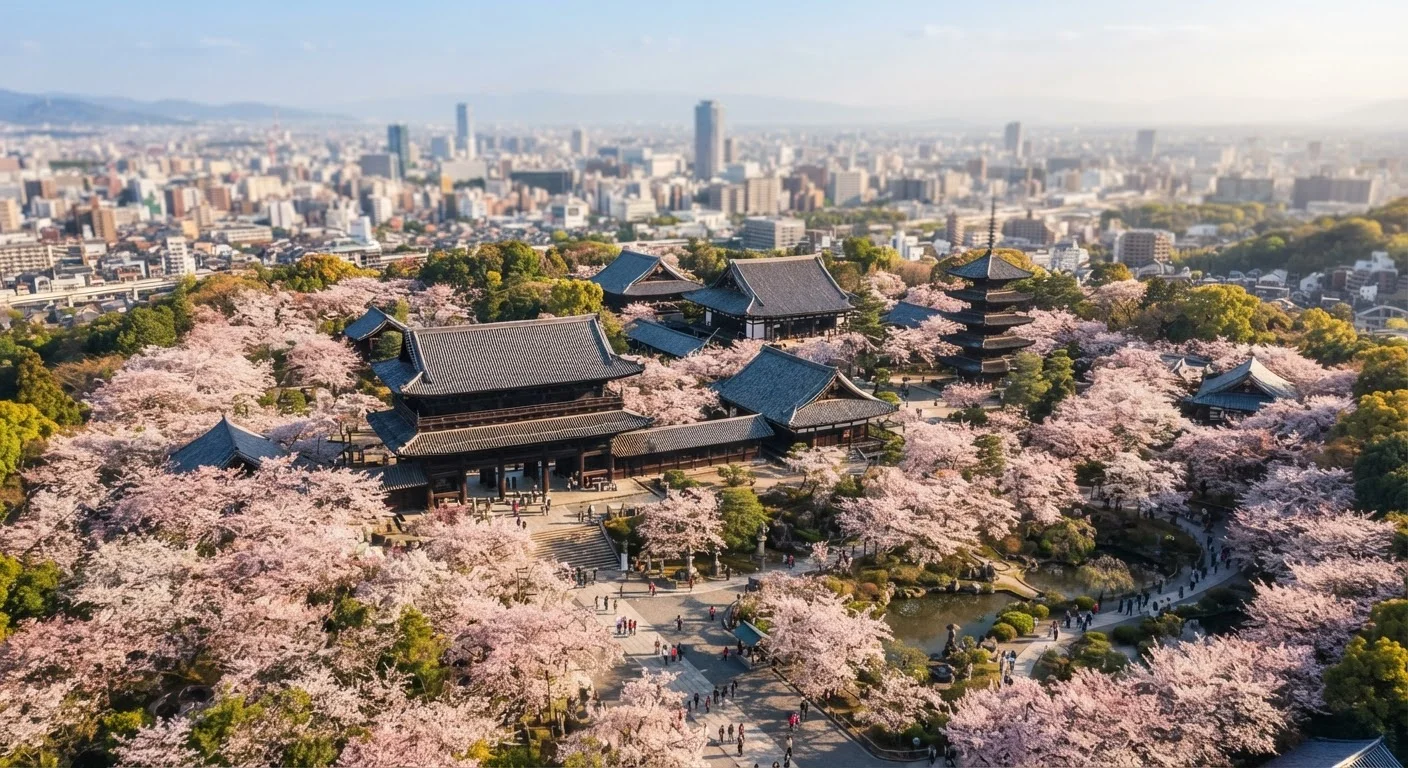
Tokyo is enormous — navigating it takes energy, and the scale surprises many people. Popular destinations like Kyoto's Fushimi Inari or Hakone can be genuinely crowded during peak seasons (cherry blossom season in late March through April, and autumn foliage in November are the busiest periods). If crowds will affect your experience, factor shoulder-season travel into your planning.
Japan is also more expensive than some neighbouring Asian destinations, though budget travel is feasible with the right approach. Accommodation, transportation, and food costs are manageable when you understand the landscape — though they should be built honestly into any trip budget.
If you're weighing Japan against other first-trip options in the region, our guide to visiting Southeast Asia on a first trip outlines a different set of trade-offs worth understanding.
For anyone still assembling the full planning framework, trip planning from scratch covers the end-to-end process from destination selection through departure.
Japan rewards travellers who arrive informed. Understanding entry logistics, social norms, and practical daily realities before you go doesn't diminish the experience — it makes room for it.