
A Traveller's Reference Guide to Entry Requirements, Visas, and Health Documentation

| Minimum passport validity (common rule) | 6 months beyond intended departure (Varies by destination; verify per country) |
| Most commonly mandated vaccine for entry | Yellow fever (WHO and destination government requirements) |
| Primary U.S. source for travel entry info | U.S. Department of State (travel.state.gov) |
| U.S. health travel guidance source | CDC Travelers' Health (wwwnc.cdc.gov/travel) |
| Common e-visa lead time | 3–10 business days (varies widely) (Apply well in advance of travel; check issuing country) |
| Embassy visa processing time | Days to several weeks (Varies by country, season, and application volume) |
Why Entry Requirements Matter Before You Book
Entry requirements are among the most consequential — and most overlooked — elements of international trip planning. A misunderstood visa rule or missing health document can result in boarding denial, detention at the border, or mandatory quarantine. These aren't rare edge cases; they happen regularly to travelers who assumed their passport was sufficient.
Requirements vary significantly by destination, nationality, travel purpose, and even the traveler's vaccination history. They also change — sometimes with little notice — in response to diplomatic shifts, public health developments, or security policy updates. No single article, including this one, can substitute for verification through official government and embassy sources before departure.
For a broader planning framework, see our pre-trip planning checklist for first-time international travelers, which covers documentation alongside passports, currency, and health preparation.
Visa
An official authorization, typically stamped or affixed in a passport or issued electronically, that permits a foreign national to enter, transit, or remain in a country for a specified purpose and duration.
Visa-Free Access
An arrangement between countries that allows citizens of one country to enter another without obtaining a visa in advance, usually for tourism and up to a defined number of days.
ICVP (Yellow Card)
The International Certificate of Vaccination or Prophylaxis is an official WHO-format document recording a traveler's vaccination history, required for entry to certain countries as proof of immunization against specific diseases.
Port of Entry
A designated location — such as an international airport, land border crossing, or seaport — where travelers are formally processed by immigration and customs authorities.
E-Visa
An electronic travel authorization obtained online before departure. The approval is linked digitally to the traveler's passport and must typically be presented at the port of entry.
Biometric Data
Physical or behavioral characteristics — such as fingerprints or facial recognition data — collected by immigration authorities at ports of entry, increasingly required by many countries as part of the entry process.
Travel Advisory
An official government assessment of conditions in a foreign country, including safety, health, and entry risks, issued to help citizens make informed decisions about traveling to that destination.
Arrival Card
A form completed by travelers before or upon arrival at a port of entry, declaring personal details, travel purpose, and accommodation. Some countries have replaced paper cards with digital equivalents.
Core Terms: Visas, Entry Conditions, and Documentation
Understanding the vocabulary of international entry helps you ask the right questions when researching your trip. Below are key concepts explained in plain language.
| Minimum passport validity (common rule) | 6 months beyond intended departure (Varies by destination; verify per country) |
| Most commonly mandated vaccine for entry | Yellow fever (WHO and destination government requirements) |
| Primary U.S. source for travel entry info | U.S. Department of State (travel.state.gov) |
| U.S. health travel guidance source | CDC Travelers' Health (wwwnc.cdc.gov/travel) |
| Common e-visa lead time | 3–10 business days (varies widely) (Apply well in advance of travel; check issuing country) |
| Embassy visa processing time | Days to several weeks (Varies by country, season, and application volume) |
Passport Validity Rules
Many countries require that your passport remain valid for six months beyond your intended departure date — not just your arrival date. This rule catches travelers off guard, particularly those traveling late in a passport's validity window. Always check the specific validity requirement for your destination; some countries require only three months of remaining validity, while others may have different thresholds entirely.
Visa-on-Arrival vs. E-Visa vs. Embassy Visa
A visa-on-arrival is issued at the port of entry — typically an airport immigration counter — upon meeting stated eligibility criteria. An e-visa is applied for and approved electronically before travel, with the approval record tied to your passport. An embassy visa (also called a sticker visa or consular visa) requires an in-person application at the relevant consulate, often weeks in advance. These categories are not interchangeable; applying for the wrong type may void your entry eligibility.
Health Documentation
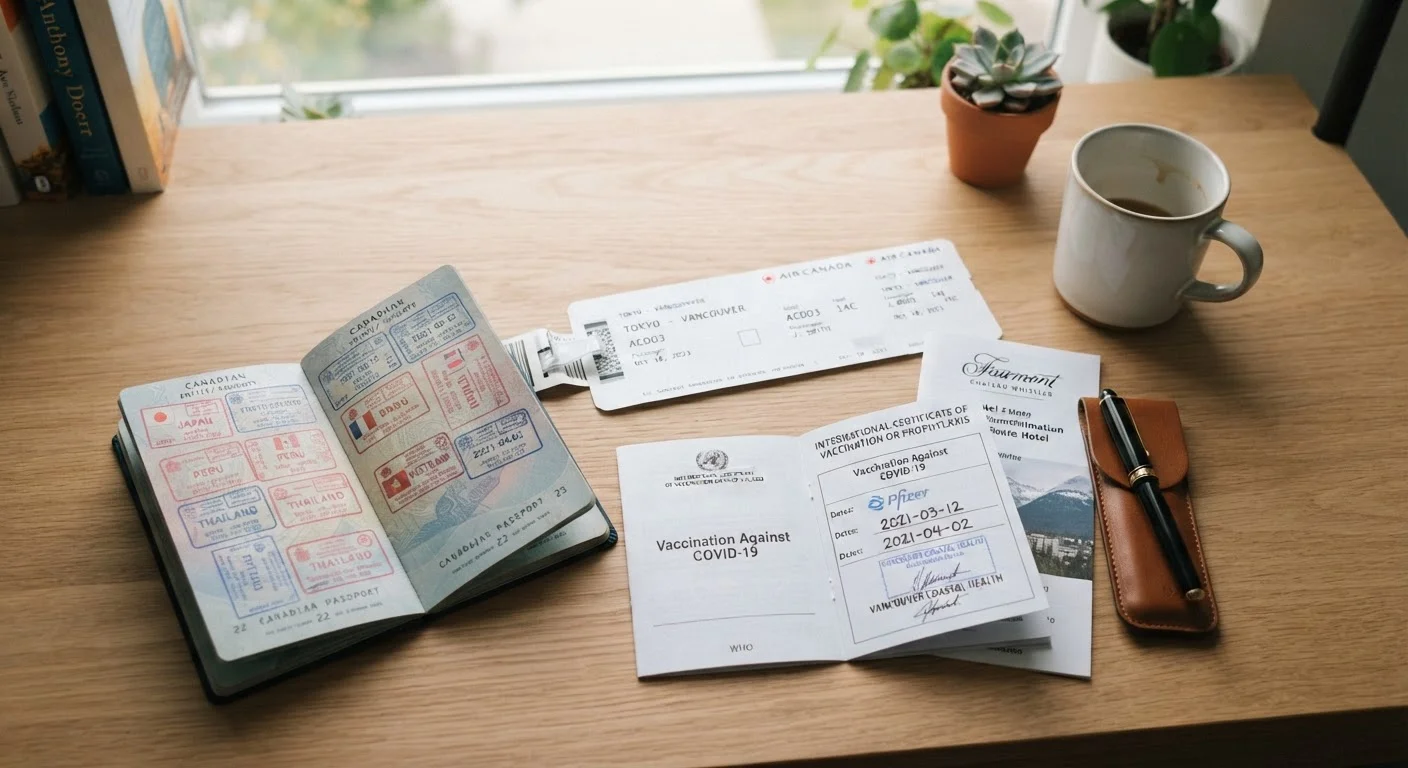
Some destinations require proof of vaccination against specific diseases — yellow fever is the most commonly mandated — as a condition of entry, particularly for travelers arriving from or transiting through affected regions. Proof is typically presented via an International Certificate of Vaccination or Prophylaxis (ICVP), sometimes called the yellow card. Requirements for other vaccines vary widely by destination and traveler circumstances. Consult a travel medicine professional and verify destination requirements well ahead of departure, as some vaccines require multiple doses over several weeks.
This article provides general educational information about travel documentation. It is not medical or legal advice. Always consult a licensed healthcare provider for vaccination guidance and verify entry requirements through official government sources before traveling.
Where to Verify Requirements: Official Sources Only
Third-party travel blogs and booking platforms sometimes publish entry requirement summaries, but these sources can be outdated or incomplete. For authoritative information, go directly to primary sources:
- Your own government's travel advisory portal — the U.S. Department of State (travel.state.gov) publishes country-specific entry, safety, and health information for American citizens.
- The destination country's official embassy or consulate website — this is the authoritative source for visa categories, application procedures, and required documentation.
- The destination country's immigration or border agency website — for countries with e-visa systems or arrival card requirements.
- The CDC's Travelers' Health portal (wwwnc.cdc.gov/travel) — for health-related entry considerations and recommended vaccinations by destination.
For destination-specific guidance once entry requirements are confirmed, our destination guides hub covers practical overviews of popular international destinations. If you're planning a trip to Japan, for example, see our detailed guide on Japan for first-time international travellers.
For travelers managing the full scope of trip preparation, our budget travel planning guide addresses documentation alongside booking strategy and on-the-ground logistics.