

Key Takeaways
- Insulation slows conductive heat loss through walls, roofs, and floors; draught-proofing blocks convective air infiltration through gaps.
- Up to 35% of a home's heat can escape through the roof, making loft insulation one of the highest-impact upgrades available.
- Draught-proofing is generally low-cost and DIY-friendly, making it a practical first step for most households.
- Both measures work best together — stopping draughts without insulating still leaves significant heat loss through surfaces.
- Older homes typically benefit from draught-proofing first, then targeted insulation, since gaps are often the most immediate comfort problem.
Option A
Insulation
The structural barrier that slows heat transfer through surfaces.
Best for: Homes where walls, attics, or floors are losing heat steadily through building materials, regardless of wind or gaps.
Option B
Draught-Proofing
The targeted fix that stops cold air infiltrating through gaps and cracks.
Best for: Homes where cold air noticeably enters around doors, windows, floorboards, or loft hatches, making rooms feel uncomfortable despite adequate heating.
If your home feels cold near doors and windows even with heating on
Draught-Proofing
Cold air infiltration creates immediate discomfort. Sealing gaps with weatherstripping and door seals directly addresses the source.
If your heating bills are persistently high despite a well-sealed home
Insulation
When air leakage isn't the main issue, heat is escaping through surfaces. Improving insulation in the attic or walls addresses this conductive loss.
If you have a limited budget and want the quickest return on effort
Draught-Proofing
Materials are inexpensive and installation is manageable without professional help, making the effort-to-impact ratio very favorable.
If you're renovating an older home for long-term comfort and efficiency
Insulation
Structural upgrades — particularly attic and wall insulation — deliver lasting reductions in heat loss that compound over many years.
If you want comprehensive year-round performance in both heating and cooling seasons
Insulation
Insulation resists both heat loss in winter and heat gain in summer, making it the more versatile long-term investment.
How Each Approach Actually Works
Insulation and draught-proofing address heat loss through two entirely different physical mechanisms — which is why doing one without the other often leaves noticeable gaps in comfort and efficiency.
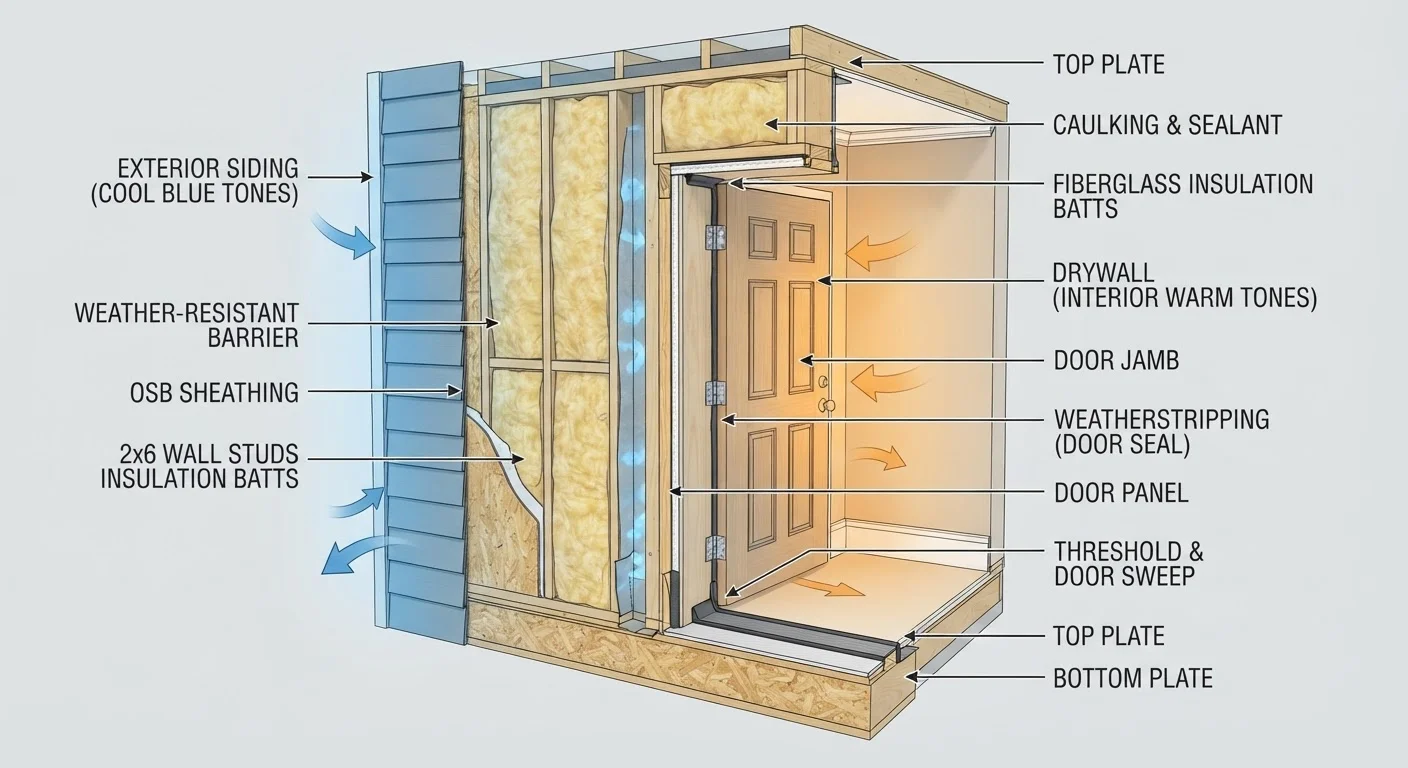
Insulation works by resisting conductive heat transfer — the process by which warmth moves through solid materials like walls, ceilings, and floors from a warmer space to a cooler one. Insulating materials (fiberglass batts, mineral wool, rigid foam, blown cellulose) trap air in small pockets, slowing that transfer. The effectiveness of insulation is measured by its R-value: the higher the R-value, the more resistance to heat flow.
Draught-proofing tackles a different problem: convective infiltration, where cold outside air physically enters the home through gaps, cracks, and unsealed joints. Common entry points include frames around doors and windows, gaps at skirting boards, unsealed floorboards, loft hatches, and letterboxes. Sealing these gaps with weatherstripping, foam tape, door sweeps, or caulk stops that airflow directly.
Think of it this way: insulation is the thermal blanket your home wears; draught-proofing is zipping it up. Both matter — but they solve distinct problems. For more on how passive building principles relate to temperature stability, see how thermal mass works in the home efficiency guide.
| Criterion | Insulation | Draught-Proofing |
|---|---|---|
| Heat loss mechanism addressed | Conduction through surfaces | Air infiltration through gaps |
| Typical cost range | Moderate to high | Low to moderate |
| DIY accessibility | Varies; some tasks need professionals | Generally DIY-friendly |
| Speed of impact on comfort | Gradual; felt over heating season | Often immediate |
| Summer benefit | Yes — resists heat gain too | Limited |
| Permit or code considerations | Often required for retrofits | Rarely required |
| Best starting point in older homes | After air sealing is addressed | Yes — typically first priority |
Where Heat Actually Escapes — and What That Means for Priority
Knowing where your home loses the most heat is the most reliable guide to where to act first. According to the U.S. Department of Energy, a significant share of heat loss in a typical home occurs through the ceiling and roof — estimates suggest attic heat loss alone can account for roughly 25–35% of total heat escaping the building envelope. Walls account for another substantial portion, with floors and windows making up the remainder.
Air infiltration through gaps and cracks — the target of draught-proofing — is estimated to account for approximately 25–40% of heating and cooling energy loss in many homes, depending on age and construction type. Older homes built before modern building codes are typically far leakier than newer construction.
25–35%
Heat lost through ceiling and roof
The U.S. Department of Energy estimates that attic and ceiling heat loss accounts for a substantial share of overall building envelope loss in typical American homes.
25–40%
Heating loss from air infiltration
Air leakage through gaps and cracks is widely cited by building science researchers as responsible for roughly a quarter to two-fifths of heating and cooling energy loss, particularly in older construction.
15+ years
Useful life of quality insulation
Properly installed insulation — particularly rigid foam and mineral wool — can maintain its thermal resistance for decades with minimal maintenance, according to building materials research.
This breakdown has practical implications. In a newer, reasonably well-sealed home, improving insulation R-values may deliver the largest remaining gains. In an older home with visible gaps, cold spots near frames, or drafts detectable by a held-up hand or a lit incense stick, addressing air leakage first is likely to produce the more noticeable immediate improvement.
For a structured look at tackling both issues in an older property, the guide on insulating an older home walks through prioritization by location and impact.
Cost, Complexity, and What You Can Realistically Do Yourself
Draught-proofing is, by a wide margin, the more accessible starting point. Weatherstripping tape, door sweeps, foam sealant, and flexible caulk are all widely available and inexpensive. Most gap-sealing tasks around doors, windows, and floorboards fall within the range of a careful DIYer with basic tools. Costs for a typical home are modest — often well under a few hundred dollars in materials — though professional draught-proofing assessments and installation are also available for harder-to-reach areas.
Insulation is more variable in scope and cost. Adding blown-in attic insulation is relatively affordable and can often be done by a contractor in a single visit. Retrofitting wall insulation — particularly in finished walls — is more invasive and expensive, requiring either interior removal of drywall or drilling for injected foam or blown cellulose. Floor insulation beneath a suspended timber floor is moderately DIY-friendly if there's crawl space access, but attic work near eaves or around recessed lighting can involve code considerations and should involve a qualified professional.
Important: Any insulation work involving electrical fixtures, gas appliances, or structural elements should be assessed by a licensed contractor. Some insulation retrofits require permits and inspection depending on your local jurisdiction — verify requirements with your local building department before starting work.
For a seasonal view of where these tasks fit in a broader home efficiency plan, the seasonal home efficiency checklist provides a useful framework.
The Case for Doing Both — and in the Right Order
In practice, insulation and draught-proofing are complementary rather than competing measures. A well-insulated home that's still leaky will lose the benefit of that insulation every time cold air infiltrates. Conversely, a tightly sealed home with poor insulation will still hemorrhage heat through its surfaces.
For most households, the practical sequence is: seal gaps first, then improve insulation. The logic is straightforward — draught-proofing is cheaper, faster, and delivers immediate comfort improvements. Once air infiltration is controlled, it's also easier to accurately assess whether remaining heat loss is coming from inadequate insulation in specific areas.
One nuance worth noting: in very airtight homes, intentional ventilation becomes more important. Sealing a home too thoroughly without ensuring adequate fresh air exchange can affect indoor air quality and moisture levels. In well-draught-proofed homes, mechanical ventilation — such as energy recovery ventilators (ERVs) — may be worth considering. This is especially relevant in climates with long, cold winters. See also the guide on zoned versus whole-home heating for how your heating setup interacts with the building envelope.
This article is for general informational purposes only. Always consult a licensed contractor or building professional before undertaking insulation or structural home improvement work. Verify permit and code requirements with your local authority.