

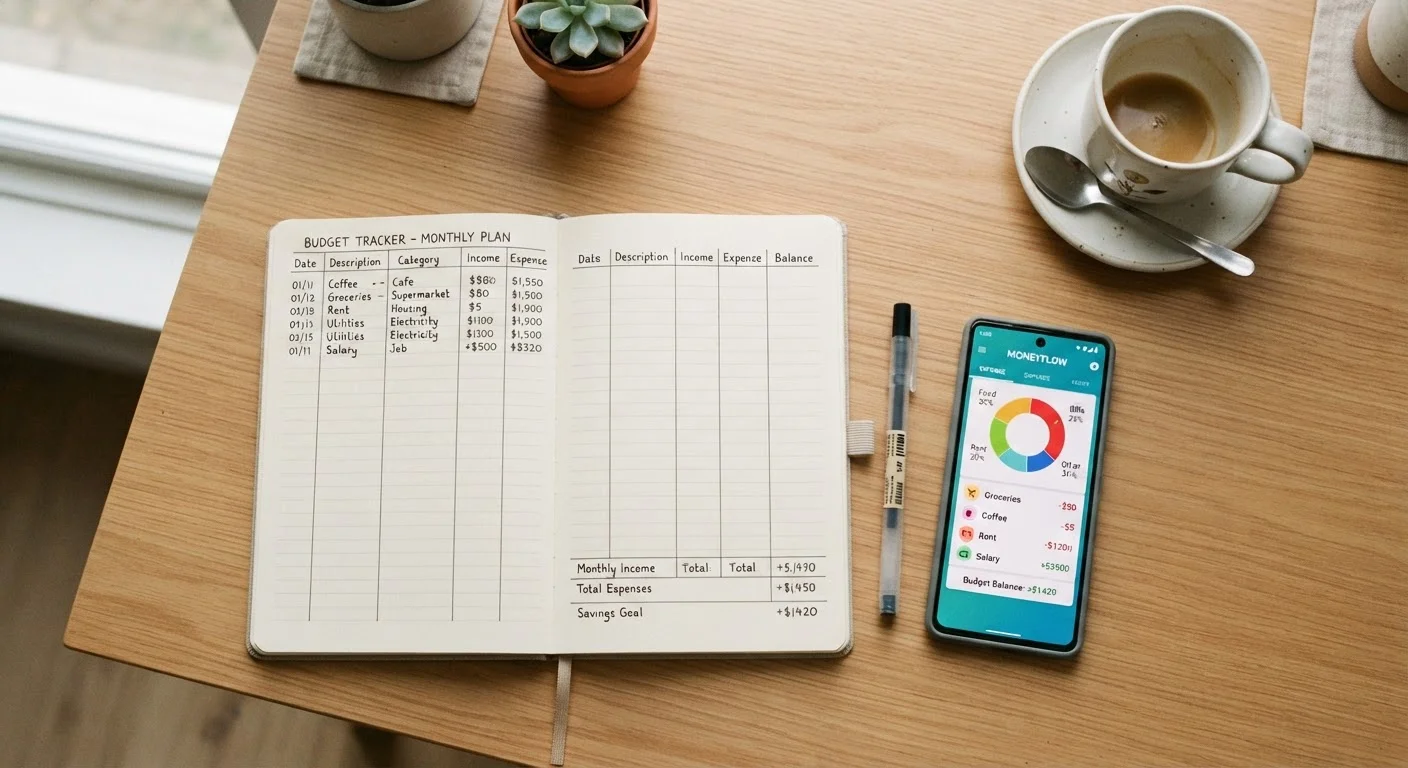
Key Takeaways
- Manual tracking builds stronger financial awareness by requiring active, conscious engagement with each transaction.
- App-based tracking offers automation and real-time categorization, reducing friction but sometimes reducing attention too.
- Consistency matters more than method — the best system is the one you'll actually use over time.
- Many people benefit from a hybrid approach: apps for data capture, manual review for reflection.
- Neither method guarantees better financial outcomes on its own without regular review habits.
Our Verdict
Both manual tracking and app-based tools can support healthier spending habits — the difference lies in what kind of engagement you need. Manual methods tend to build deeper awareness and work well for people early in their budgeting journey or those who process information better through writing. Apps reduce friction significantly and suit people who prioritize speed and automation. For most adults, the winning strategy is whichever approach gets used consistently, ideally paired with a structured weekly review.
| Best for | Recommended |
|---|---|
| Those building budgeting habits from scratch | Manual tracking (notebook or spreadsheet) |
| Busy adults who want low-friction data capture | App-based tracking |
| People who want both automation and intentional reflection | Hybrid approach |
| Anyone struggling with consistency in either method | Weekly money check-in routine paired with either method |
What Each Approach Actually Involves
Manual tracking means recording every transaction yourself — in a notebook, a printed template, or a spreadsheet you build and maintain. You enter amounts, assign categories, and tally totals, either daily or in periodic batches. App-based tracking connects to your bank and card accounts, imports transactions automatically, and sorts them into categories using algorithms or rules you configure.
The mechanical difference is significant: manual tracking requires deliberate input; apps operate mostly in the background. That distinction has downstream effects on awareness, accuracy, and how well each method actually changes behavior. For a related comparison of physical versus digital organization systems, see digital vs. paper planning.
The Case for Manual Tracking
Writing down a $47 dinner forces a moment of acknowledgment that automatic import does not. Research in behavioral finance consistently finds that friction — when applied intentionally — can prompt more deliberate decision-making. Manual trackers often report higher awareness of spending patterns earlier in the process, simply because they cannot ignore what they're recording.
Manual methods also offer flexibility. A spreadsheet can be structured exactly to match how you think about your money, with custom categories, formulas, and visual layouts no app will replicate. There's no subscription cost, no data-sharing with a third party, and no dependency on software updates or account connectivity.
The trade-off is time and discipline. Manual tracking breaks down when life gets busy. Missing a week of entries often means incomplete data, and incomplete data leads to poor conclusions. It also requires honest self-reporting — there's no automatic catch for forgotten cash purchases or receipts stuffed in a pocket.
Start With One Week of Manual Tracking
Even if you plan to use an app long-term, spending one week logging every purchase by hand gives you a baseline understanding of your patterns that passive automation won't replicate. Many financial educators recommend this as a calibration exercise. After a week, you'll categorize your app's data more accurately — and scrutinize it more critically.
The Case for App-Based Tracking
The primary strength of app-based tracking is completeness. When linked to all your accounts, an app captures nearly every digital transaction without requiring any action from you. For people who've struggled to maintain manual logs, that automation can be the difference between having spending data and having none.
Most tracking apps generate reports automatically — spending by category, month-over-month comparisons, and trend lines — reducing the analytical work you'd otherwise do manually. That can surface patterns that would take significant spreadsheet work to uncover.
The risks are subtler. Automation can create a passive relationship with your finances: you check a dashboard occasionally but don't develop the tactile familiarity with individual purchases that manual tracking builds. Miscategorized transactions (a grocery store flagged as "dining," for example) go unnoticed unless you audit regularly. And linking financial accounts to third-party apps involves a data-sharing decision that's worth understanding before you connect. For more on how digital tools compare to physical systems in the cash envelope vs. digital tracker context, that comparison is worth reading alongside this one.
Comparing the Two Approaches
The table below summarizes the core trade-offs across practical dimensions relevant to most budgeters.
| Manual Tracking | App-Based Tracking | |
|---|---|---|
| Setup effort | Moderate — build template or buy notebook | Low — connect accounts, configure categories |
| Ongoing time commitment | High — daily or batch entry required | Low — mostly automated after setup |
| Spending awareness | High — active entry reinforces attention | Variable — depends on review habits |
| Data completeness | Risk of gaps (cash, missed entries) | Near-complete for linked digital accounts |
| Customization | Fully flexible — any structure you want | Limited to app's category system |
| Cost | Free to minimal (notebook or spreadsheet) | Free tiers available; premium features vary |
| Privacy / data sharing | No third-party access required | Requires account linking to third party |
| Best for | Building awareness, early budgeters | Busy adults, automation-first preference |
Neither method has a universal advantage. The right choice depends on what barrier is preventing you from tracking consistently — is it time and effort, or is it awareness and engagement?
Building a Sustainable Habit Either Way
The method matters far less than the routine built around it. A weekly money check-in — reviewing what you spent, comparing it to your plan, and adjusting for the week ahead — is the practice that drives financial clarity, regardless of the tool. See how to build a weekly money check-in for a practical framework to get started.
Many people land on a hybrid approach: apps handle data capture during the week, and a short manual review session each Sunday reinforces awareness. This captures the efficiency of automation without losing the intentionality of engagement. Small daily habits — like glancing at your account balance each morning — compound meaningfully over time and work well alongside either tracking method.
For more practical frameworks on managing day-to-day money decisions, the Money Habits hub covers the full range of approaches.
This article provides general financial information for educational purposes and does not constitute personalized financial advice. Consider consulting a qualified financial professional for guidance specific to your situation.