

Key Takeaways
- Zoning assigns a clear purpose to each area of a room, reducing visual clutter and mental friction.
- Zones don't require walls — rugs, lighting, and furniture arrangement can define boundaries effectively.
- Every household member benefits from knowing where things belong and where activities happen.
- Zoning works in rooms of any size, including small apartments and open-plan spaces.
- Consistent zones are one of the most durable organizing habits you can establish.
Room Zoning
Room zoning is the practice of dividing a single space into distinct areas, each dedicated to a specific activity or function. Rather than letting a room serve every purpose at once — often creating clutter and confusion — zoning gives each activity its own clearly defined territory. The result is a room that feels intentional, easier to maintain, and simpler to navigate day to day.
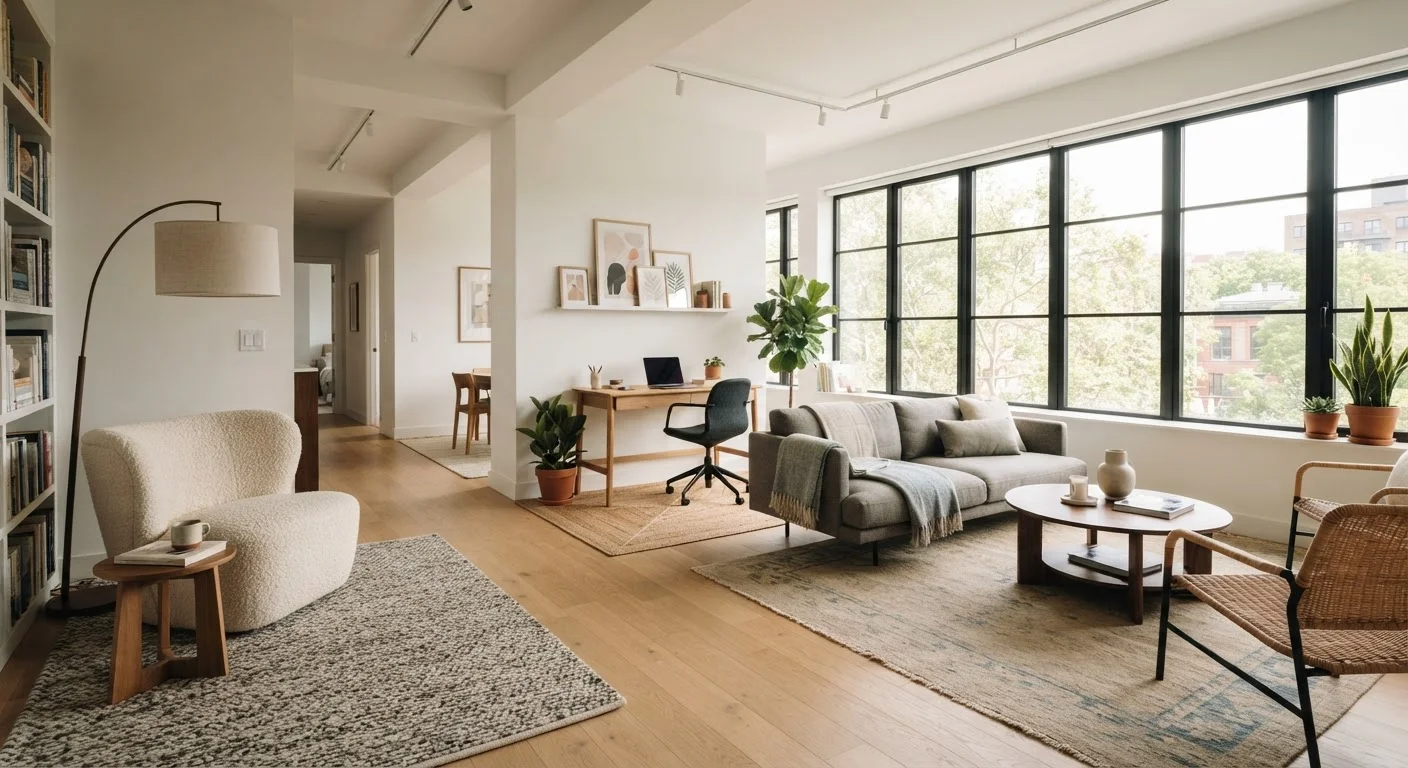
In interior design, zones are typically established through furniture placement, area rugs, lighting, and visual cues rather than physical walls — making the approach suitable for open-plan layouts and smaller homes alike.
Why Rooms Stop Working — and What Zoning Fixes
Most rooms don't fail because they're too small or too sparsely furnished. They fail because they're trying to do everything at once without any structure guiding how. A living room that doubles as a homework station, a storage area, and a TV room simultaneously tends to feel perpetually untidy — not because of the volume of stuff, but because nothing has a defined place.
Zoning addresses this at the root. By assigning each activity a dedicated area within a room, you give both people and objects a clear home. The payoff isn't just visual: research into cognitive load suggests that environmental ambiguity — spaces with no clear purpose — requires ongoing mental effort to navigate. A zoned room reduces that friction every time you enter it.
This is why zoning sits at the foundation of durable organizing systems. It's worth reading alongside why organized homes don't stay that way — because zoning is precisely the kind of structural habit that makes tidiness self-sustaining rather than something you have to repeatedly impose.
The Building Blocks of a Zone
A zone doesn't require walls, room dividers, or renovation. In practice, four elements do most of the heavy lifting:
- Furniture placement: Grouping a sofa, coffee table, and side lamp together signals "this is where we relax." A desk and task chair signal "this is where work happens." The arrangement itself communicates purpose.
- Area rugs: One of the most effective — and reversible — zoning tools available. A rug anchors a grouping of furniture and visually separates it from adjacent areas without any structural change.
- Lighting: Overhead lighting floods an entire room equally, which can undermine zoning. Task lighting (a desk lamp, a reading light) draws the eye to a specific area and reinforces its dedicated function.
- Storage proximity: Objects used within a zone should be stored within that zone. If homework supplies live in a drawer across the room from the homework zone, the system breaks down quickly.
You'll find this principle — keeping storage close to use — explored in detail in our guide to storage habits for small homes.
Audit Before You Arrange
Before moving a single piece of furniture, walk through the room and note every activity that takes place there — even briefly. Write them down. This audit prevents you from designing zones around how you imagine you use a space rather than how you actually do. Zones built on real behavior are dramatically easier to maintain.
Putting Zoning Into Practice Room by Room
The specific zones a room needs depend entirely on how it's actually used — not how it's supposed to be used. Start by spending a few days observing what activities happen where, then design zones around honest behavior rather than aspiration.
Living Rooms
Common zones include a conversation and relaxation area, an entertainment area, and — in households without a dedicated office — a small work or reading nook. The key is keeping these areas visually distinct so the room doesn't read as one undifferentiated space.
Bedrooms
Beyond the obvious sleeping zone, most bedrooms benefit from a separate dressing zone (even if it's just a corner with a mirror and a clothes rack) and, if space permits, a reading or quiet zone distinct from the bed. Conflating work or screen time with the sleeping area is widely noted by sleep researchers as a factor in poorer rest — separation here has practical consequences.
Open-Plan Kitchens and Living Areas
These are where zoning earns its keep most visibly. A dining zone, a cooking zone, and a living zone within one continuous space can feel harmonious or chaotic depending almost entirely on how well each area is defined. Rugs and pendant lighting are particularly effective here.
In shared households, agreeing on zones also removes a significant source of friction. Our guide to organizing shared spaces offers practical approaches for households where tidiness standards differ.
Common Zoning Mistakes — and How to Avoid Them
The most frequent error is creating zones in theory but not supporting them in practice. A designated reading nook with no nearby shelf for books, no good light, and nowhere to set a drink will revert to a dumping ground within weeks. Zones need to be functional, not just mapped on a floor plan.
A second mistake is over-zoning — dividing a room into so many micro-areas that it feels cluttered rather than organized. If a zone doesn't reflect a genuine, recurring activity, it's a category that exists only in your head and will be hard to maintain.
Finally, watch for zones that conflict with traffic flow. A work zone placed in the main path between the kitchen and the living area will be disrupted constantly — and disruption erodes the system. Map zones to areas of the room that match the intensity of activity: high-traffic zones near entry points, quieter zones toward the perimeter.
For a broader look at organizing ideas that don't always deliver on their promise, see our overview of common home organization myths.