

Key Takeaways
- Planning around food groups rather than specific products makes shopping more flexible and nutritionally sound.
- Whole, minimally processed foods form a practical foundation regardless of your dietary style.
- Reading ingredient lists and nutrition labels helps you evaluate products beyond marketing claims.
- Balancing macronutrients — protein, carbohydrates, and fats — across your cart supports varied, satisfying meals.
- A pre-shopping checklist reduces impulse decisions and helps align your cart with your actual nutritional goals.
Summary
18 items · 15–30 minutes
Why a Pre-Shopping Checklist Matters
Most grocery-shopping decisions happen quickly, often under the influence of hunger, time pressure, or eye-catching packaging. Having a structured set of nutrition principles in hand before you reach the store shifts the environment in your favor — you're making deliberate choices rather than reactive ones.
This checklist is built around durable, evidence-informed concepts rather than a rigid diet plan. The goal is to help you build a cart that supports balanced eating across a range of different meal styles. For a deeper look at how to compose individual meals from these ingredients, see Building Balanced Meals: Principles That Hold Across Different Eating Styles.
Understanding how your kitchen is organized can also shape what you buy and how much gets used. Organising a Kitchen for Less Food Waste and Lower Grocery Spending offers practical ideas for making sure the food you bring home actually gets eaten.
This Checklist Is Not Medical or Dietary Advice
The principles here are general nutrition education, not personalized recommendations. Individual nutritional needs vary significantly based on age, health status, medications, and other factors. If you have a specific medical condition, food allergy, or are managing a chronic illness, consult a registered dietitian or qualified healthcare provider before making significant dietary changes.
How to Use This Checklist
Work through the checklist in order — starting at home before your trip and ending with packaged goods at the store. The items are labeled by priority: must items reflect widely supported nutritional guidance, should items are strongly recommended for most people, and nice-to-have items are useful refinements if you have time and budget.
You don't need to hit every item perfectly every week. Think of the checklist as a framework that trains consistent habits over time rather than a pass/fail test on any single shopping trip.
Pen and paper or a notes app
Draft your meal framework and shopping list before heading to the store.
Nutrition Facts label
The primary reference for evaluating packaged food at the shelf — check serving size, sodium, added sugars, and fiber.
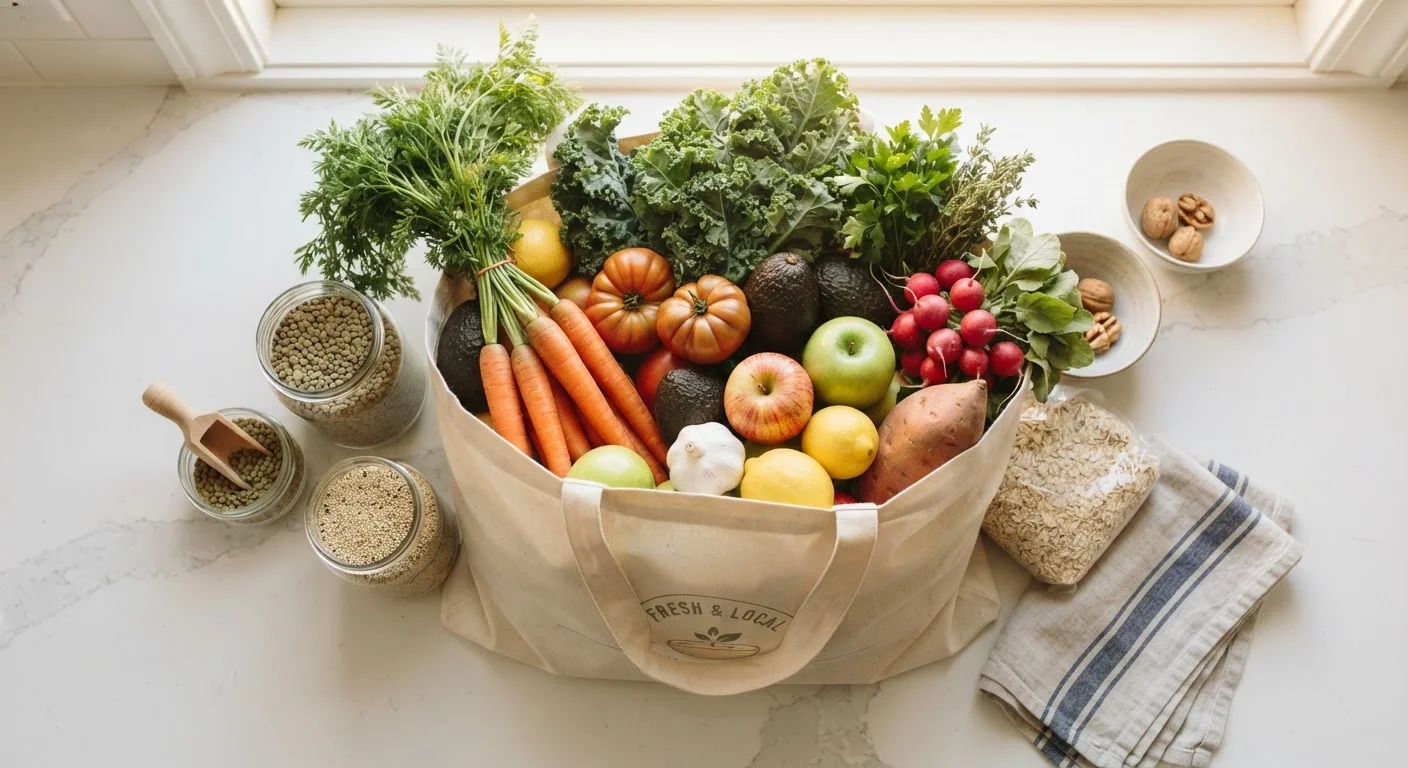
A reusable shopping bag with designated sections
Helps you mentally organize categories — produce, proteins, grains — so you move through the store more systematically.
One habit worth developing alongside this checklist is reading nutrition labels critically. Front-of-pack language is frequently designed to imply health benefits that the Nutrition Facts panel tells a more complicated story about. For a thorough reference on interpreting labels accurately, see Nutrition Label Literacy: Reading Food Packaging Without Being Misled.
Health Claims on Packaging Can Be Misleading
Terms like "natural," "multigrain," "light," or "made with whole grains" are marketing descriptors and are not regulated in the same way as the Nutrition Facts panel. A product labeled "multigrain" may still use refined grains as the primary ingredient. Always cross-check the front-of-pack claim against the ingredient list and the Nutrition Facts panel before assuming a product is a nutritious choice.
The Checklist
Use the groups below to guide your preparation at home and your decisions in-store. Each group addresses a distinct phase of the shopping process or a food category you'll navigate in the aisles.
Before You Leave Home
Produce & Whole Foods
Proteins & Legumes
Grains & Carbohydrates
Packaged & Processed Foods
Over time, you may notice that certain patterns — like skipping plant-based proteins or defaulting to refined grains — quietly affect the nutritional balance of your meals. Patterns That Undermine a Balanced Diet Without Obvious Warning Signs explores how subtle habits compound over weeks and months.
For broader everyday wellness context, visit the Healthy Living hub for straightforward guidance on maintaining a balanced lifestyle.
This article provides general nutrition information for educational purposes only and is not a substitute for personalized advice from a registered dietitian or qualified healthcare professional. Always consult a qualified professional before making significant changes to your diet, particularly if you have a medical condition or specific health goals.