

| Number of boroughs | 5 (Manhattan, Brooklyn, Queens, The Bronx, Staten Island) |
| Primary transit system | NYC Subway — 24-hour service on most lines (Metropolitan Transportation Authority (MTA)) |
| Most visited neighbourhood | Midtown Manhattan (Times Square area) (NYC Tourism & Conventions data) |
| Most budget-friendly base | Long Island City (Queens) or Crown Heights (Brooklyn) compared to Midtown |
| Walkability | Manhattan and northwestern Brooklyn are highly walkable; outer areas vary |
| Airport options | JFK, LaGuardia (LGA), Newark Liberty (EWR) |
Why Neighbourhood Choice Matters More Than You Think
Most first-time visitors to New York City assume Manhattan is the destination — and then discover, often mid-trip, that Manhattan itself is a collection of very different places. Where you base yourself shapes what you pay, what you hear outside your window at 11 p.m., how long you spend on the subway, and what kind of city you actually experience. Before committing to a neighbourhood, it helps to understand what each area genuinely feels like on the ground.
If you're still in the early stages of planning, our complete trip-planning guide for new travellers covers the broader logistics — budget-setting, documentation, and day-of readiness — that apply before you even start picking a zip code.
| Number of boroughs | 5 (Manhattan, Brooklyn, Queens, The Bronx, Staten Island) |
| Primary transit system | NYC Subway — 24-hour service on most lines (Metropolitan Transportation Authority (MTA)) |
| Most visited neighbourhood | Midtown Manhattan (Times Square area) (NYC Tourism & Conventions data) |
| Most budget-friendly base | Long Island City (Queens) or Crown Heights (Brooklyn) compared to Midtown |
| Walkability | Manhattan and northwestern Brooklyn are highly walkable; outer areas vary |
| Airport options | JFK, LaGuardia (LGA), Newark Liberty (EWR) |
Manhattan: The Core and Its Contrasts
Midtown is what most people picture when they think of New York — Times Square, Grand Central, the Empire State Building. It is convenient and heavily touristed, which means crowds are constant and accommodation is expensive. It functions well as a base for checking landmarks off a list, but it lacks the residential texture that makes the city interesting day-to-day.
The Upper West Side and Upper East Side offer a quieter, more residential Manhattan experience. Both are walkable, well-served by the subway, and border Central Park. The Upper East Side traditionally skews more formal; the Upper West Side has a slightly more relaxed, cultural feel anchored by Lincoln Center and the Museum of Natural History. Neither is particularly budget-friendly, but both are notably calmer than Midtown.
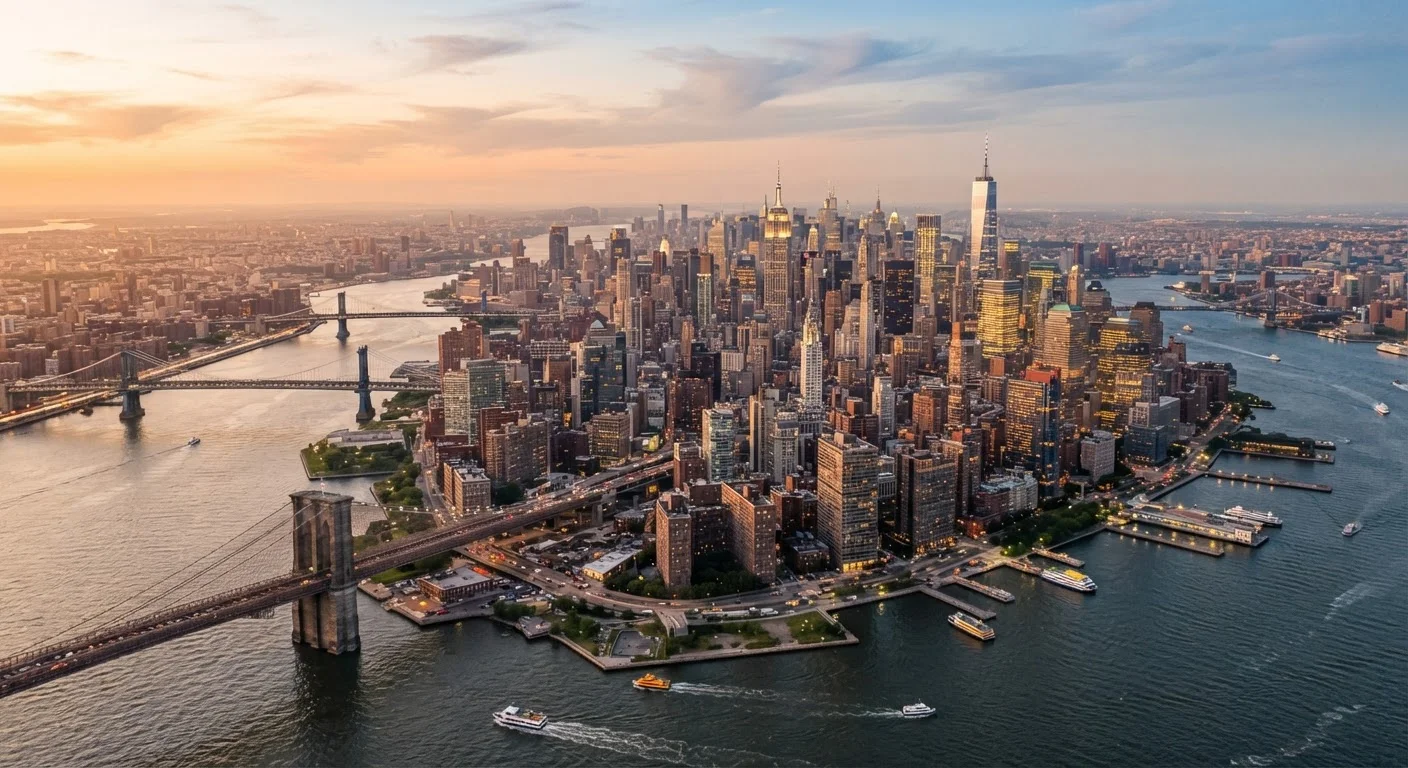
Lower Manhattan and the Financial District empty out on evenings and weekends, which can feel eerie — but that also means better accommodation value and genuine proximity to the Brooklyn Bridge, the 9/11 Memorial, and the Staten Island Ferry (free, with views of the harbor).
Greenwich Village and the West Village remain among the most walkable and atmospherically distinct parts of the city — narrow streets, pre-war architecture, and a mix of long-established residents and visitors. The area is expensive but rewards slow exploration on foot.
Harlem is frequently overlooked by first-timers and is worth reconsidering. Its main corridors — 125th Street in particular — are commercially active, historically rich, and considerably more affordable for food and accommodation than lower Manhattan. The area is well-connected by subway to the rest of the city.
Brooklyn, Queens, and the Outer Boroughs
Brooklyn is large enough to be a city in its own right, and its northern neighbourhoods are now firmly on the tourist map. Williamsburg draws visitors with its waterfront views of Manhattan, dense restaurant scene, and weekend markets. DUMBO (Down Under the Manhattan Bridge Overpass) offers some of the city's most photographed street views and easy bridge access. Park Slope is quieter and more residential, a good option for visitors who want a neighbourhood feel rather than a scene.
Queens is arguably the most ethnically diverse urban area in the United States, and that diversity is reflected in its food — Flushing for Chinese and Korean cuisine, Jackson Heights for South Asian and Latin American food. Queens is often overlooked by first-timers, but its subway connections to Manhattan are reliable and its accommodation tends to be more affordable.
The Bronx and Staten Island see far fewer leisure visitors. The Bronx is home to the New York Botanical Garden, the Bronx Zoo, and Yankee Stadium — all worth the trip. Staten Island is most commonly visited via its free ferry, which many travellers use primarily for the harbor views rather than the island itself.
New York rewards a very different kind of curiosity than, say, New Orleans — if you're weighing very different American city experiences, our guide to New Orleans beyond Bourbon Street offers a useful contrast in scale, pace, and neighbourhood character.