

Key Takeaways
- River cruises dock in town centers, not remote ports, reducing transit time to attractions.
- Ships carry far fewer passengers than ocean liners, creating a quieter, more regimented atmosphere.
- Low water or flood conditions can force itinerary changes or bus transfers mid-trip.
- Shore excursions are often bundled but move at a group pace that independent travelers may find limiting.
- The experience suits travelers who prefer structure, scenic landscapes, and cultural depth over beach relaxation.
European River Cruise
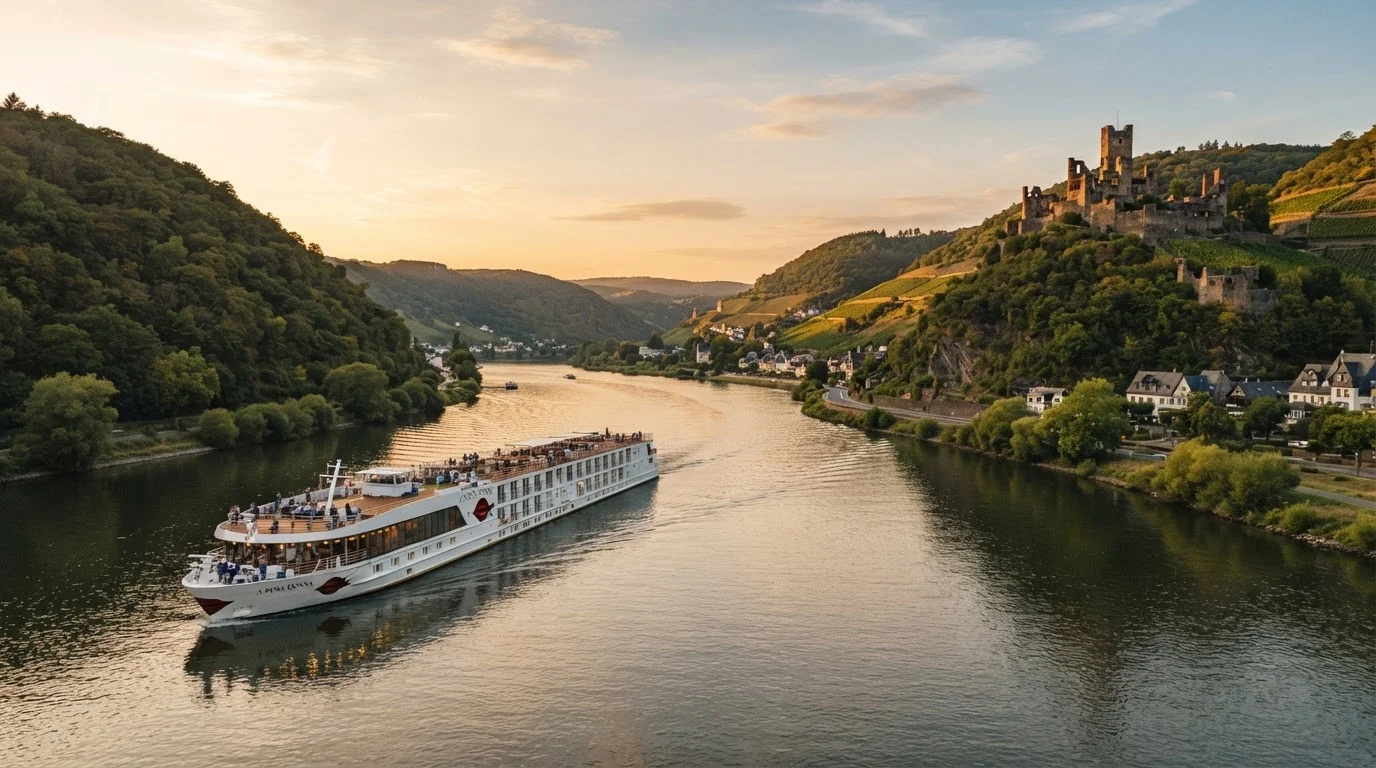
A European river cruise is a multi-day voyage along inland waterways — most commonly the Rhine, Danube, or Seine — aboard a relatively small, flat-bottomed ship designed to navigate locks and low bridges. Unlike ocean cruising, the focus is on reaching historic town centers directly by water, with shore excursions built into a structured daily schedule. Ships typically carry between 100 and 200 passengers, creating an intimate travel environment.
River cruise vessels are purpose-built with shallow drafts (often under 1.5 meters) to handle fluctuating water levels, which can cause itinerary disruptions during drought or flood conditions — a logistical reality rarely emphasized in marketing materials.
What Ship Life Actually Looks Like
The ships themselves are the sharpest departure from ocean cruising expectations. A typical river vessel is roughly 400 feet long and three decks tall — constrained by bridge clearances across hundreds of historic crossings. There is no atrium, no multiple pools, and no casino. The sun deck is the social hub when weather permits; in rain or cold, the main lounge becomes the gathering point for everyone aboard.
Meals are served at set times in a single dining room, and seating is often assigned or lightly communal. This structure builds camaraderie quickly but removes the flexibility travelers accustomed to independent dining may expect. Cabins range from modest interior rooms with fixed windows to full-width panoramic suites — and the price gap between them is substantial.
Cabin Selection Has Outsized Impact
On a ship this small, cabin placement matters more than on an ocean liner. Lower-deck cabins with fixed portholes can feel claustrophobic when the ship is moored alongside another vessel, which is common in busy ports. If budget allows, mid-ship cabins on the second or third deck offer better natural light and less engine noise — factors that substantially affect comfort over a 7–14 day voyage.
The Port Experience: What Brochures Understate
The central selling point — docking directly in charming historic towns — is largely accurate and genuinely convenient. Stepping off the gangway into Rüdesheim, Bratislava, or Arles without a bus transfer or tender boat is a real advantage over many ocean itineraries. The complication is what happens once you're ashore.
Group excursions move at the pace of the slowest participant and cover well-trodden highlights efficiently but not deeply. Popular stops like Bruges or the Rhine Gorge are heavily visited destinations where crowds are a genuine factor, especially during peak summer season. Travelers who leave the group tour find they have meaningful time to explore independently — but this requires advance research and comfort navigating without a guide.
Itinerary Disruptions: The Water Level Problem
Low water levels during summer droughts and high water in spring have become increasingly common disruptions on Central European rivers. When a stretch becomes unnavigable, operators substitute motorcoach transfers or move passengers to a sister vessel waiting downstream. The cultural experience continues, but the sensation of continuous river travel — the core product — is interrupted.
Disruptions are not rare edge cases. Travelers should treat them as a realistic possibility rather than an unlikely inconvenience, particularly on Danube itineraries through Germany and Austria. Reading operator policies on compensation and reviewing recent traveler accounts from the same travel period can help set realistic expectations before committing.
~190
Average passenger capacity per river cruise ship
Most European river vessels carry between 100 and 200 passengers, compared to thousands on large ocean liners, according to river cruise industry overviews.
4–8 hrs
Typical time in each port of call
Standard itineraries allocate roughly half a day per destination, with some overnight moorings extending access to evening hours ashore.
7–15 days
Typical European river cruise duration
Most itineraries run one to two weeks, covering between six and twelve ports depending on the river route chosen.
Who This Style of Travel Genuinely Suits
River cruising delivers best for travelers who value a structured, low-logistics framework for covering multiple countries without repeated packing and unpacking. The single-unpack model, predictable daily rhythm, and included meals reduce decision fatigue significantly — a real benefit for those who find independent multi-city travel exhausting.
It is a less natural fit for travelers who prioritize spontaneous itinerary changes, budget flexibility, or extended time in a single destination. If your instinct is to linger somewhere for several days rather than move daily, the slow travel approach may align better with how you actually want to experience Europe. River cruising is neither wrong nor right — it is a specific format with genuine strengths and genuine constraints.