

| Label Authority (US) | Federal Trade Commission (FTC) (EnergyGuide program) |
| Testing Standards Set By | Department of Energy (DOE) (Appliance Standards and Rulemaking Federal Advisory Committee) |
| ENERGY STAR Administered By | EPA and DOE jointly (ENERGY STAR program overview) |
| Typical ENERGY STAR Efficiency Gain | 10–50% vs. federal minimum (Varies by product category; see ENERGY STAR website) |
| Energy Unit Shown on Label | kWh/year or therms/year (EnergyGuide label format) |
| Cost Estimate Basis | National average utility rate (not local) (FTC EnergyGuide methodology) |
What the Label Is Actually Measuring
The energy efficiency rating on an appliance is a standardized measure of how much energy a device uses to complete a defined task — running a full dishwasher cycle, cooling a cubic foot of refrigerated space, or washing a kilogram of laundry. It does not measure how useful or durable the appliance is. It measures one thing: energy consumed relative to output.
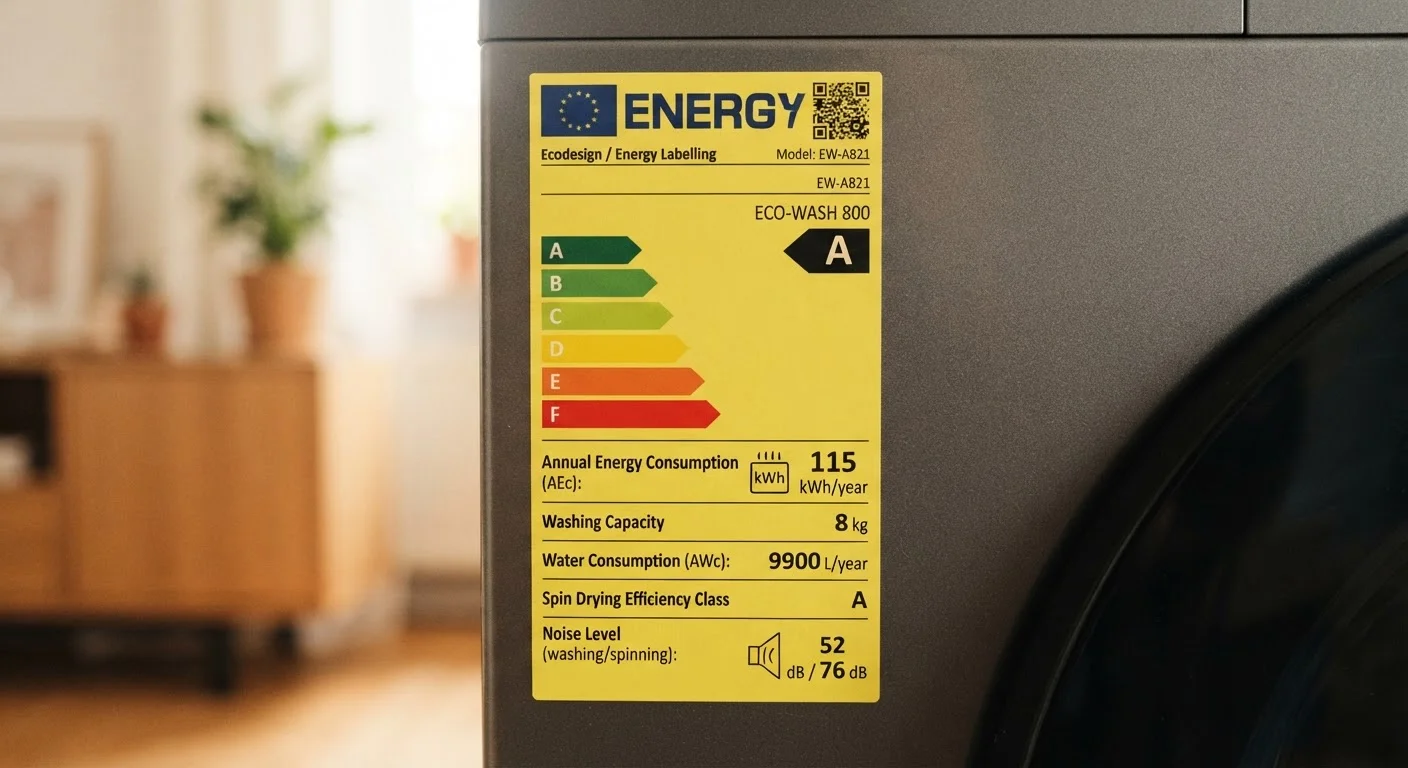
In the US, the primary labeling system is the EnergyGuide label, administered by the Federal Trade Commission (FTC) and backed by Department of Energy (DOE) testing standards. You'll find it on most major appliances — refrigerators, dishwashers, washing machines, water heaters, air conditioners, and furnaces. The label typically shows estimated annual energy consumption in kilowatt-hours (kWh) or therms, alongside an estimated annual operating cost based on national average utility rates.
A separate but related program, ENERGY STAR, is a voluntary certification run by the EPA and DOE. Products that earn the ENERGY STAR mark meet efficiency thresholds that are generally 10–50% more efficient than the federal minimum standard, depending on the product category. Not all products with an EnergyGuide label have ENERGY STAR certification — these are two different things that often appear together.
| Label Authority (US) | Federal Trade Commission (FTC) (EnergyGuide program) |
| Testing Standards Set By | Department of Energy (DOE) (Appliance Standards and Rulemaking Federal Advisory Committee) |
| ENERGY STAR Administered By | EPA and DOE jointly (ENERGY STAR program overview) |
| Typical ENERGY STAR Efficiency Gain | 10–50% vs. federal minimum (Varies by product category; see ENERGY STAR website) |
| Energy Unit Shown on Label | kWh/year or therms/year (EnergyGuide label format) |
| Cost Estimate Basis | National average utility rate (not local) (FTC EnergyGuide methodology) |
How to Interpret the Numbers (and Where They Fall Short)
The estimated annual cost shown on an EnergyGuide label is calculated using a fixed national average energy price — not your local utility rate, which may be significantly higher or lower. The estimate also assumes a standardized usage pattern. If you run your dishwasher twice a day instead of once, or keep your refrigerator in a warm garage, your actual cost will differ.
This means the label is most useful as a comparison tool between similar appliances rather than a precise forecast of your bill. The label includes a comparison bar showing where the model sits relative to similar models on the market — that context is arguably more useful than the cost figure itself.
Also worth knowing: testing conditions are controlled and may not reflect real-world use. A washing machine's efficiency rating is measured using specific load sizes, water temperatures, and spin speeds. If you typically wash on a higher-heat setting, you'll use more energy than the label suggests.
For a broader picture of where energy is actually going in your home, see our guide to home energy monitoring — real-time data often reveals surprises that labels alone cannot.
Using Ratings When Evaluating Appliances
When you're evaluating options, efficiency ratings are one input among several — not the whole story. Here's how to use them practically:
- Compare within categories, not across them. A refrigerator and a chest freezer serve different purposes. Compare the 18 cu ft refrigerators against each other, not against a 30 cu ft model.
- Calculate lifetime operating cost, not just purchase price. A less expensive appliance with a higher annual energy cost may cost more over 10–15 years of use than a more efficient option.
- Check ENERGY STAR qualification separately. Not every efficient appliance carries the ENERGY STAR mark, and the threshold varies by category. The DOE's ENERGY STAR website lists current qualifying products and the specific efficiency criteria each must meet.
- Factor in your actual usage patterns. A highly efficient appliance used frequently may still consume more total energy than a less efficient one used sparingly.
If you want to see how appliance choices fit into your home's overall energy picture, our room-by-room home efficiency audit is a useful starting point for identifying where the biggest opportunities actually are.