

Key Takeaways
- Tackling the entire home at once is one of the most common reasons decluttering stalls out.
- Reorganizing clutter into containers without removing items first creates the illusion of progress, not real change.
- Without a system to manage what comes in, cleared spaces reliably fill back up within months.
- Decision fatigue is a documented barrier — time-boxing sessions prevents it from derailing progress.
- Sentimental items handled too early can cause the whole effort to grind to a halt.
Why Decluttering Efforts Keep Failing
Most people have decluttered at least once — and most have watched the results unravel within a few months. The problem usually isn't motivation or effort. It's a handful of repeatable missteps that undermine even the most determined purge. Understanding where these efforts break down is the first step toward a home that actually stays manageable.
The home organization strategies that work long-term aren't about willpower — they're about process. Get the process wrong and you'll be sorting through the same pile next spring.
Trying to declutter the entire home in a single session.
Why it happens: Motivation spikes on weekends or after watching an organizing show, and people want to ride that energy before it fades. The scale of the task isn't obvious until you're three hours in and exhausted.
Reorganizing clutter instead of removing it.
Why it happens: Sorting items into bins, baskets, or labeled boxes feels productive and creates visible change without requiring difficult decisions about what to discard. It's easier to move things than to let them go.
Starting with sentimental or emotionally charged items.
Why it happens: People often want to handle the hardest decisions first, or sentimental items are simply in the room they've chosen to tackle. These objects carry emotional weight that consumes time and energy disproportionately.
Keeping items on the basis of guilt, not genuine use or value.
Why it happens: Gifts, expensive purchases, and items tied to past goals ('I'll use this when I get back to painting') are hard to release because discarding them feels like admitting a mistake or rejecting someone's generosity.
No plan for where discarded items will go.
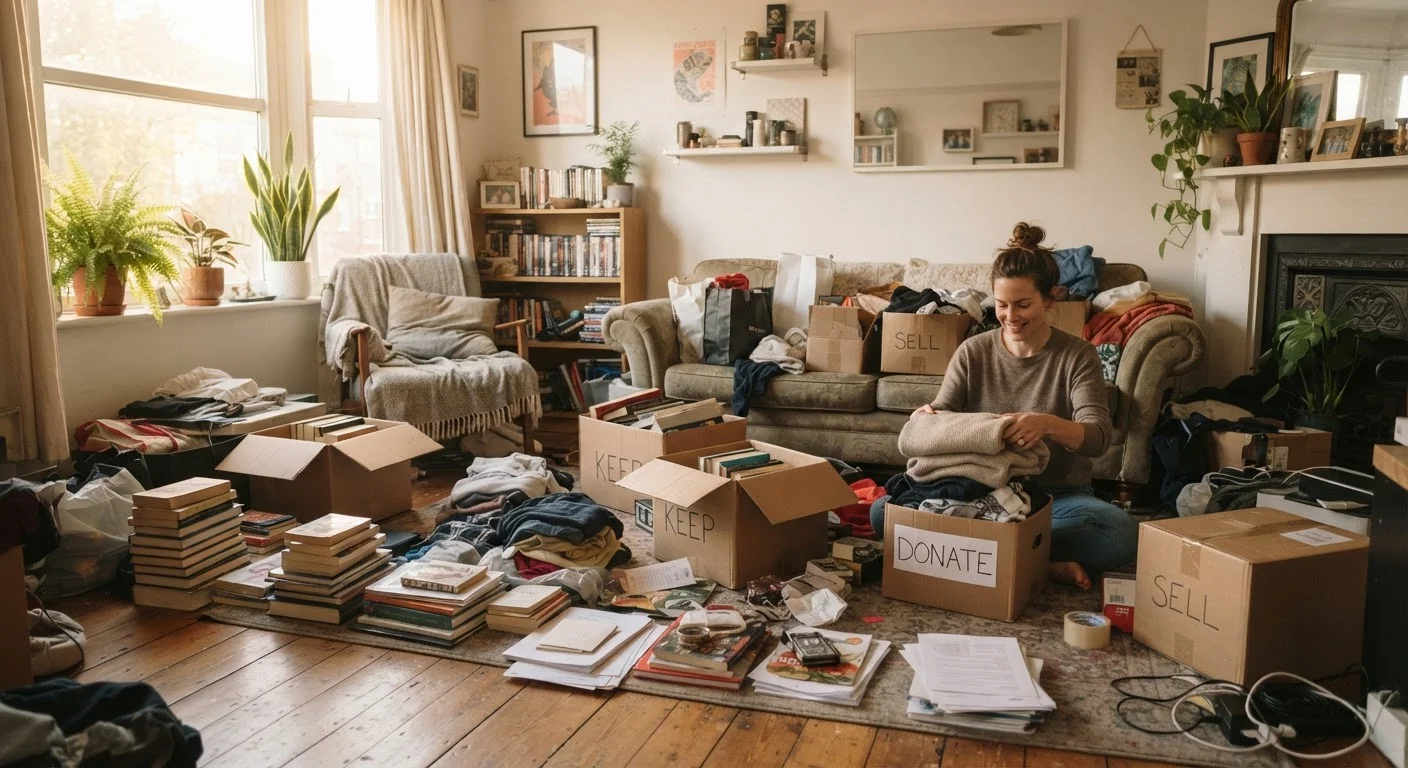
Why it happens: The focus is on sorting, not on logistics. Without a destination, bags of 'donate' or 'sell' items sit in hallways and garages for months, creating a new form of clutter.
Failing to address how new items enter the home after decluttering.
Why it happens: The declutter is treated as the finish line rather than the reset point. Without changed habits around shopping, accepting freebies, or managing inbound paper and packaging, cleared spaces refill predictably.
Structural Fixes That Make the Difference
Avoiding these pitfalls requires more than good intentions on a Saturday morning. It means treating decluttering as a repeating system rather than a one-time event. For a room-by-room framework that builds on these principles, see our complete room-by-room walkthrough.
Buying Storage Before Reducing Volume
One of the most reliably counterproductive moves is purchasing bins, shelving, or organizers before removing unwanted items. New storage creates the appearance of a solution while leaving the underlying excess untouched — and often adds to it. Reduce first, then assess what storage, if any, is genuinely needed for what remains.
Once spaces are cleared, the real challenge is keeping them that way. Intake rules — deciding what's allowed into the home and under what conditions — are among the most reliable tools available. Our guide to intake rules that prevent clutter creeping back covers practical options, including the well-known one-in-one-out principle.
For households where different people have different standards, the dynamic adds another layer of complexity. Organizing shared spaces when not everyone agrees explores workable approaches that don't require everyone to adopt the same level of tidiness. And if you've cleared the space but find it filling back up despite your best efforts, why organized homes don't stay that way addresses the systemic habits that make order last.
This article is for general informational purposes only. Costs, timelines, and outcomes will vary depending on individual circumstances.