

Key Takeaways
- Debt settlement can reduce your total balance owed, sometimes significantly, but it is not guaranteed.
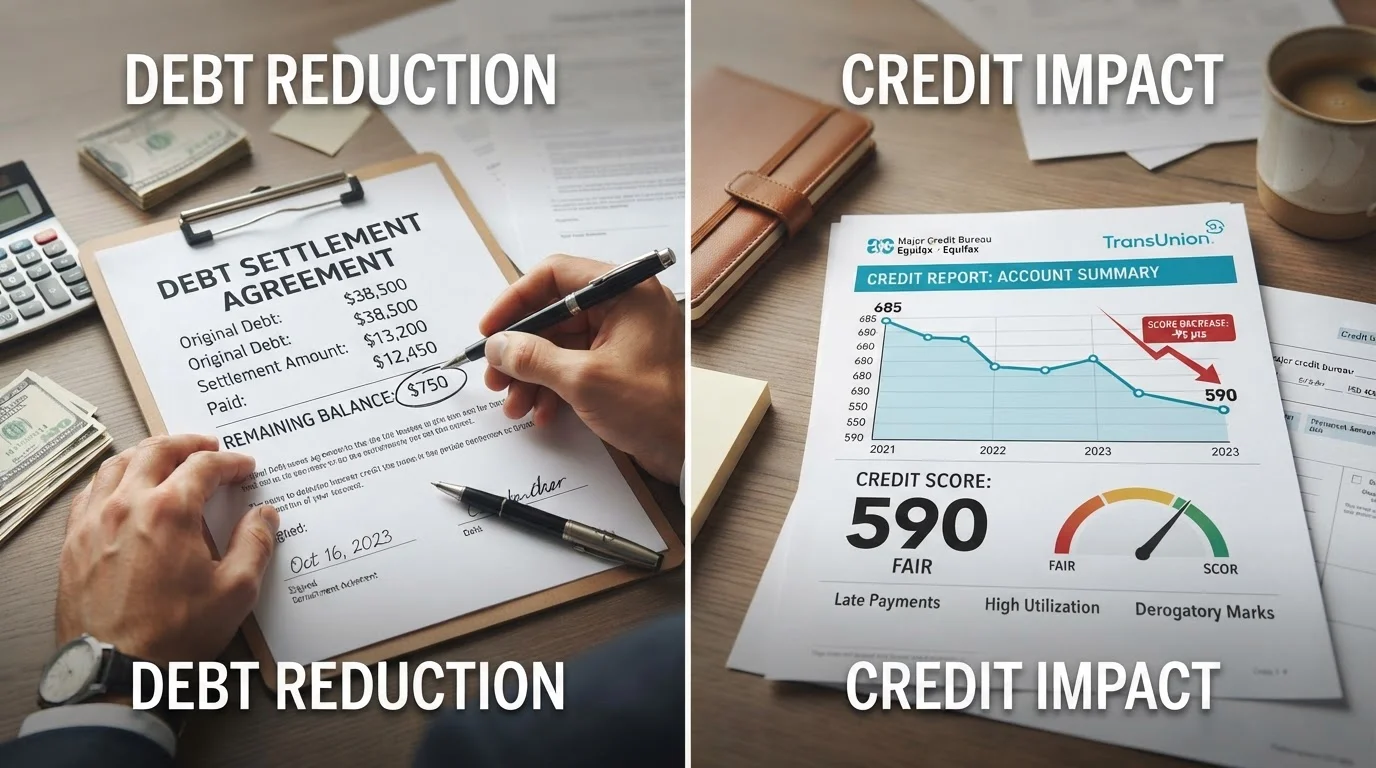
- Settled accounts are reported to credit bureaus and typically damage your credit score for several years.
- The forgiven debt may be treated as taxable income by the IRS unless an exemption applies.
- Third-party settlement companies charge fees and cannot guarantee results — understand costs upfront.
- Settlement is generally a last resort after other options like negotiation or consolidation have been considered.
Reduces the total amount you must repay
Creditors may accept 40–60 cents on the dollar for severely delinquent accounts, though actual outcomes vary considerably based on the creditor, debt age, and your negotiating position. There is no guaranteed reduction.
Can resolve debt faster than full repayment
If you can access a lump sum — from savings, a family loan, or liquidated assets — settlement can close an account in one transaction rather than years of minimum payments.
May prevent escalation to lawsuits or judgments
When creditors are considering legal action to collect, a negotiated settlement can close the account and reduce the risk of wage garnishment or a court judgment, though this is not a guarantee.
Provides psychological relief from unmanageable debt
For individuals dealing with overwhelming balances and persistent collection activity, resolving accounts — even at a cost — can reduce financial stress and allow forward planning to resume.
Severe and lasting credit score damage
A settled account is reported to the credit bureaus as 'settled for less than full amount,' which is a negative mark that typically remains on your credit report for seven years and can significantly lower your score.
Forgiven debt may be taxable income
The IRS generally treats canceled debt of $600 or more as taxable income, and creditors issue a Form 1099-C. Exceptions exist — notably the insolvency exclusion — but you should consult a tax professional before assuming you qualify.
No guarantee creditors will agree
Creditors are not obligated to settle. Some will not negotiate at all, and others only do so after significant delinquency, which itself damages your credit in the interim.
Third-party settlement companies charge substantial fees
Settlement companies typically charge 15–25% of the enrolled debt amount or the settled amount, which can offset much of the financial benefit and occasionally leave borrowers worse off.
Requires stopping payments, worsening delinquency
Many settlement programs instruct clients to stop paying creditors and accumulate funds in an escrow account instead — a process that guarantees missed-payment marks on your credit report and can trigger collection calls or lawsuits.
Does not apply to secured or federal student loans
Settlement is only viable for certain unsecured debts. Mortgages, auto loans, and federal student loans operate under different rules and are generally not eligible for standard settlement programs.
Our Verdict
Debt settlement can provide meaningful relief for people who are already significantly delinquent and have exhausted other options. However, the credit damage, potential tax liability, and fees mean it carries real costs that extend well beyond the settled balance. It is not a clean slate — it is a calculated trade-off.
Best suited for individuals with large unsecured debts who are already severely delinquent, cannot sustain minimum payments, and have considered alternatives such as consolidation, creditor negotiation, or bankruptcy counseling.
What Debt Settlement Actually Is
Debt settlement is a negotiation process in which a debtor and creditor agree that the debtor will pay less than the full amount owed — typically in a lump sum — in exchange for the creditor considering the account resolved. It is most commonly used for unsecured debts such as credit card balances, medical bills, and personal loans.
Before pursuing this path, it helps to have a complete picture of every obligation you carry. Building a personal debt inventory is a practical first step that clarifies which debts might be candidates for settlement and which are better handled another way.
Settlement can be pursued directly with a creditor or through a third-party debt settlement company. The two routes carry different cost structures and risks, which matter significantly when evaluating whether this strategy makes sense for a given situation.
This article provides general financial information and education only. It is not personalized financial, legal, or tax advice. Consult a qualified professional before making decisions about your own circumstances.
The Case for Debt Settlement
For people facing unmanageable debt loads, settlement offers a few genuine advantages worth understanding clearly.
Reduces the total amount you must repay
Creditors may accept 40–60 cents on the dollar for severely delinquent accounts, though actual outcomes vary considerably based on the creditor, debt age, and your negotiating position. There is no guaranteed reduction.
Can resolve debt faster than full repayment
If you can access a lump sum — from savings, a family loan, or liquidated assets — settlement can close an account in one transaction rather than years of minimum payments.
May prevent escalation to lawsuits or judgments
When creditors are considering legal action to collect, a negotiated settlement can close the account and reduce the risk of wage garnishment or a court judgment, though this is not a guarantee.
Provides psychological relief from unmanageable debt
For individuals dealing with overwhelming balances and persistent collection activity, resolving accounts — even at a cost — can reduce financial stress and allow forward planning to resume.
~40–60%
Typical settlement range on delinquent unsecured debt
Industry estimates and consumer advocacy analyses suggest creditors often settle severely delinquent unsecured accounts for 40–60% of the balance, though results vary widely by creditor and account age.
7 years
How long a settled account stays on credit report
Under the Fair Credit Reporting Act (FCRA), most negative account information, including settled-for-less accounts, can remain on a consumer credit report for up to seven years from the date of first delinquency.
15–25%
Typical fee charged by settlement companies
The Consumer Financial Protection Bureau (CFPB) notes that for-profit debt settlement companies commonly charge fees ranging from 15% to 25% of the total enrolled or settled debt amount.
If you are weighing settlement against other approaches, it is worth comparing it directly to alternatives. Debt consolidation and debt management plans operate very differently and may preserve your credit profile while still simplifying repayment.
The Costs and Risks You Need to Know
Settlement's advantages come with trade-offs that can affect your finances for years. These are not minor footnotes — they are central to any honest assessment of the strategy.
Severe and lasting credit score damage
A settled account is reported to the credit bureaus as 'settled for less than full amount,' which is a negative mark that typically remains on your credit report for seven years and can significantly lower your score.
Forgiven debt may be taxable income
The IRS generally treats canceled debt of $600 or more as taxable income, and creditors issue a Form 1099-C. Exceptions exist — notably the insolvency exclusion — but you should consult a tax professional before assuming you qualify.
No guarantee creditors will agree
Creditors are not obligated to settle. Some will not negotiate at all, and others only do so after significant delinquency, which itself damages your credit in the interim.
Third-party settlement companies charge substantial fees
Settlement companies typically charge 15–25% of the enrolled debt amount or the settled amount, which can offset much of the financial benefit and occasionally leave borrowers worse off.
Requires stopping payments, worsening delinquency
Many settlement programs instruct clients to stop paying creditors and accumulate funds in an escrow account instead — a process that guarantees missed-payment marks on your credit report and can trigger collection calls or lawsuits.
Does not apply to secured or federal student loans
Settlement is only viable for certain unsecured debts. Mortgages, auto loans, and federal student loans operate under different rules and are generally not eligible for standard settlement programs.
The IRS Insolvency Exclusion Explained
If your total liabilities exceeded your total assets at the time a debt was canceled, you may qualify for the IRS insolvency exclusion, which can reduce or eliminate the tax owed on forgiven debt. This is not automatic — you must file IRS Form 982 and document your financial position. Because the calculation can be complex, working with a qualified tax professional is strongly advisable before assuming you are exempt.
If your debts are not yet severely delinquent, you may have more leverage than you think. Negotiating directly with creditors is an option many people overlook before turning to settlement companies.
Settlement vs. Other Debt Payoff Strategies
Debt settlement sits at one end of a spectrum of approaches. On the other end are structured repayment methods like the debt avalanche and debt snowball, which preserve your credit and avoid the credit and tax consequences of settlement. Comparing these repayment strategies is worthwhile if you still have the ability to make regular payments.
Settlement tends to become relevant only after those structured paths are no longer viable — when debts are already delinquent, balances are large relative to income, and the creditor has reason to negotiate rather than pursue collection. In short, the choice of strategy should follow from an honest assessment of what is actually achievable, not from what sounds most appealing on paper.
If settlement is on the table, approach third-party companies with scrutiny: review their fee structures, check complaints through consumer protection resources, and confirm what they can and cannot promise before signing anything.