

Key Takeaways
- Strict budget categories improve spending visibility and help close common money leaks.
- Rigid systems can backfire when life doesn't fit neatly into predefined boxes.
- A hybrid approach — firm on essentials, flexible on discretionary — works for many people.
- Consistency matters more than perfection; the best budget is one you'll actually use.
- Categorizing spending requires a clear vocabulary — know what counts as a need vs. a want.
Makes overspending visible before it compounds
Assigning a fixed limit to each category means you can see a problem building mid-month rather than discovering it when the credit card statement arrives. Early visibility is one of the most cited benefits of structured budgeting.
Reduces low-stakes spending decisions to a simple rule
When a category is empty, the answer is no — no deliberation required. This reduces decision fatigue and makes it harder to rationalize small purchases that collectively add up.
Reveals actual spending patterns quickly
Many people significantly underestimate what they spend in categories like dining, subscriptions, or personal care. A few months of strict tracking typically surfaces these gaps with hard numbers.
Supports specific, time-bound financial goals
When the aim is to save a set amount or pay off a specific debt by a deadline, categorical budgets allow you to engineer the math backward from the goal and hold each spending area accountable to it.
Builds habitual awareness of money flows
People who maintain categorical budgets for several months often report that the awareness becomes internalized, reducing the need for constant checking once habits are established.
Irregular expenses break the system unpredictably
Car repairs, medical copays, and home maintenance don't arrive on schedule. A strict monthly category structure can leave people scrambling to reclassify spending or simply abandoning the budget when surprises hit.
Can create a restrictive, all-or-nothing mindset
When one category is blown early in the month, some people conclude the entire budget has failed and stop tracking altogether. This "what-the-hell effect" is a documented behavioral pattern in self-regulation research.
Requires significant upfront time and maintenance
Building accurate categories means reviewing several months of past spending, assigning realistic limits, and revisiting those limits regularly as circumstances change — a meaningful time commitment that not everyone sustains.
Poorly suited to variable or irregular income
Fixed spending ceilings become nearly meaningless when monthly income swings by hundreds or thousands of dollars. People with fluctuating pay often need percentage-based or priority-ordered approaches instead.
Ambiguous spending creates friction and error
Real-world purchases rarely fit one tidy label, and the constant need to classify every transaction can make budgeting feel more like bookkeeping than a useful planning tool.
Our Verdict
Strict budget categories are a genuinely useful tool for people who need structure to stop chronic overspending or who are working toward a defined financial goal. For others — particularly those with variable incomes or highly irregular expenses — the rigidity can generate more stress than savings. Neither approach is universally right, and the evidence suggests that a flexible-but-intentional system outperforms both extremes for long-term consistency.
Best suited to adults with stable, predictable income who want firm guardrails during a debt paydown period, a savings push, or a financial reset — and who are willing to revisit their category limits regularly.
What Strict Budget Categories Actually Mean
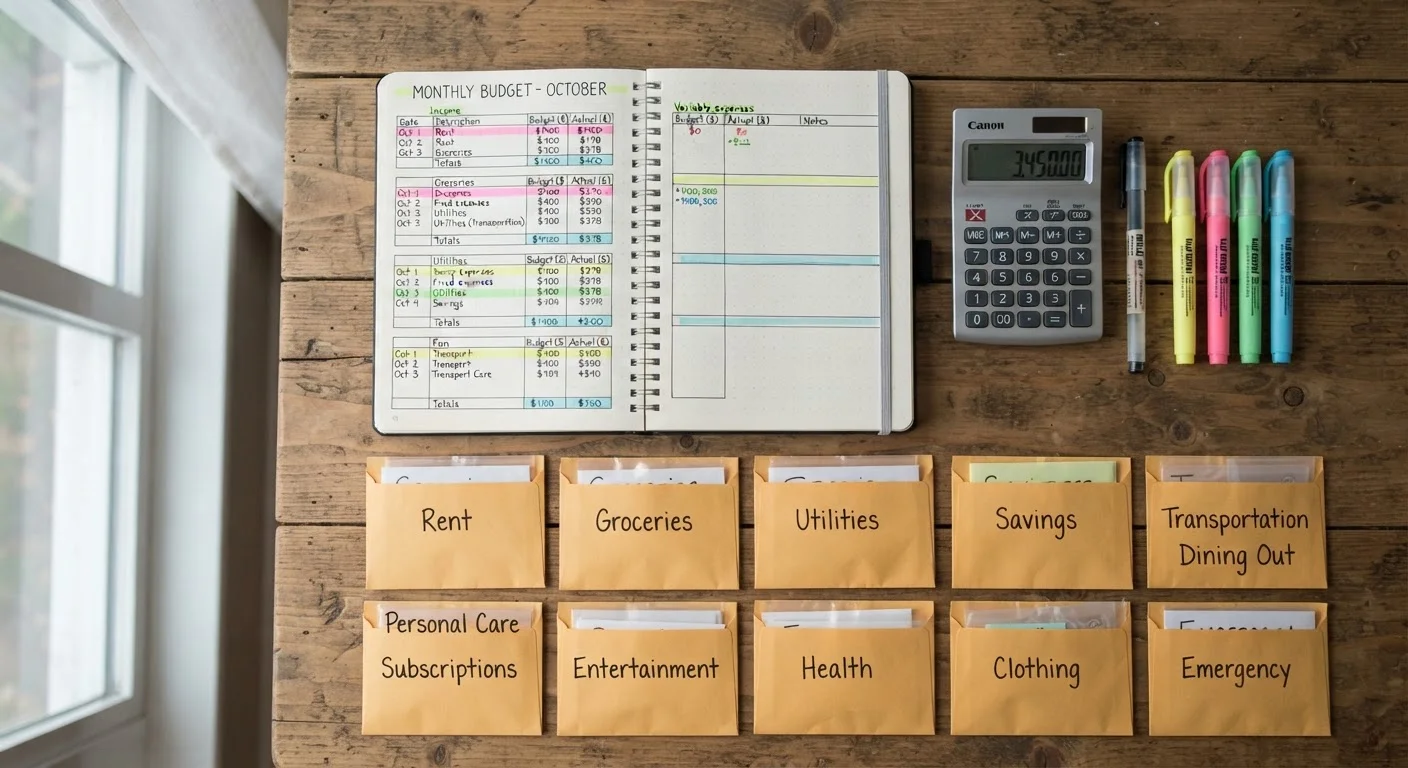
A strict or "categorical" budget assigns every dollar of income to a named spending bucket before the month begins. Common categories include housing, groceries, transportation, dining out, utilities, clothing, and savings. The defining feature is that each category has a fixed ceiling — once you've spent your grocery allocation, you don't dip into the dining-out fund to cover it.
This approach underpins well-known frameworks like zero-based budgeting, which requires that every dollar be assigned a job. You can learn how it compares to looser methods in our comparison of the 50/30/20 rule vs. zero-based budgeting. The key question isn't whether categories are useful — they generally are — but whether locking them down tightly helps or hinders your actual financial progress.
The Case For Strict Categories
Proponents of categorical budgeting point to several concrete advantages, particularly for people who are new to tracking spending or who have identified consistent overspending in specific areas.
Makes overspending visible before it compounds
Assigning a fixed limit to each category means you can see a problem building mid-month rather than discovering it when the credit card statement arrives. Early visibility is one of the most cited benefits of structured budgeting.
Reduces low-stakes spending decisions to a simple rule
When a category is empty, the answer is no — no deliberation required. This reduces decision fatigue and makes it harder to rationalize small purchases that collectively add up.
Reveals actual spending patterns quickly
Many people significantly underestimate what they spend in categories like dining, subscriptions, or personal care. A few months of strict tracking typically surfaces these gaps with hard numbers.
Supports specific, time-bound financial goals
When the aim is to save a set amount or pay off a specific debt by a deadline, categorical budgets allow you to engineer the math backward from the goal and hold each spending area accountable to it.
Builds habitual awareness of money flows
People who maintain categorical budgets for several months often report that the awareness becomes internalized, reducing the need for constant checking once habits are established.
65%
Adults without a written or tracked budget
According to a National Financial Educators Council survey, roughly two-thirds of U.S. adults do not follow a formal household budget, suggesting that structure — even imperfect — puts users ahead of most.
$1,000+
Typical annual subscription spending per household
Research from various consumer finance surveys suggests the average U.S. household pays for streaming, software, and membership services that add up well beyond what most people estimate.
Beyond the numbers, strict categories create accountability. When you can see that you've already spent your full entertainment allowance by the 15th, you have data — not vague guilt — to work with. That visibility makes course-correcting far more tractable. For goals like building an emergency fund or paying down credit card debt, that precision can be genuinely valuable.
The Case Against Strict Categories
The limitations of rigid categorization are just as real, and they tend to surface quickly once life stops behaving predictably — which it usually does.
Irregular expenses break the system unpredictably
Car repairs, medical copays, and home maintenance don't arrive on schedule. A strict monthly category structure can leave people scrambling to reclassify spending or simply abandoning the budget when surprises hit.
Can create a restrictive, all-or-nothing mindset
When one category is blown early in the month, some people conclude the entire budget has failed and stop tracking altogether. This "what-the-hell effect" is a documented behavioral pattern in self-regulation research.
Requires significant upfront time and maintenance
Building accurate categories means reviewing several months of past spending, assigning realistic limits, and revisiting those limits regularly as circumstances change — a meaningful time commitment that not everyone sustains.
Poorly suited to variable or irregular income
Fixed spending ceilings become nearly meaningless when monthly income swings by hundreds or thousands of dollars. People with fluctuating pay often need percentage-based or priority-ordered approaches instead.
Ambiguous spending creates friction and error
Real-world purchases rarely fit one tidy label, and the constant need to classify every transaction can make budgeting feel more like bookkeeping than a useful planning tool.
One structural challenge is that strict categories often assume a stable, salaried income arriving on a fixed schedule. Freelancers, hourly workers, and anyone with variable pay can find that fixed category ceilings become arbitrary constraints rather than useful guides. Our overview of budgeting frameworks worth knowing covers approaches better suited to fluctuating income.
There's also a categorization problem. Spending rarely slots cleanly into predefined boxes. Is a gym membership health or entertainment? Is a work-from-home internet bill a utility or a business expense? Ambiguity erodes the system over time if the rules aren't clearly established upfront. Building a clear spending vocabulary before you set your categories helps considerably.
Finding a Middle Ground That Actually Holds
For most people, the practical answer lies between "every dollar has a locked category" and "I'll track loosely and hope for the best." A tiered approach tends to work well: apply firm limits to the categories where you historically overspend or where precision matters most (groceries, dining out, subscriptions), and use a single flexible "discretionary" bucket for everything else.
The 'Miscellaneous' Category Is a Feature, Not a Flaw
Building a dedicated miscellaneous or buffer category — typically 5–10% of monthly take-home — isn't budget padding, it's realistic planning. Expenses that don't fit elsewhere have somewhere to land without derailing your entire structure. Treating that buffer as a last resort rather than a slush fund is what keeps it functional. Once you've tracked a full year, you'll likely find many "miscellaneous" items repeat enough to deserve their own category.
Tracking tools — whether cash envelopes or an app — reinforce whichever system you choose. Our comparison of cash envelope systems vs. digital spending trackers can help you match the tool to your habits. The goal is a budget you return to regularly, not one you abandon after a frustrating month.
This article is for general informational purposes only and does not constitute personalized financial advice. Consider speaking with a qualified financial professional about your specific situation.