

Key Takeaways
- Rising damp, condensation, and penetrating damp are three distinct problems requiring different solutions.
- Many expensive damp-proofing treatments address the wrong cause and deliver poor results.
- Condensation — the most common cause of indoor damp — is often solved through ventilation, not chemical injection.
- A damp-proof course (DPC) failure is far rarer than most homeowners assume.
- Correctly diagnosing the damp type before spending money is the single most important step.
Why Getting Damp Wrong Is an Expensive Mistake
Damp is one of the most misunderstood problems in residential homes. Homeowners spot a stain, a musty smell, or peeling wallpaper and reach for a solution — often one recommended by the same company that profits from selling it. The result is frequently a costly treatment that targets the wrong problem entirely.
There are three fundamentally different causes of damp in homes: condensation, penetrating damp, and rising damp. Each has distinct causes, appearances, and appropriate remedies. Confusing them doesn't just waste money — it can leave the underlying problem untreated and worsen structural damage over time.
Understanding what you're actually dealing with is the starting point for any effective fix. Our room-by-room home efficiency audit can also help you spot early warning signs before damp takes hold. Below, we break down the myths that most commonly lead homeowners astray.
Myth
All damp in a home is rising damp, and the only fix is a chemical damp-proof course injection.
Fact
Rising damp is relatively rare. The majority of indoor damp problems are caused by condensation or penetrating damp, neither of which is solved by DPC injection.
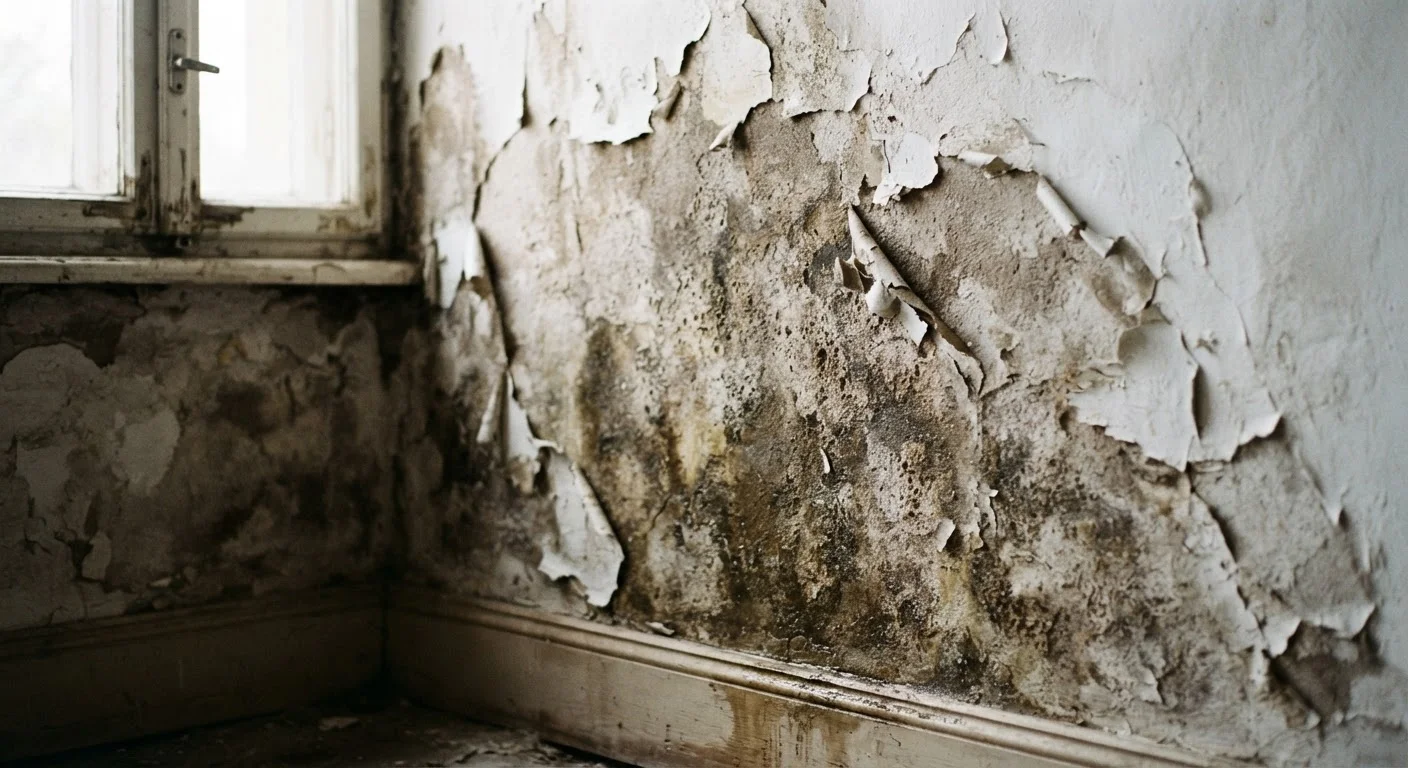
Rising damp occurs when groundwater travels upward through porous masonry — and it is considerably less common than the remedial damp industry implies. The telltale signs are a 'tide mark' stain typically no higher than about one meter from the floor, white salt deposits (called efflorescence) on the wall surface, and damage concentrated to ground-floor external walls.
Condensation, by contrast, appears on cold surfaces throughout the home — particularly on north-facing walls, in corners, and around window frames. It is by far the most common cause of mold and damp patches in modern housing and is primarily addressed through improved ventilation, heating patterns, and sometimes better insulation — not waterproof injection creams.
Myth
If you can see black mold, you must have a serious structural damp problem.
Fact
Black mold (most commonly Cladosporium or Aspergillus species) typically grows where condensation creates persistent surface moisture — a lifestyle and ventilation issue, not a structural one.
Mold growth requires moisture, warmth, and a surface to colonize. In most homes, condensation on cold walls — driven by cooking, showering, and breathing without adequate ventilation — provides exactly those conditions. The fix is rarely structural: improving airflow with extractor fans, opening windows, and maintaining a more consistent indoor temperature addresses the root cause.
That said, mold on walls that are genuinely wet from penetrating damp or a leaking pipe is a different matter. Context matters: check whether the mold is confined to areas of known condensation (corners, external wall surfaces, behind furniture blocking airflow) before assuming structural intervention is needed.
Myth
Painting over damp walls with a waterproof or anti-damp paint will solve the problem.
Fact
Anti-damp paints can temporarily mask moisture at the surface but do not address the source of the problem and frequently fail within months.
Tanking and waterproof paints work by creating a barrier — but moisture under pressure from behind a wall will eventually find its way around or through any surface coating. If penetrating damp or condensation continues unchecked, the paint blisters, peels, or simply transfers the moisture problem to an adjacent area.
Surface treatments have a legitimate but limited role: they can protect a wall surface once the underlying cause has been corrected. Applied before that correction, they are at best a temporary cosmetic measure and at worst a way of trapping moisture inside a wall, which can accelerate decay in any embedded timber.
Myth
A damp-proof course lasts forever once installed, so if you have one, rising damp isn't possible.
Fact
Traditional DPCs — particularly slate or bitumen types in older homes — can degrade, crack, or be bridged by raised ground levels, rendering them ineffective.
Many homes built before the mid-20th century have original DPCs made from slate, lead, or early bitumen felt. These materials can fail over decades. Additionally, even a functional DPC is bypassed when soil, paving, or rendered walls are raised above its level — a phenomenon called 'bridging.' This is one of the most common, and most overlooked, causes of genuine rising damp.
Before any remedial work, check whether external ground levels have been raised above the existing DPC line (usually visible as a thin horizontal line in the mortar between bricks near ground level). Lowering a path or flower bed that has been built up over years can sometimes resolve apparent rising damp without any further intervention.
Myth
Damp is always a winter problem caused by cold weather.
Fact
Penetrating damp often appears or worsens in autumn and winter due to increased rainfall, but condensation can occur year-round and is sometimes worse in summer when warm humid air meets cool surfaces.
Different damp types follow different seasonal patterns. Penetrating damp from a failing roof, cracked render, or blocked gutters correlates directly with rainfall and is most visible after wet periods. Condensation, however, depends on the relationship between indoor humidity and surface temperature — and can peak in summer in poorly ventilated bathrooms and kitchens.
Tracking when and where damp appears is one of the most useful diagnostic tools available to a homeowner. Damp that intensifies during or after heavy rain on a specific wall points clearly toward penetrating damp from an external defect on that elevation. Damp that appears seasonally across multiple internal surfaces without a rainfall correlation is almost certainly condensation-driven.
How to Diagnose Damp Before Spending Anything
Before contacting any contractor or purchasing any product, take time to observe the damp carefully. Note where it appears — on external walls or internal ones, near windows, at floor level or ceiling height, and whether it worsens in winter or after heavy rain. These patterns are diagnostic clues.
Be Cautious of Damp Survey Conflicts of Interest
Many free damp surveys are conducted by companies that sell remedial treatments. Their financial incentive is to identify a problem requiring their product. Where possible, commission an independent survey from a qualified building surveyor or chartered structural engineer who has no stake in recommending a specific treatment. This is particularly important before committing to any significant remedial work.
A simple, inexpensive test involves taping a piece of plastic sheeting (around 12 inches square) firmly over the affected area for 24–48 hours. If moisture collects on the room-facing side of the plastic, the problem is condensation. If moisture appears between the plastic and the wall, it is coming through from outside or below.
For anything beyond straightforward condensation — particularly where structural walls, timber floors, or basement areas are involved — an independent survey from a qualified building surveyor (not a remedial damp company) gives you an unbiased assessment. This upfront cost frequently prevents far larger misdirected spending later. See also our honest overview of when DIY makes sense and when it doesn't for guidance on setting realistic expectations.
Fixing damp correctly also intersects with broader home efficiency. Adequate ventilation, well-maintained gutters, and good insulation all reduce moisture risk — topics explored in our guide on insulation versus draught-proofing. And if managing the cost of any remedial work feels daunting, it's worth noting that misallocated spending on home problems shares some patterns with the budgeting myths that keep people stuck — acting on incomplete information usually makes outcomes worse.