

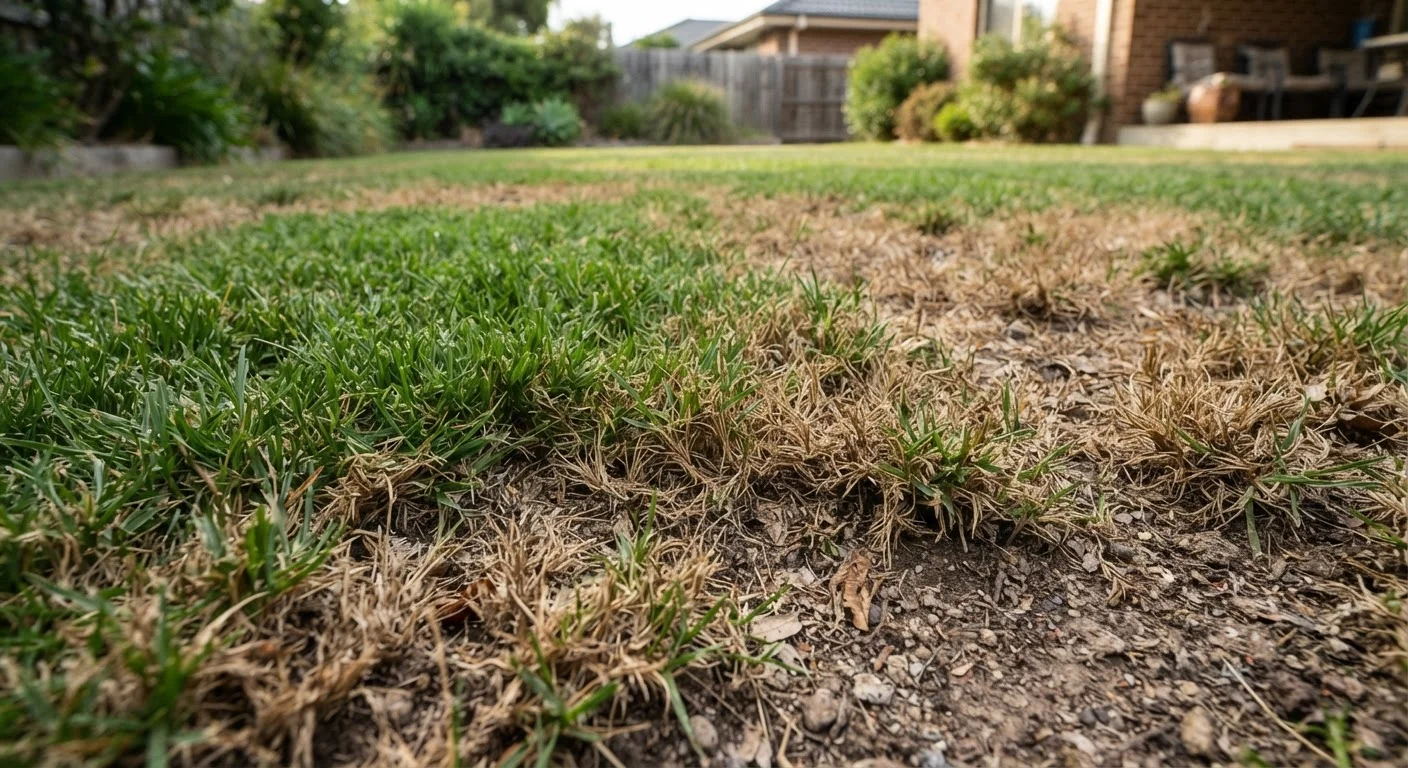
Key Takeaways
- Overwatering and underwatering can produce identical brown symptoms, making diagnosis essential before treatment.
- Soil compaction prevents water and nutrients from reaching grass roots, causing slow, widespread browning.
- Fungal diseases often appear as circular patches and worsen when lawns are watered in the evening.
- Mowing too short stresses grass and exposes soil to heat, accelerating browning in warm weather.
- Correcting the underlying cause — not just watering more — is the only reliable path to a green lawn.
Brown Grass Is a Symptom, Not the Problem
When your lawn turns brown, the instinct is to reach for the hose. Sometimes that helps — but just as often, extra watering makes things worse. Brown or yellowing grass is your lawn communicating stress, and that stress has many possible sources: compacted soil, disease, incorrect mowing, poor drainage, or even the wrong grass variety for your climate.
Before you treat anything, observe the pattern. Is the browning uniform across the lawn, or does it appear in circular patches, stripes, or only in shaded areas? The shape and location of brown spots are often the clearest clues about what's actually going wrong. Understanding your soil's condition is equally important, since root-level problems rarely show up until grass is already struggling.
Common Mistakes That Turn Lawns Brown
Most lawn browning comes down to a handful of repeated errors. Recognizing these patterns can save you time, money, and unnecessary frustration.
Watering too frequently but too shallowly, which keeps the topsoil moist while roots never develop depth.
Why it happens: Daily light watering feels attentive, and it does keep the surface visibly damp — but grass roots follow moisture, staying shallow rather than growing downward.
Mowing the lawn too short — a practice known as scalping — which removes too much of the grass blade and stresses the plant.
Why it happens: Many homeowners assume shorter grass means less frequent mowing or a neater appearance, but cutting below one-third of the blade's height at once shocks the plant and exposes soil to intense heat.
Ignoring soil compaction, which physically prevents water, air, and nutrients from penetrating to the root zone.
Why it happens: Compaction builds gradually through foot traffic, heavy equipment, and clay-heavy soils, so homeowners rarely notice it until the lawn is already struggling to recover from routine stress.
Watering in the evening, which leaves grass blades wet overnight and creates conditions where fungal diseases thrive.
Why it happens: Evening watering is convenient and feels efficient since less water evaporates — but it gives fungal spores many hours of moisture to establish on the leaf surface.
Applying fertilizer at the wrong time or in excessive amounts, which can chemically burn grass and produce rapid browning.
Why it happens: Fertilizer burns — caused by excessive nitrogen concentration drawing moisture out of grass cells — are easy to confuse with drought stress, leading homeowners to keep fertilizing when they should stop.
Reading the Signs and Taking Targeted Action
Once you've identified the likely cause, resist the urge to apply multiple fixes at once. Changing your watering schedule, aerating the soil, and applying a fungicide simultaneously makes it nearly impossible to know what worked — or what made things worse.
Start with the most probable cause based on your observations. If the browning is patchy and circular, investigate fungal disease before adjusting irrigation. If it's widespread and the soil feels like concrete when you press a screwdriver into it, compaction is your primary target. For watering-related confusion, reviewing common watering misconceptions can help you rule out habits that are quietly doing damage.
~40%
Lawn issues linked to compacted soil
Turfgrass specialists commonly attribute a significant share of persistent lawn problems to soil compaction, which impairs drainage and root development over time.
1 inch/week
General weekly water target for most lawns
University cooperative extension programs across the US consistently recommend approximately one inch of water per week as a general guideline, adjusted for rainfall and grass type.
Healthy lawns are resilient, but they do require consistent, informed care. Most brown patches can be reversed within a few weeks once the correct cause is addressed — though heavily damaged areas may need overseeding to fully recover.