

Key Takeaways
- Starting your packing list several days before departure eliminates last-minute scrambling and forgotten essentials.
- Organizing items by category — not by day — makes repacking faster and locating things easier mid-trip.
- A consistent pre-departure checklist is the single most effective tool for reducing travel-day anxiety.
- Carry-on placement of critical documents, medications, and valuables protects against checked-luggage delays.
- Packing a small 'day-of' kit separate from your main bag keeps essentials reachable without digging.
Why Packing Systems Matter More Than Packing Light
The popular advice to 'pack light' is broadly sound, but it misses a more fundamental truth: what reduces travel-day stress is not the volume of what you bring — it's how deliberately you've organized it. Travelers who rush packing into the final hour before departure consistently report higher anxiety, more forgotten items, and more time wasted at airports hunting through bags. A repeatable packing system addresses all three problems.
Whether you're taking a weekend domestic flight or a two-week international trip, the underlying principles are the same: start early, categorize intentionally, and validate with a checklist. For a broader view of how packing fits into the full trip-planning process, see our end-to-end travel planning guide.
Proven Packing Practices Worth Adopting
The following practices are grounded in the experiences of frequent travelers and travel writers who've stress-tested different approaches across varied trip types.
Build your packing list at least 72 hours before departure, not the night before.
Starting early gives you time to notice what's missing, do laundry, and replace items that are worn or depleted. Last-minute packing compresses all decision-making into a high-stress window when cognitive errors are most likely.
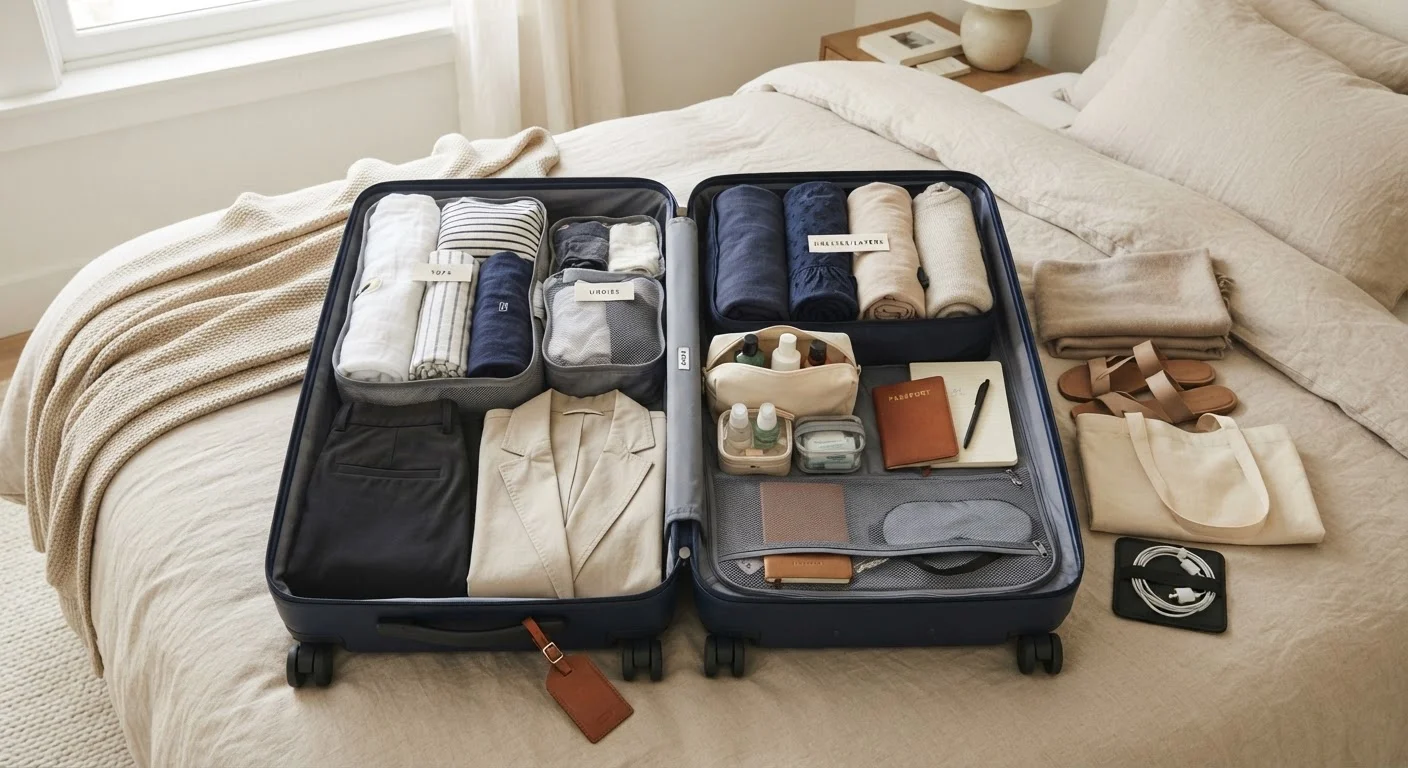
Organize by category using packing cubes or designated zones, not by outfit or day.
Category-based packing — tops together, bottoms together, toiletries in one pouch — makes items locatable at a glance and speeds up repacking at hotels. Day-based packing sounds logical but breaks down the moment plans change.
Keep a master packing checklist and refine it after every trip.
A written checklist removes reliance on memory under pressure. Updating it post-trip — noting what you never used and what you wished you'd brought — gradually calibrates it to your actual travel style.
Pack all critical items — documents, medications, valuables — in your carry-on, never in checked luggage.
Checked bags are delayed, misrouted, or temporarily unavailable more often than most travelers expect. Any item whose absence would derail your trip or health must stay within arm's reach.
Prepare a separate small 'travel day kit' that stays accessible throughout your journey.
During transit, you need a small subset of items repeatedly — ID, snacks, headphones, lip balm, phone charger — but digging through a full bag at security or on a plane wastes time and causes anxiety.
What to Do the Morning of Departure
Even the most prepared traveler can lose composure on travel day itself. The morning of departure deserves its own protocol — distinct from your main packing routine.
A useful habit is placing your passport, boarding pass, and any required travel documents in the same external pocket every trip, without exception. Consistency eliminates the search. If your itinerary involves crossing several time zones, note that your sleep and concentration may already be affected before you board — learn what jet lag actually does to the body so you can plan accordingly.
Common Packing Myths Worth Questioning
Several widely repeated packing beliefs don't hold up well under scrutiny. Rolling clothes always saves more space than folding is one example — in practice, the method that works best depends on fabric type and bag shape. Similarly, the idea that you should pack for every possible scenario leads to overpacking far more reliably than it prevents problems. Most 'what-if' items go unused.
Another persistent myth: that experienced travelers never check bags. Checking luggage is sometimes the smarter move — particularly on longer trips, in destinations with extreme temperatures requiring bulkier clothing, or when traveling with specialized gear. The decision should be practical, not a point of pride. For a broader look at planning assumptions worth re-examining, see common travel myths examined.
Packing strategy also connects to budget decisions. Avoiding checked-bag fees can matter on a tight trip budget, but only if it doesn't mean leaving behind essential items. Prioritizing where your travel money goes is a separate skill that pairs well with an efficient packing approach.