

Key Takeaways
- Shoulder season falls between peak and off-peak periods and often balances cost, weather, and crowd levels effectively.
- Exact shoulder season dates vary by destination — research each location individually rather than assuming universal windows.
- Accommodation and flights can be meaningfully less expensive during shoulder periods compared to peak weeks.
- Many attractions remain fully open and staffed during shoulder season, unlike some off-peak closures.
- Booking flexibility — not just timing — is key to capturing the most value from shoulder season travel.
Shoulder Season
Shoulder season refers to the travel periods that fall between a destination's peak tourist season and its quieter off-peak months. These windows — typically a few weeks before or after the busiest period — often offer a practical middle ground: weather that's still reasonably favorable, tourist infrastructure that's fully operational, and noticeably fewer crowds. Many experienced travelers deliberately target shoulder season to avoid the drawbacks of both extremes.
Shoulder season timing varies significantly by destination and hemisphere; what constitutes shoulder season in one region may coincide with peak season in another, so it's always worth researching each destination individually.
What Shoulder Season Actually Means in Practice
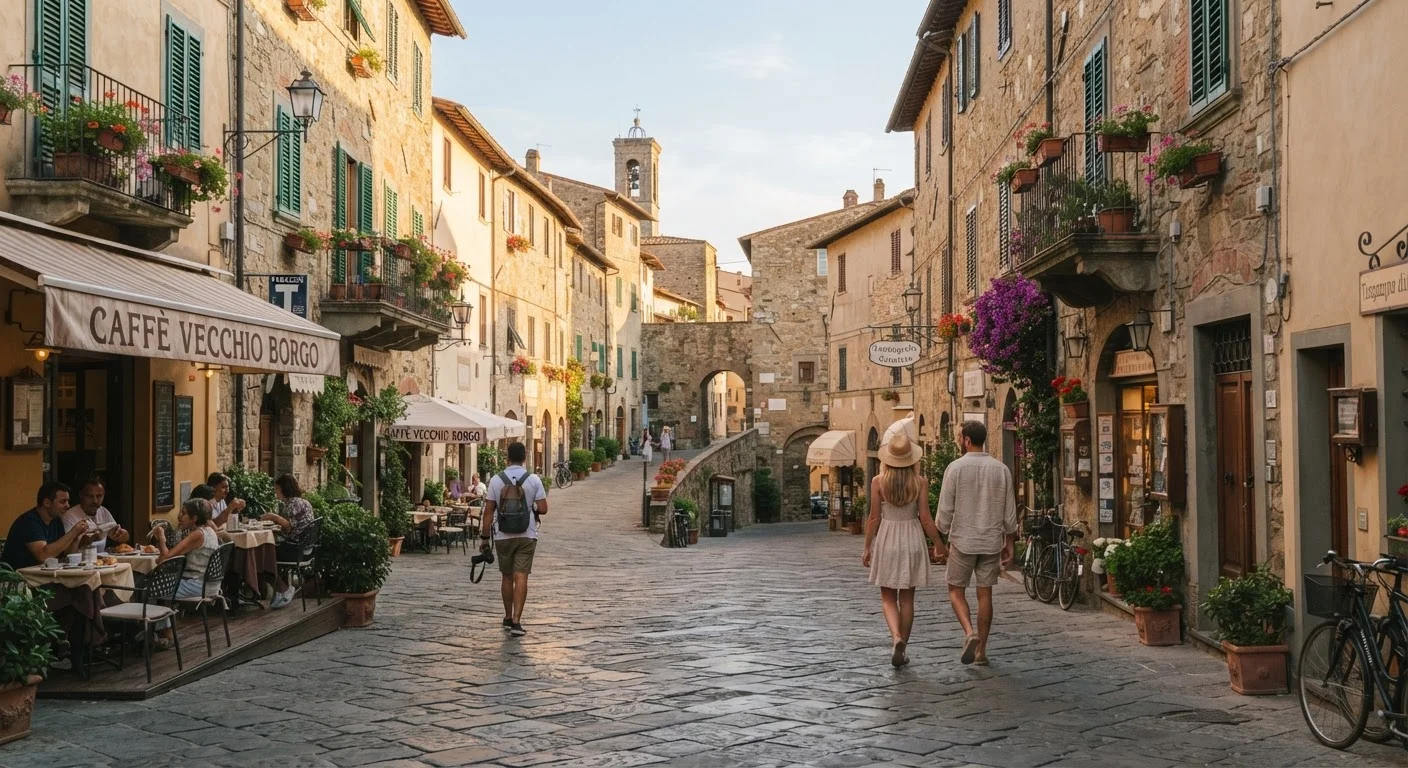
Shoulder season isn't a precisely defined calendar window — it's a relative concept that describes the transitional weeks on either side of a destination's peak demand period. Think of it as the buffer zone: the crowds have thinned compared to the high season rush, but the destination hasn't fully retreated into off-season mode. Restaurants are still open. Museums are staffed. Tour operators are running full schedules.
The practical implication is significant. A traveler visiting the Amalfi Coast in late September rather than mid-August is likely to find shorter waits at popular overlooks, easier restaurant reservations, and hotel rates that haven't reached their summer ceiling — all while the weather remains warm enough for the coast to be genuinely enjoyable.
Understanding this concept matters because many travelers default to peak season out of habit or a fear that any other time will be a compromised experience. That assumption often goes unchallenged. In reality, for many destinations, shoulder season offers conditions that experienced travelers actively prefer. As one framework for thinking about it: peak season optimizes for maximum conditions; shoulder season optimizes for reasonable conditions with far fewer trade-offs in logistics and cost.
Shoulder Season Timing Varies by Hemisphere
If you're comparing destinations across hemispheres, remember that seasons are reversed. A traveler planning a Southern Hemisphere trip (New Zealand, Chile, South Africa) should research local summer and winter patterns independently rather than applying Northern Hemisphere calendar assumptions. What's a quiet October in Paris is the beginning of peak summer in Patagonia.
Why the Cost Difference Is Worth Examining
The financial case for shoulder season travel is real, though it's worth being precise about what that means. Accommodation pricing tends to show the most consistent variation — hotels and short-term rentals typically use dynamic pricing tied closely to demand, so even a two-week shift can produce meaningful rate differences. Flight pricing is less predictable, since airfare depends on route-specific capacity and competition, but shoulder periods often see softer demand that can translate to lower fares on some routes.
What's harder to quantify is the indirect cost of peak travel: the time spent in ticket lines, the difficulty of getting a table at a popular restaurant without a reservation made months in advance, or the experience of viewing a landmark surrounded by a dense crowd. These aren't purely financial costs, but they affect how much value a traveler actually extracts from a trip.
20–40%
Typical hotel rate reduction in shoulder vs. peak season
Industry observers and travel research consistently note that accommodation pricing tends to drop by roughly this range during shoulder periods at popular leisure destinations, though exact figures vary widely by location and property type.
~30%
Fewer international arrivals at many destinations outside peak months
Tourism data from destinations with pronounced seasonality — including many European and Caribbean markets — commonly shows visitor volumes drop by around this share when comparing peak to shoulder months.
For travelers working within a defined budget, the savings during shoulder season can be redirected toward experiences — a guided excursion, an upgraded accommodation for a night or two, or simply more days in destination. Planning a trip around a tight budget involves deliberate trade-offs, and shoulder season timing is one of the higher-leverage levers available.
How to Identify the Right Shoulder Window for a Destination
The most common mistake travelers make when applying the shoulder season concept is assuming the windows are the same everywhere. They aren't. A destination's peak season is driven by a combination of weather patterns, school holiday calendars, cultural events, and visitor origin markets — all of which vary by location.
A useful approach is to research a destination's average monthly visitor numbers alongside its historical weather data. The overlap between declining crowd levels and still-acceptable conditions marks the shoulder window. For beach destinations in the Caribbean, that often means late April through early June before the Atlantic hurricane season intensifies. For many northern European cities, September and early October offer favorable conditions as summer crowds recede. For ski destinations, the weeks between the end of peak winter season and full spring closure can be quieter and less expensive while lifts are still running.
Local events are an important variable to check. A regional festival or international conference can spike demand during what would otherwise be a quiet shoulder period. Conversely, understanding when these events conclude can reveal an overlooked soft window. Booking timing strategy intersects directly with shoulder season planning — the two concepts work together rather than independently.
Shoulder Season and the Pace of Travel
There's an experiential dimension to shoulder season travel that goes beyond cost. With fewer visitors competing for the same spaces, it becomes easier to linger — to spend an extra hour at a site without feeling pressed by crowds, or to explore a neighborhood without navigating around tour groups. This connects directly to how travel pace affects the overall quality of a trip.
Travelers who prefer slow travel approaches often find shoulder season particularly compatible with their style. A destination that feels overwhelming during peak season may become genuinely enjoyable when the density of visitors drops. That shift doesn't require going entirely off-season — it simply requires timing the trip to avoid the concentrated peak.
It also creates space for the kind of unplanned discovery that makes travel memorable. When you're not fighting for position at every attraction or rushing to make reservations secured months in advance, there's room for the spontaneous decisions that often become the highlights of a trip. Building flexibility into an itinerary becomes far more feasible when the destination itself isn't operating at maximum capacity.
The case for shoulder season ultimately rests on a simple insight: the experience of a destination isn't fixed — it changes meaningfully based on when you arrive. Choosing the window deliberately, rather than defaulting to peak or discounting off-season entirely, is one of the more straightforward ways to travel more thoughtfully.