
Free and Low-Cost Experiences That Define a Destination More Than Paid Attractions

Key Takeaways
- Public markets, parks, and neighborhoods frequently offer deeper cultural insight than ticketed attractions.
- Free and low-cost experiences tend to put travelers in proximity to locals rather than other tourists.
- Intentional planning — not just spontaneity — is what unlocks meaningful no-cost experiences.
- Community calendars, city tourism offices, and local libraries are underused research tools for finding authentic events.
- Spending less on entrance fees frees up budget for food, transport, and extended stays.
Why Free Experiences Often Feel More Real
Paid attractions have their place. A well-curated museum, a guided historical tour, a ticketed performance — these can be genuinely valuable parts of a trip. But a pattern emerges for experienced travelers: the moments that define a destination are rarely the ones behind a ticket gate.
The reason is straightforward. Free and low-cost spaces — markets, plazas, public beaches, neighborhood streets — are where ordinary life continues regardless of tourism. When you step into a city's central market on a Tuesday morning or follow a riverside walking path at dusk, you're sharing space with people who actually live there. That proximity changes the texture of the experience entirely.
This isn't an argument for never paying admission. It's an argument for allocating your travel budget deliberately — knowing that some of the highest-value hours of a trip will cost nothing. The list below covers the categories of free and low-cost experience most consistently worth seeking out, regardless of where you're traveling.
Public Markets
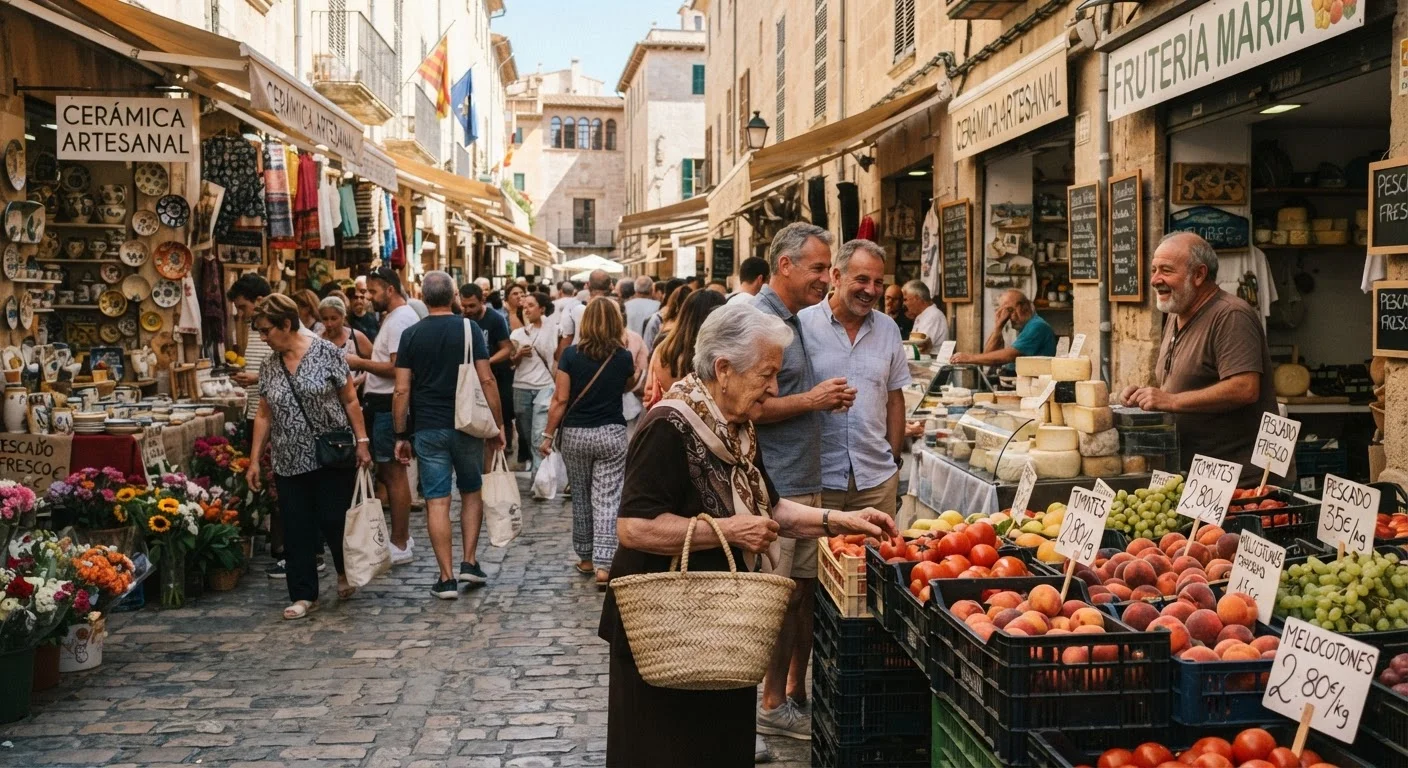
Food markets, flea markets, and farmer's markets are among the most information-dense environments a traveler can enter. In a single hour, you can observe what people eat, how they negotiate, what's in season locally, and how vendors and customers interact. This is compressed cultural context that no museum exhibit can fully replicate.
Many of the world's most celebrated markets — from covered municipal markets in Spain to sprawling weekend markets in Southeast Asia — charge no entry fee at all. Even where a small charge exists, it's usually minimal. The key is visiting during operating hours when locals shop, not during the midday window when tour groups arrive.
Markets compress more cultural context into one hour than almost any ticketed sight.
Neighborhood Walking Routes
Every city has neighborhoods that guidebooks mention briefly but rarely explore in depth — residential areas, creative districts, working-class communities that have shaped the city's identity without developing a tourist infrastructure. Walking these areas costs nothing and often produces the kind of unscripted encounter — a mural, a bakery, an unexpected viewpoint — that travelers remember longest.
City tourism offices and local planning departments sometimes publish free walking route maps. Architectural preservation societies in many cities offer self-guided audio tours at low or no cost. These are worth looking up before arrival rather than relying solely on commercial apps.
Residential neighborhoods reveal a city's character in ways that tourist districts rarely can.
Public Parks and Green Spaces
Urban parks function as the living rooms of a city. People bring their children, exercise, gather with friends, celebrate, and decompress there. Spending an hour in a city's major park — not walking through it to reach something else, but actually sitting and observing — provides a surprisingly clear picture of local social life.
Beyond passive observation, many parks host free programming: outdoor concerts, fitness classes, cultural events, and seasonal celebrations. These are listed inconsistently in travel guides but reliably on city parks department websites and local event calendars.
Urban parks function as a city's living room — spend time there, not just passing through.
Community Festivals and Local Events
Every destination has an annual cycle of community events — street festivals, religious observances, harvest celebrations, local sporting events — that aren't designed for tourists but are almost always open to them. These events tend to be free or very low cost and offer something that purpose-built tourist experiences structurally cannot: genuine local participation and investment in what's happening.
Finding them requires a bit of advance research. Searching a destination's city name alongside terms like "community events," "local festivals," or the specific month of travel often surfaces results that standard travel sites miss. Destination-specific guides can also help identify the seasonal rhythms worth planning around.
Events designed for residents, not tourists, offer the kind of authentic participation money rarely buys.
Free Museum Hours and Public Collections
Many well-regarded museums offer free admission on specific days or times — often one evening per week or the first Sunday of the month. Public art collections, government buildings with open galleries, and university museums frequently charge nothing at all. These aren't lesser alternatives; they often include serious, well-curated work.
The practical approach is to identify one or two paid institutions you genuinely want to visit, then structure the rest of your cultural exposure around free options. This also helps avoid the "museum fatigue" that sets in when travelers try to cover too many ticketed sights in rapid succession.
Structuring paid museum visits around free admission windows is one of the most reliable cost-cutting moves in any city.
Local Food Scenes Beyond Tourist Zones
Street food stalls, market lunch counters, and neighborhood canteens frequented by working residents are typically the most affordable and most authentic eating options in any destination — and they require no reservation, no dress code, and no significant outlay. The challenge is finding them, since they're underrepresented in mainstream travel media.
Asking hotel or guesthouse staff where they personally eat lunch is a reliable shortcut. So is simply walking a few blocks away from a major attraction and observing where lines form at midday. For a more structured approach to eating affordably without defaulting to tourist traps, the guide to eating well while spending less covers the practical mechanics in detail.
The best affordable meals are usually found a few blocks from wherever the main tourist crowds are concentrated.
Making the Most of What's Already There
None of these experiences require significant advance planning, but a small amount of research pays off. Most city and regional tourism offices publish free event listings — many updated weekly — that include community festivals, outdoor film screenings, gallery openings, and neighborhood celebrations that don't appear in major travel guides. Local library systems in many cities also post community calendars that skew toward resident-facing events rather than tourist-facing ones.
Check Official City Calendars Before You Arrive
Most municipal tourism offices and city parks departments maintain free event listings updated weekly. These calendars tend to reflect resident-facing programming — outdoor concerts, neighborhood festivals, free museum nights — that doesn't always surface in major travel apps or guidebooks. Spending 20 minutes with these resources before departure can significantly reshape your itinerary toward lower-cost, higher-authenticity experiences.
It's also worth reframing what counts as a "destination experience." Riding public transit across a city, sitting in a park at the same time locals take their afternoon break, or watching a neighborhood change character between morning and evening — these are observations, not activities, but they accumulate into a genuine sense of place that no single attraction can replicate.
For a broader framework on managing costs without narrowing your experience, the end-to-end budget travel planning guide covers the full arc from destination research through on-the-ground spending. And if you're rethinking what low-cost travel actually involves, the real cost of traveling cheap is worth reading before you finalize any itinerary.