

The Core Test: Three Questions to Ask
Most people build an emergency fund without ever writing down what qualifies as an emergency. That gap creates real problems when something unexpected hits and you're deciding under pressure whether to tap savings or not. A clear definition, set in advance, removes that ambiguity.
Apply these three questions to any unexpected expense before reaching for your emergency fund:
- Is it unexpected? A predictable expense — annual car registration, holiday gifts, a known medical co-pay — is not an emergency. It belongs in a sinking fund or your regular budget.
- Is it necessary? The expense must address a genuine need: keeping you housed, employed, healthy, or safe. Discretionary wants don't qualify, even urgent-feeling ones.
- Is it urgent? It can't reasonably be deferred, negotiated, or resolved another way within a normal pay cycle.
A legitimate financial emergency clears all three bars simultaneously. If an expense fails even one, it belongs somewhere else in your financial plan — not in your emergency fund. For a broader framework on how emergency funds fit into overall financial resilience, see what an emergency fund actually is (and isn't).
What Qualifies — and What Doesn't
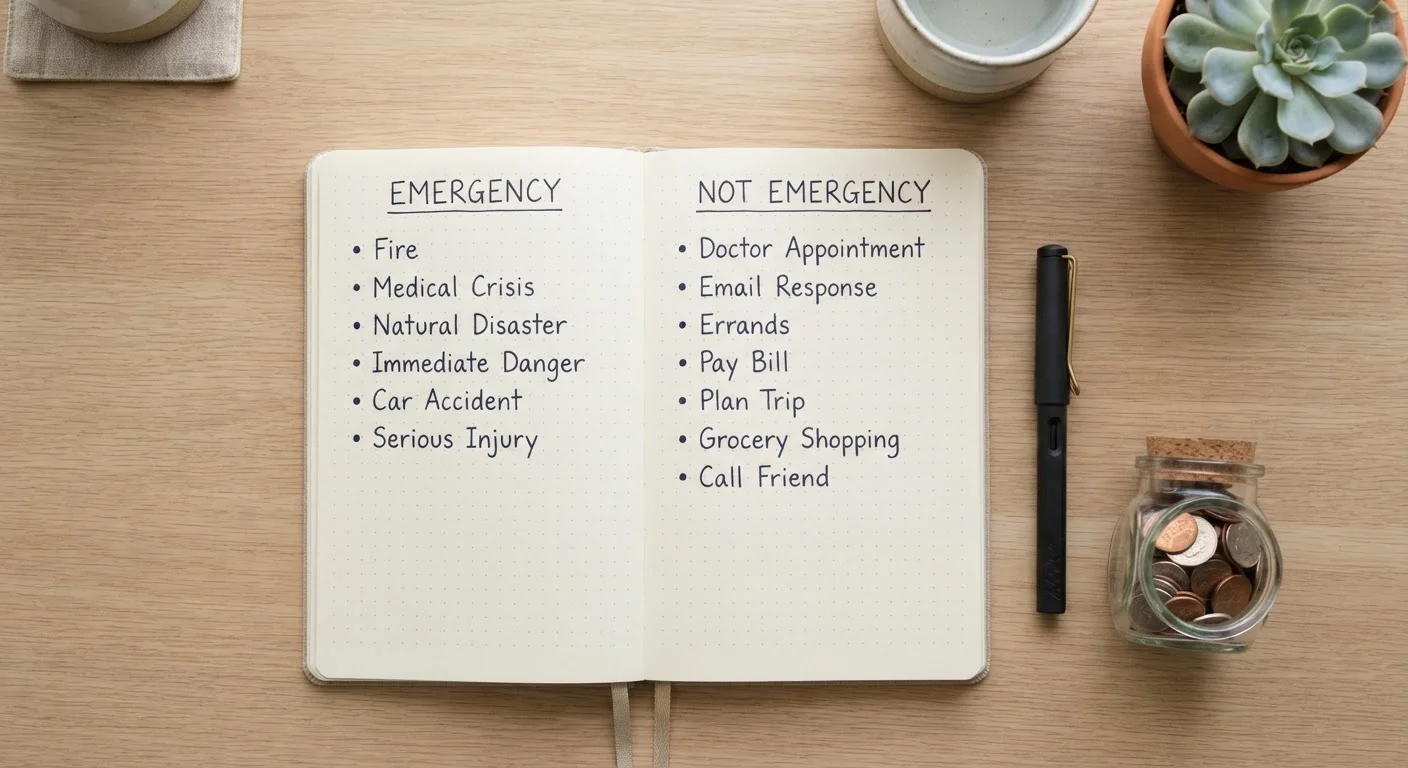
Walking through concrete examples is often more useful than abstract rules. Use the table below as a reference point, though your specific situation may shift some items between columns.
| Qualifies as an Emergency | Does Not Qualify |
|---|---|
| Job loss or sudden significant income reduction | Annual subscription renewal you forgot about |
| Emergency medical or dental treatment not covered by insurance | Elective cosmetic or non-urgent dental procedure |
| Essential car repair needed to get to work | Upgrading a car because yours feels old |
| Urgent home repair affecting safety or habitability (burst pipe, heating failure in winter) | Home improvement project or aesthetic renovation |
| Unexpected essential travel (family medical crisis) | A vacation deal that expires soon |
| Essential appliance failure (refrigerator, washer in a household with young children) | Replacing a working appliance with a newer model |
Notice the pattern: emergencies are reactive, not aspirational. Anything you could have foreseen or planned for — even loosely — generally shouldn't drain the fund built for genuine crises. If you find yourself regularly dipping into savings for borderline items, understanding why people raid emergency funds can help you identify and address the root triggers.
Emergency Fund
A dedicated pool of liquid savings set aside exclusively for genuine, unplanned financial emergencies — not general savings or discretionary spending. Its purpose is to prevent debt or financial disruption when an unexpected essential expense arises.
Sinking Fund
Money saved incrementally in advance for a known or predictable future expense, such as car maintenance, annual insurance premiums, or holiday spending. It is separate from an emergency fund and absorbs expenses that are foreseeable.
Financial Resilience
The ability to absorb unexpected financial shocks — job loss, illness, major repairs — without going into debt or destabilizing your broader financial plan. An emergency fund is one of the primary tools for building it.
Liquidity
How quickly and easily an asset can be converted to cash without significant loss of value. Emergency funds should be held in highly liquid accounts (such as a savings account) so funds are accessible immediately when needed.
Gray Areas Worth Thinking Through
Some expenses genuinely sit on the border. That's normal, and it's worth thinking through the common ones rather than improvising at a stressful moment.
Pet emergencies
An emergency vet visit for an otherwise healthy pet meets the necessity and urgency tests for most households where a pet is a genuine dependent. Routine checkups and preventive care do not.
Job-related expenses
If a certification or tool is required to maintain your current employment or accept a time-sensitive job offer, there's a reasonable case for emergency fund use — provided no other financing option is viable. Career advancement expenses don't qualify.
Partial income loss
A gig worker whose income drops 40% for several weeks due to illness faces a legitimate emergency. A freelancer with a slow month they could absorb with tighter spending does not.
The key discipline: be honest with yourself about whether a purchase is truly unavoidable right now, or whether you're under stress and looking for a permission slip to spend. Your future self, facing a real crisis, will thank you for holding the line.
It also helps to review your fund's adequacy at major life transitions — certain life events should trigger a fresh look at your safety net.
This article is for general informational and educational purposes only and does not constitute personalized financial advice. Consult a qualified financial professional for guidance tailored to your individual circumstances.