

Key Takeaways
- A budget is a spending plan, not a spending restriction — it reflects your priorities.
- Budgets work on any income level; the dollar amount doesn't determine whether one is useful.
- A budget is not a static document — it should be updated when your income or expenses change.
- Tracking past spending and planning future spending are related but distinct activities.
- No single budget format works for everyone; frameworks should fit your life, not the other way around.
Personal Budget
A personal budget is a plan that maps your expected income against your planned expenses over a set period — typically a month. It tells your money where to go before it arrives, rather than wondering where it went afterward. Think of it as a decision-making tool, not a punishment system.
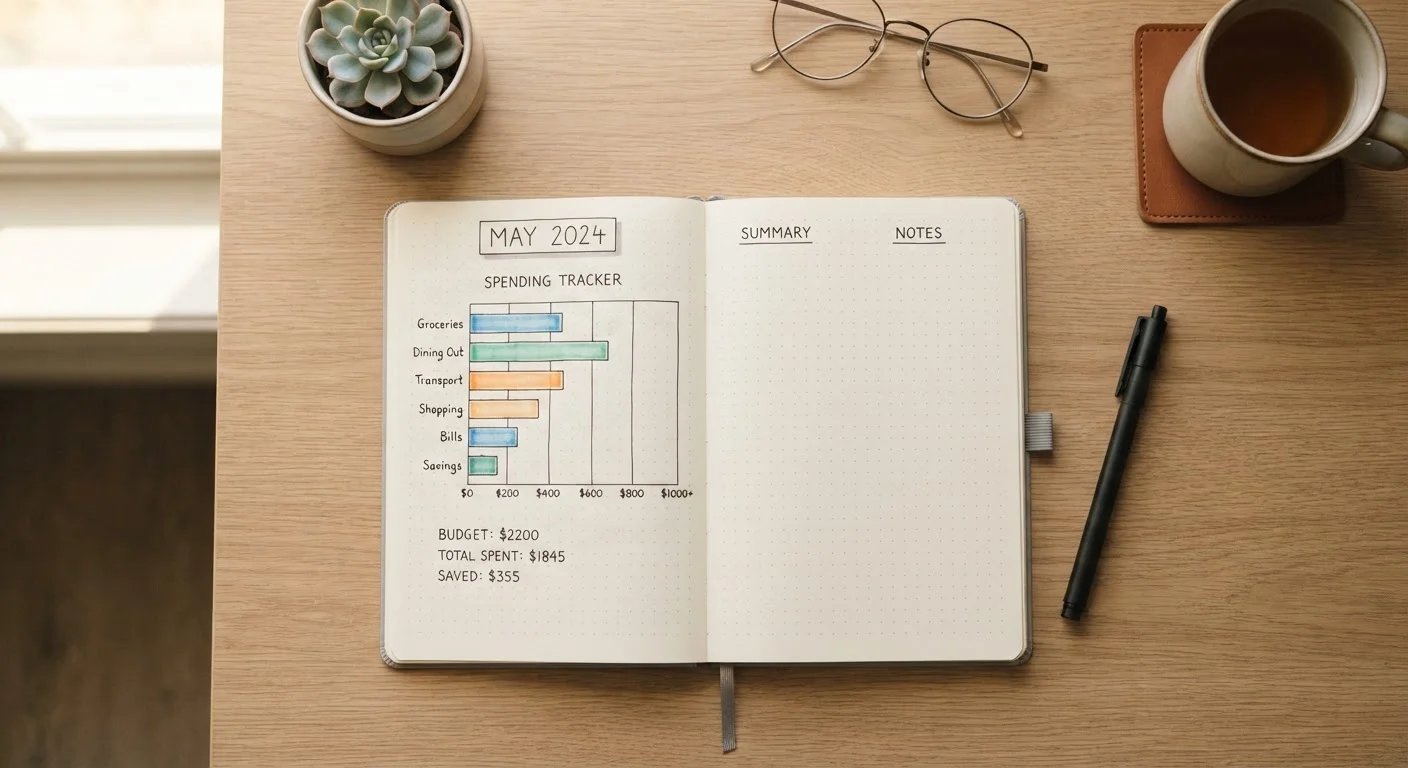
In accounting terms, a budget is a forward-looking financial statement; it differs from a spending tracker, which is a backward-looking record of what already occurred.
The Core Idea: A Plan, Not a Prison
Most people who resist budgeting are reacting to a definition that isn't quite right. They picture a rigid spreadsheet that bans spontaneous spending, demands sacrifice, and assigns guilt whenever a number goes over the line. That's not what a budget actually is.
A budget is simply a spending plan. It's a written or recorded intention about how you'll allocate your income across your expenses, savings, and goals during a given period. It gives you a framework before decisions happen, so those decisions are made deliberately rather than by default.
The distinction matters: a budget doesn't stop you from spending — it just makes sure that spending reflects what you actually want. If dining out matters to you, a realistic budget includes a dining-out category. If travel is a priority, it has a travel line. The plan bends around your life, not the other way around. For a deeper look at how common misconceptions distort people's relationship with budgeting, see budgeting myths that keep people stuck.
What a Budget Is Not
Clarifying what a budget isn't strips away a lot of the anxiety people carry into the process.
- It's not a record of past spending. That's a spending tracker — a useful companion tool, but a separate activity. A budget looks forward; a tracker looks back.
- It's not a one-size-fits-all formula. The percentages in popular frameworks — like allocating 50% to needs, 30% to wants, and 20% to savings — are starting points, not rules. Your cost of living, income variability, and goals will shape different allocations.
- It's not only for people in financial trouble. People across every income level use budgets to build wealth, avoid lifestyle creep, save for goals, and make large financial decisions with confidence.
- It's not permanent or fixed. A budget is a living document. When income changes, when a bill drops off, or when a goal shifts, the budget changes with it.
~33%
US adults who follow a written budget
Surveys by the National Financial Educators Council and similar organizations consistently find fewer than half of American adults maintain a formal written spending plan.
65%
Americans living paycheck to paycheck at some point
Multiple annual consumer finance surveys have found roughly two-thirds of US adults report living paycheck to paycheck at least occasionally, regardless of income level.
Understanding these distinctions is what lets someone actually use a budget instead of abandoning it after the first imperfect month.
The Basic Mechanics
At its most fundamental, a budget has two sides: income and outflow. Income is any money coming in — wages, freelance earnings, benefits, or other sources. Outflow covers everything money goes toward: fixed expenses like rent or loan payments, variable expenses like groceries and utilities, discretionary spending, debt repayment, and savings or investing contributions.
The goal is for planned outflows to match — or fall below — expected income. When outflows exceed income on paper, the budget reveals a gap you can address intentionally, rather than discovering it by running short mid-month.
Budgets are typically built on a monthly cycle because most recurring bills operate monthly. But some people find weekly or biweekly cycles easier to manage, particularly with variable income. The format — app, spreadsheet, envelope system, or notebook — matters far less than the habit of actually using it. For a structured look at the frameworks that put these mechanics into practice, see budgeting frameworks worth knowing.
This article is for general informational purposes only and does not constitute personalized financial advice. Consider consulting a qualified financial professional for guidance specific to your situation.