

Key Takeaways
- Labor typically accounts for 40–65% of total bathroom renovation costs.
- Permits are legally required for plumbing, electrical, and structural changes in most US jurisdictions.
- Hidden conditions like water damage or outdated wiring often add 10–20% to project costs.
- Keeping the existing plumbing layout intact is one of the most effective ways to control costs.
- A contingency fund of at least 15% of your total budget helps absorb unexpected discoveries.
Bathroom Renovation Cost
A bathroom renovation cost is the total sum of all expenses required to update or rebuild a bathroom space — including materials, skilled labor, permits, fixtures, and contingency funds for unexpected issues. It encompasses both the visible upgrades (tile, vanity, fixtures) and the behind-the-wall work (plumbing, electrical, waterproofing) that makes those upgrades possible and safe.
Renovation costs are typically categorized as either hard costs (physical materials and labor) or soft costs (permits, design fees, inspections). Both categories affect your final budget and should be planned for from the start.
Why Bathroom Renovations Cost More Than Expected
Bathrooms are small rooms with unusually complex systems concentrated in a tight space — plumbing supply and drain lines, exhaust ventilation, GFCI-protected electrical circuits, and waterproofing layers all coexist behind a few square feet of wall and floor. That density is precisely what makes bathroom renovations among the most cost-intensive projects per square foot in any home.
Homeowners frequently budget for what they can see: new tile, a vanity, a toilet, perhaps a walk-in shower. What they underestimate are the systems underneath — and the labor required to work around or replace them. Understanding the real cost drivers before you commit to a scope of work helps you build a budget that reflects reality rather than optimism.
If you're planning broader home updates alongside your bathroom, a room-by-room home efficiency audit can help you prioritize where water and energy improvements will have the most impact.
The Major Cost Categories
Labor
Labor is almost always the largest line item in a bathroom renovation, typically representing 40–65% of total project cost. Tile setters, plumbers, electricians, and general contractors each bring specialized skills — and their rates reflect that. In many metro areas, licensed plumbers and electricians bill $75–$150 per hour or more. Attempting to skimp here by hiring unlicensed help often leads to failed inspections or rework that costs more than the original savings.
Materials and Fixtures
Tile, vanities, toilets, tubs, showers, faucets, lighting, mirrors, and hardware are the visible elements most homeowners focus on. Material costs swing dramatically based on choice: porcelain tile can range from $2 to $20+ per square foot before installation. The same principle applies to vanities and fixtures. Setting a clear material budget before shopping — and sticking to it — is a discipline that pays off.
Permits and Inspections
Any project that alters plumbing, electrical wiring, or structural elements requires permits in most US jurisdictions. Permit fees vary by location but typically range from $100 to $1,000 for residential bathroom work. Skipping this step isn't just a legal risk — an unpermitted renovation can complicate a future home sale and may require costly corrective work to pass inspection retroactively.
40–65%
Share of renovation budget consumed by labor
Industry estimates consistently place skilled trade labor as the largest single cost category in bathroom renovation projects.
15%
Recommended contingency fund percentage
Renovation professionals widely advise setting aside at least 15% of the total project budget for unexpected discoveries during construction.
$100–$1,000
Typical permit fee range for bathroom work
Permit fees vary by municipality; projects involving plumbing, electrical, or structural changes generally require permits in most US jurisdictions.
Waterproofing and Substrate Work
Behind every shower tile is a waterproofing membrane and a proper substrate — cement board or a similar backer material. These aren't optional. Inadequate waterproofing is the leading cause of moisture damage inside bathroom walls, which often isn't discovered until the damage is extensive. Budget for this work explicitly; it's not visible, but it's foundational.
Hidden Costs That Derail Budgets
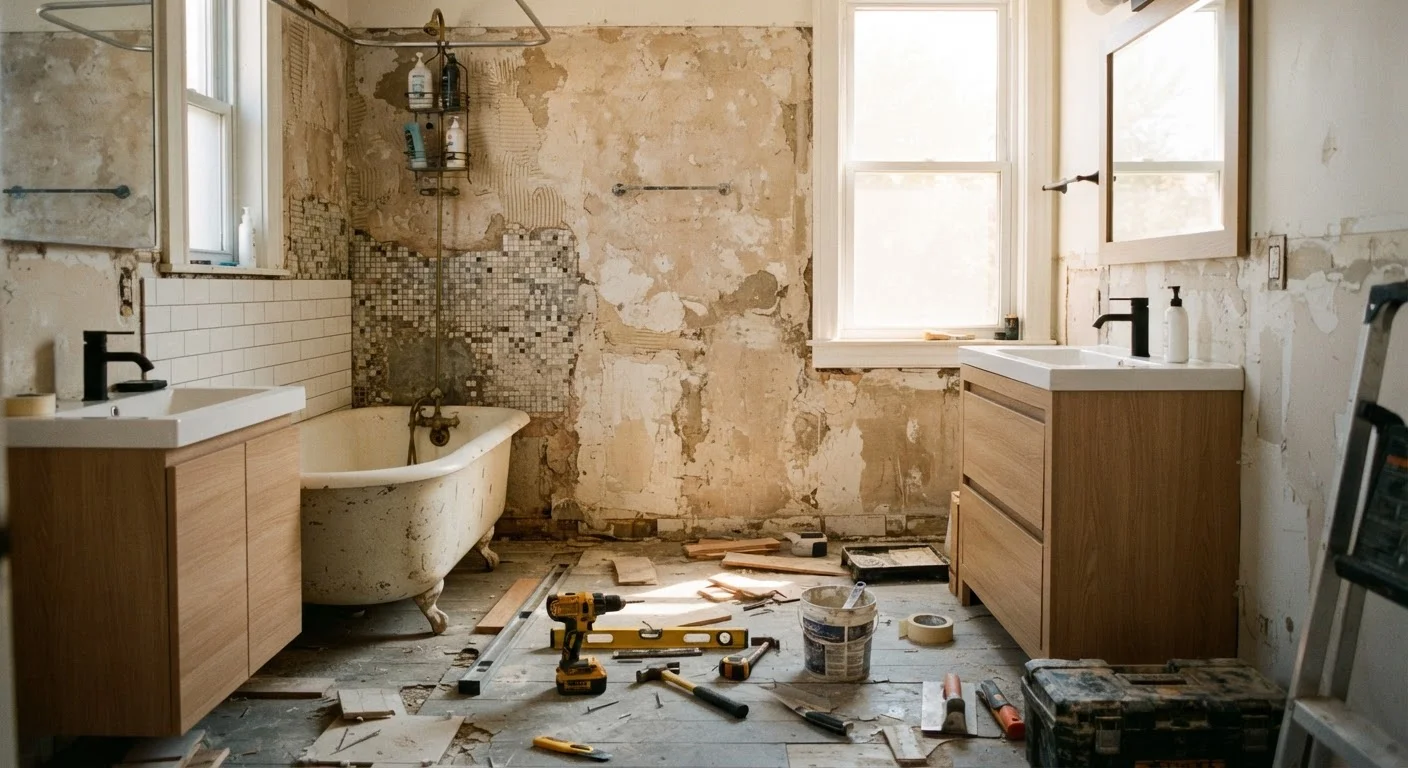
Even experienced contractors encounter surprises once walls are opened. Subfloor rot beneath old vinyl flooring, mold colonies behind a shower surround, galvanized pipes that need replacement, or an electrical panel that can't accommodate a new circuit — these are common discoveries that add cost and time to any project.
Industry guidance consistently recommends setting aside a contingency fund of at least 15% of your total renovation budget to absorb these discoveries without derailing the project. Treat the contingency as a required line item, not a fallback you hope not to use.
For a broader look at how unexpected expenses can affect project planning — even outside the home — the same principle applies to travel budgeting, as explored in our piece on hidden costs travelers forget to budget for.
Where Homeowners Have Real Control Over Costs
Some cost drivers are fixed — labor rates in your market, permit fee schedules, the condition of what's behind your walls. Others are decisions entirely within your control.
- Keep the plumbing where it is. Moving a toilet, shifting a shower drain, or relocating a sink requires opening floors or walls and rerouting drain lines. This is one of the most expensive decisions in a bathroom layout change.
- Sequence the project correctly. Rough plumbing and electrical work must be inspected before walls close. Plan accordingly to avoid costly re-opening.
- Compare contractor bids carefully. Get at least three written estimates with itemized scopes of work. A low bid that omits waterproofing or subfloor repair isn't actually lower.
- DIY selectively. Demolition, painting, and installing accessories are reasonable DIY contributions. Plumbing tie-ins and electrical panel work are not. Our guide on what DIY saves and what it costs you breaks down when doing it yourself makes financial sense.
Understanding how renovation costs align with home value is equally important. Not every dollar spent in a bathroom translates to a dollar gained at resale — a point worth reading more about in our look at renovations that often underperform on added value.