

| Best heat tolerance | Stainless steel and ceramic/porcelain tile |
| Easiest to clean (fewest joints) | Tempered glass or stainless steel sheet |
| Highest maintenance requirement | Natural stone (requires periodic sealing) |
| Most DIY-friendly installation | Ceramic and porcelain tiles |
| Not suitable directly behind gas flame | Engineered quartz, painted plaster, unsealed natural stone |
| Grout type matters | Epoxy grout resists staining better than cement-based grout |
What a Splashback Actually Has to Withstand
A kitchen splashback sits at the intersection of steam, cooking grease, water droplets, and occasional direct heat — all within a few inches of the cooktop. Choosing a material purely for looks without understanding these conditions often leads to staining, warping, or grout degradation within a few years.
The key performance factors to evaluate for any splashback material are:
- Heat resistance — proximity to open flames or electric elements
- Moisture resistance — exposure to steam and repeated wiping
- Stain resistance — absorption of oils, sauces, and cleaning agents
- Ease of cleaning — number of joints, grout lines, or porous surfaces
- Installation complexity — whether DIY is realistic or a licensed trade is needed
| Best heat tolerance | Stainless steel and ceramic/porcelain tile |
| Easiest to clean (fewest joints) | Tempered glass or stainless steel sheet |
| Highest maintenance requirement | Natural stone (requires periodic sealing) |
| Most DIY-friendly installation | Ceramic and porcelain tiles |
| Not suitable directly behind gas flame | Engineered quartz, painted plaster, unsealed natural stone |
| Grout type matters | Epoxy grout resists staining better than cement-based grout |
Understanding these factors before committing to a material helps you match the splashback to your actual cooking habits rather than an idealized version of them.
Material by Material: What Each One Handles Well
Each common splashback material has a distinct performance profile. Here's how they compare across the conditions that matter most in a working kitchen.
Ceramic and Porcelain Tiles
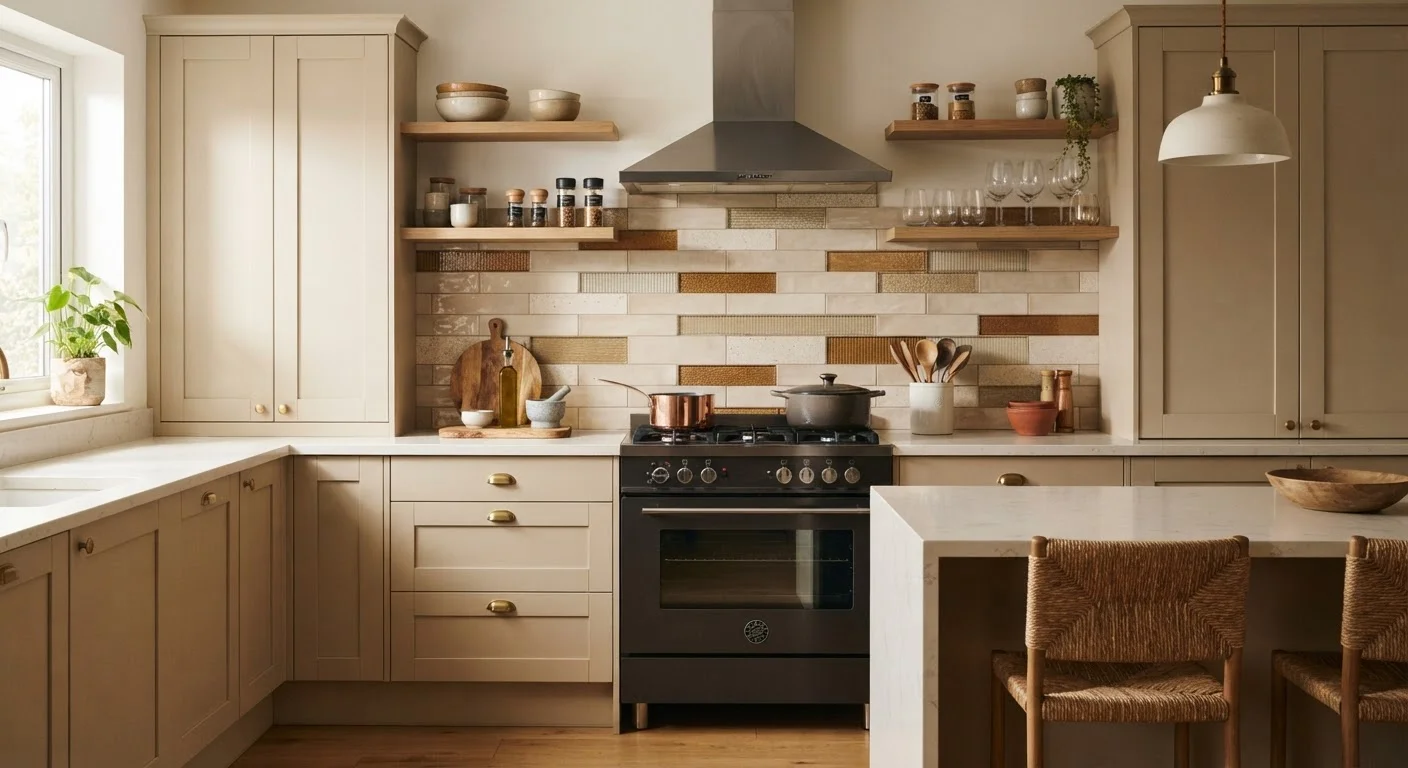
Tiles remain one of the most widely used splashback materials because they handle moisture and heat reliably. Porcelain is denser than standard ceramic and absorbs less water — an important distinction near a sink or steam-heavy cooking zone. The main limitation is grout: unsealed grout lines trap grease and require regular maintenance to prevent discoloration and bacterial buildup. Epoxy grout is more stain-resistant than cement-based grout and is worth specifying if tiles are your choice.
Tempered Glass
A single sheet of tempered glass behind the cooktop has no joints, no grout, and resists moisture completely. It wipes clean in seconds and works well in kitchens where a seamless, reflective finish is the goal. However, glass can show fingerprints and smears prominently, and standard glass panels should not be installed directly behind a gas flame without a heat buffer — always check the manufacturer's minimum clearance specifications. Tempered glass is rated for higher temperatures than standard float glass but is not immune to thermal shock from sudden temperature changes.
Stainless Steel
Stainless steel is the default choice in commercial kitchens for a reason: it tolerates direct heat, is non-porous, and cleans easily with a damp cloth. In residential kitchens it offers the same practical advantages. The trade-off is visual — it scratches over time and shows fingerprints readily. Brushed finishes hide scratches better than polished ones. Stainless is a strong functional choice directly behind a cooktop where heat tolerance is the top priority.
Natural Stone (Marble, Granite, Slate)
Natural stone brings genuine visual character to a kitchen but requires the most maintenance of common splashback materials. Marble in particular is porous and acid-sensitive — tomato sauce, citrus juice, and vinegar-based cleaners can etch the surface. Granite is harder and more resistant, and slate offers a matt, textured surface that conceals splatter well. All natural stone splashbacks require periodic sealing (typically once or twice a year) to maintain stain resistance. Stone is generally not recommended as a primary material directly behind a gas flame without checking supplier heat tolerance guidelines.
Engineered Quartz Panels
Engineered quartz combines crushed stone with resin binders to produce a hard, non-porous slab that resists staining better than natural stone without requiring sealing. It tolerates moisture well and the surface cleans easily. The resin component does have a heat threshold, however — prolonged direct heat exposure can cause discoloration or warping, so quartz is better suited to walls beside the cooktop rather than directly behind it.
Painted or Rendered Plaster
Specialty kitchen paints and rendered finishes can work in low-splash areas — primarily around sinks with modest cooking activity. They are not appropriate as a material directly behind any heat source and require more frequent repainting over time. Their value is primarily aesthetic versatility at lower upfront cost.
Tempered glass
Glass that has been heat-treated to increase its strength and resistance to thermal breakage. It shatters into small, blunt fragments rather than sharp shards, making it safer for kitchen use.
Epoxy grout
A grout made from epoxy resins rather than cement. It is highly resistant to staining, moisture, and chemical cleaners, making it preferable for kitchen tile installations.
Thermal shock
Stress caused by a rapid change in temperature that can crack or weaken certain materials. Glass and some stone surfaces are vulnerable if subjected to sudden heat followed by cold water.
Porosity
A material's capacity to absorb liquids through its surface. High-porosity materials like unsealed natural stone absorb oils and stains more readily and require protective sealing.
Engineered quartz
A manufactured surface material made from ground quartz crystals bound with resin. It is non-porous and more uniform in appearance than natural stone, though the resin component has heat limitations.
Matching Material to Your Kitchen's Real Conditions
Two questions narrow down the field faster than any other consideration:
- What type of cooktop do you have? Gas flame requires stricter heat tolerances than induction or electric coil. If you cook over gas, prioritize materials explicitly rated for high heat proximity — ceramic tile, stainless steel, and some tempered glass options (with correct clearance) are the most reliable choices.
- How much grease and steam does your cooking typically generate? High-output cooking with lots of frying or wok cooking demands a surface with no joints or grout lines, or at minimum epoxy-grouted tiles. Low-output cooking such as light stovetop use opens up a broader material range.
Installation is a secondary but important factor. Tile installation is within reach of confident DIYers with the right preparation, though cutting tiles around outlets and corners requires patience and the correct tools. Large glass panels and stone slabs are heavy, require precise cutting, and are typically best handled by experienced installers. Always verify whether your local building code requires permits or inspections for alterations involving gas appliance proximity — this varies by jurisdiction and is worth confirming with your local authority before work begins.
Once you've identified two or three candidate materials, request samples and observe how each cleans after deliberate greasing or steaming — a straightforward test that reveals real-world performance more reliably than appearance alone.