

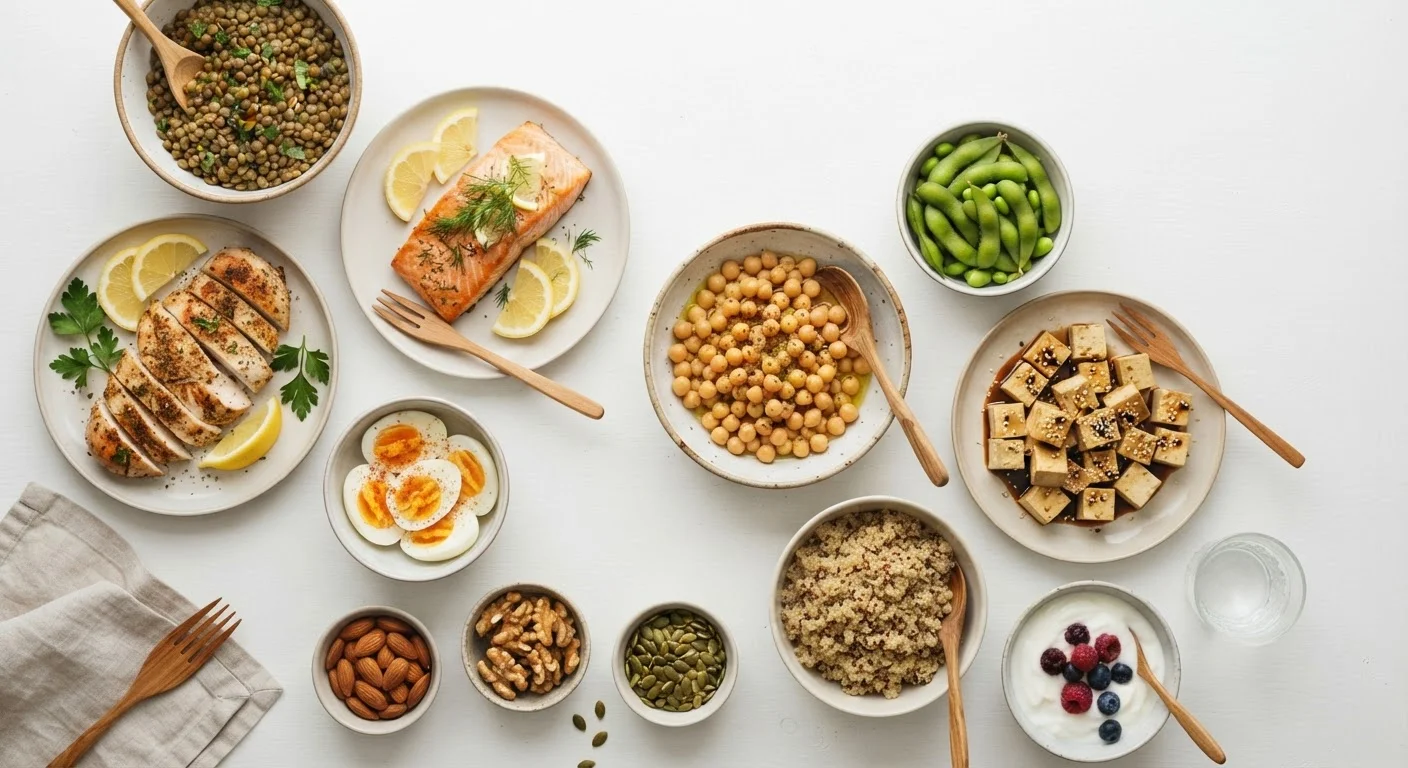
Key Takeaways
- Animal proteins are generally 'complete,' containing all nine essential amino acids in adequate ratios.
- Most plant proteins are lower in one or more essential amino acids, but combining sources across the day addresses this.
- Protein digestibility varies significantly between sources, which affects how much the body can actually use.
- Dietary context—overall eating pattern and food quality—matters as much as protein source alone.
- Both protein types can support health goals; individual needs, ethics, and health status all play a role.
Our Verdict
Neither plant-based nor animal protein is categorically superior for all people in all contexts. Animal proteins offer complete amino acid profiles and high digestibility, while plant proteins bring fiber, phytonutrients, and a lower environmental footprint. The strongest evidence supports diverse, minimally processed protein sources within an overall balanced eating pattern.
| Best for | Recommended |
|---|---|
| Those prioritizing amino acid completeness with minimal planning | Animal protein sources |
| Those seeking fiber, phytonutrients, and environmental considerations | Plant-based protein sources |
| Those wanting flexible, well-rounded nutrition | Mixed approach combining both protein types |
What Makes a Protein 'High Quality'?
Protein quality is assessed by two main standards: amino acid completeness and digestibility. The body requires nine essential amino acids—meaning it cannot synthesize them and must obtain them from food. A protein source is considered "complete" when it provides all nine in proportions that match human needs.
Digestibility is equally important. The DIAAS, developed by the Food and Agriculture Organization, is the current gold standard for measuring how efficiently the body absorbs and uses a protein's amino acids. Animal proteins—including eggs, dairy, and meat—consistently score high on this scale. Many plant proteins score lower due to the presence of antinutrients such as phytates and tannins, which can reduce amino acid absorption. That said, cooking, soaking, and fermenting can meaningfully improve plant protein digestibility.
Understanding these distinctions helps frame the comparison accurately—neither type is uniformly superior across every metric. For a broader look at how to evaluate nutrition research on topics like this, see our guide to interpreting nutrition research.
Animal Protein: Strengths and Considerations
Animal-derived proteins—including meat, poultry, fish, eggs, and dairy—are nutritionally dense and complete. Beyond amino acids, many animal foods deliver vitamin B12, heme iron, zinc, and long-chain omega-3 fatty acids (particularly from fatty fish), nutrients that are less bioavailable or absent in most plant foods.
Heme iron, found only in animal tissue, is absorbed at roughly two to three times the rate of non-heme iron from plants—a meaningful distinction for individuals with higher iron needs. Similarly, vitamin B12 is not reliably found in plant foods without fortification, making animal products a straightforward dietary source.
Processed Meat Is Not Equivalent to All Animal Protein
Lumping all animal proteins together can obscure important distinctions. Processed meats (e.g., bacon, deli meats, sausages) contain additives and compounds—such as nitrates and high sodium—that are associated with specific health risks in observational research. Fish, eggs, and lean poultry present a very different nutritional profile. Evaluating animal protein sources individually, rather than as a single category, leads to a more accurate picture.
The type of animal protein matters considerably. Research associating higher red and processed meat intake with certain chronic disease risks is well-documented in large observational studies, though causality is difficult to establish definitively. Lean proteins like fish, poultry, and eggs carry a different risk profile than heavily processed meats. Dietary context—how these foods fit into the broader eating pattern—is a key variable in any honest assessment.
Plant Protein: Strengths and Practical Gaps
Legumes, tofu, tempeh, edamame, nuts, seeds, and whole grains are all meaningful protein contributors. Most individual plant proteins are described as incomplete—typically low in one or more essential amino acids (e.g., lysine in grains, methionine in legumes). However, this limitation is practically manageable: consuming a variety of plant proteins throughout the day—not necessarily at every meal—ensures that amino acid needs are met over time.
Plant proteins come packaged with additional nutritional benefits: dietary fiber, antioxidants, and phytonutrients that animal foods largely lack. Higher dietary fiber intake is consistently linked in epidemiological research to improved cardiovascular markers and digestive health. Whole plant foods are also generally lower in saturated fat, which is relevant for cardiovascular considerations according to most dietary guidelines.
Key nutritional gaps on plant-forward diets include vitamin B12, vitamin D, calcium (depending on food choices), iodine, zinc, and long-chain omega-3s. These can often be addressed through food selection and, where appropriate, supplementation—ideally guided by a healthcare provider. For further context on building balanced meals across different dietary patterns, see principles for building balanced meals.
| Plant Protein | Animal Protein | |
|---|---|---|
| Amino acid completeness | Often incomplete; manageable with variety | Complete in most sources |
| Digestibility (DIAAS) | Generally lower; improved by cooking/soaking | Generally higher |
| Fiber content | High; supports gut and cardiovascular health | None |
| Vitamin B12 | Not naturally present; requires fortified foods | Abundant in most sources |
| Iron bioavailability | Non-heme iron; lower absorption rate | Heme iron; higher absorption rate |
| Saturated fat | Generally low | Variable; higher in red/processed meats |
| Phytonutrients | Rich source | Minimal to none |
Making Sense of the Trade-Offs in Practice
The framing of plant versus animal protein as an either/or choice is largely a false dichotomy for most people. Dietary patterns—the full picture of what is eaten regularly—exert a far greater influence on health outcomes than any single food or nutrient category. Both protein sources can coexist within a diet that emphasizes whole, minimally processed foods.
Populations consuming mixed diets with varied protein sources tend to show adequate amino acid intake and broader micronutrient coverage. Individuals following exclusively plant-based diets can achieve strong nutritional outcomes with deliberate food selection and, in some cases, targeted supplementation under professional guidance.
Ultimately, factors including personal health status, food access, cultural food traditions, ethical considerations, and environmental priorities all legitimately shape protein choices. No single dietary approach is universally optimal. For a wider exploration of how different eating patterns stack up, our overview of popular eating pattern trade-offs offers additional perspective.
This article is for general informational and educational purposes only and does not constitute medical or dietary advice. Consult a qualified healthcare professional or registered dietitian for guidance tailored to your individual health needs.